
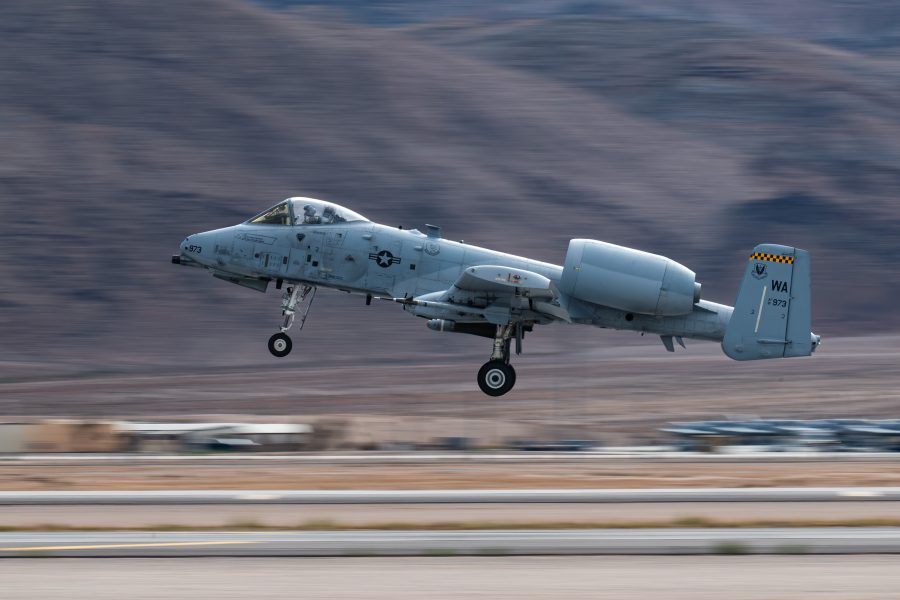
Lawmakers resolving differences in the House and Senate versions of the National Defense Authorization bill want to stop cuts to the Air Force’s combat fleet by blocking scores of planned divestments of aging A-10 and F-15E fighters.
The bill, unveiled Dec. 7, rejects the Air Force plan to retire all 162 A-10s still flying along with 21 F-15Es in 2026. If passed into law, the measure would limit divestments this fiscal year to just 59 A-10s and no F-15Es.
Also in the measure, Congress would redirect $250 million from future upgrades to the F-35 fighter and instead use it to supplement spare parts purchases.
The annual defense policy bill is considered must-pass legislation. The House passed its version in September and the Senate followed in October. Negotiations since produced the resulting 3,000-page bipartisan, bicameral conference bill, which is expected to move through both chambers in the coming weeks.
Known generally as the NDAA, the annual defense measure authorizes spending, sets policy, and directs actions, including reports, studies, research, and more. It is separate and distinct from the Defense Appropriations bill, which actually funds the department.
Lawmakers have used the NDAA to block Air Force divestment in the past, particularly for the A-10. Air Force officials acknowledge the Thunderbolt II was invaluable during the Global War on Terror but say it is poorly suited for high-end conflict in contested airspace. But lawmakers are pushing back, protecting bases with A-10 squadrons and arguing the Air Force is too eager to drop a still useful airframe.
For years, Congress curtailed A-10 retirement plans, but it had relented in recent years as Air Force leaders convinced lawmakers to allow some cuts. Buoyed by that progress, USAF officials declared their intent to retire all 162 remaining A-10s in 2026, three years faster than previously planned.
Lawmakers oppose the plan, requiring in the conference bill that the Air Force keep at least 103 total aircraft, with 93 categorized as primary mission aircraft, through Sept. 30, 2026. It would also require the Air Force to brief Congress by March 31, 2026, on the 2027-2029 plan for the A-10, including transition plans for units losing their A-10s.
Keeping the airplanes will pinch the Air Force, which didn’t fund operations and maintenance for the aircraft in its 2026 budget request. Any funding to keep 100 or so jets in the fleet would either have to be added by appropriators or reprogrammed from elsewhere. The amounts are significant: the Pentagon estimated the Air Force would save $423 million in operations and maintenance costs by retiring the entire A-10 fleet, according to a report on force structure changes submitted with the 2026 budget request. Keeping nearly two-thirds of the jets suggests a cost in the range of roughly $270 million.
Air Force plans to retire F-15Es fared no better. The Air Force had sought to retire 21 F-15Es in 2026, saving an estimated $140 million. But Congress isn’t having it. USAF revealed plans in 2023 to slash the F-15E fleet in half, cutting 130 Strike Eagles with older engines and upgrading only the 99 that already have newer engines with more advanced electronic warfare suites.
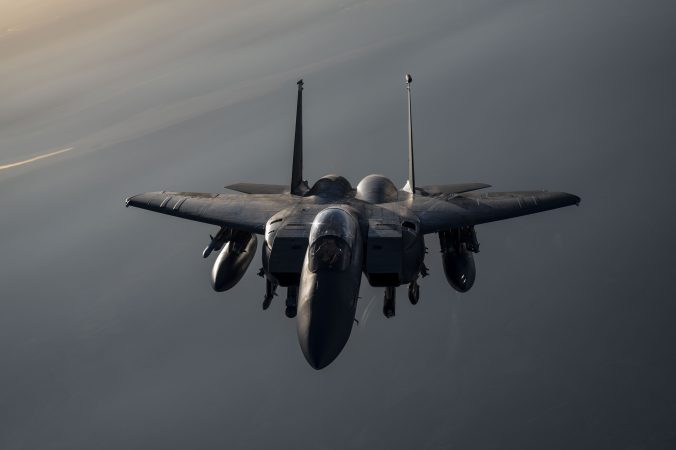
But lawmakers slowed that move, limiting the Air Force to retire no more than 68 F-15Es through fiscal 2029. The conference bill unveiled this week would pare back the number of authorized retirements to just 51 jets, and no cuts could proceed in fiscal 2026.
The funding tables for the 2026 NDAA do not specify any additional operations and maintenance funds for maintaining and manning A-10 and F-15E fighters that can’t retire, putting the onus on appropriators to add money themselves or the Air Force to figure it out.
Authorizers in Congress do sometimes shift funds to support moves. A case in point is the F-35.
In the NDAA, lawmakers slashed authorized spending on F-35 research and development, citing delays to the fifth-gen jet’s Block 4 upgrades, cutting $208.7 million in Air Force funds. But in a corresponding move, they added $250 million for F-35A spare parts, an acknowledgement that parts funding is contributing to readiness shortfalls for that aircraft.
Members of Congress, having long lamented F-35 sustainment challenges, appear pleased that Air Force officials have begun to emphasize readiness improvements, what new Chief of Staff Gen. Kenneth S. Wilsbach calls the central USAF mission: “flying and fixing airplanes.”
Meanwhile, procurement of new aircraft slows in 2026, with the Air Force set to buy just 24 F-35As. Delays to Block 4 and Tech Refresh 3 and readiness challenges has the Air Force waiting to buy fully capable jets later rather than continue to acquire current capability and retrofitting them later. Lawmakers approved those plans untouched in the 2026 NDAA, but also added provisions indicating closer oversight ahead. One requires the Pentagon to formulate a plan to transition the F-35 to “open mission systems,” enabling connectivity with F-22 and future F-47 fighters. Another calls for the Government Accountability Office to conduct annual reviews of the F-35 program.
Force Structure
The conference NDAA includes several other provisions dictating force structure requirements for the Air Force. It extends prohibitions on retiring C-130 transport aircraft in the Air National Guard, RQ-4 drones, and B-1 bombers.
The bill would also gradually increase the minimum inventory for the Air Force’s tanker fleet, from its current floor of 466 aircraft to 478 in fiscal 2027, 490 in 2028, and 502 in 2029. That language effectively bars the Air Force from retiring any KC-135s for the next several years.
In a corresponding move, other provisions prohibit the Air Force from retiring KC-135s in the primary mission aircraft inventory of the Guard and Reserve, and notes that “in the case of a KC–135 aircraft that is replaced in the aircraft inventory by a KC–46 aircraft, the Secretary of the Air Force may reassign the KC–135 aircraft to any Air Refueling Wing that has the capacity to expand its aircraft inventory to include such reassigned aircraft.”
Plans
The bill doesn’t just set requirements for Air Force fleet size. It also asks the service to explain its plans for different aircraft and missions as lawmakers conduct their oversight responsibilities. Among the plans required in the conference NDAA:
- “A comprehensive roadmap detailing the planned force structure, basing, modernization, and transition strategy for the bomber aircraft fleet of the Air Force through fiscal year 2040.”
- “A comprehensive roadmap detailing the strategic plan for the development, acquisition, modernization, and integration of intelligence, surveillance, and reconnaissance (ISR) capabilities of the Air Force.”
- A report on the F-47 Next-Generation Air Dominance program and its progress.