


Wo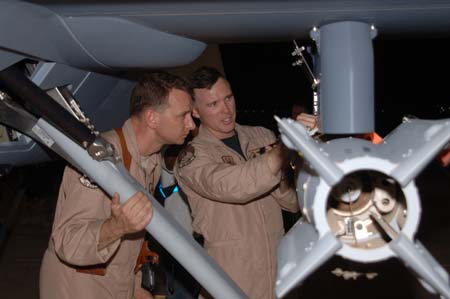 rking under a rapid acquisition and development effort, Aeronautical Systems Center’s 703rd Aeronautical Systems Group at Wright-Patterson AFB, Ohio, got the MQ-9 Reaper hunter-killer unmanned aerial vehicle to Afghanistan 18 months ahead of schedule, and earlier this month, it flew its first operational mission in Iraq. The 703rd AESG worked with Air Combat Command and prime contractor General Atomics Aeronautical Systems “to surge the capability to the field,” said Col. Christopher Coombs, 703rd AESG commander. Coombs describes the Reaper as providing an “evolution in capability” that offers “persistent awareness … and a robust target prosecution capability” with its complement of 500-pound bombs and Hellfire missiles. It helps, too, he said, that the system “has a high resolution radar that can see targets through the clouds.” Lt. Col. Micah Morgan, who leads the airmen who operate and maintain both the Reaper and its smaller brother, the MQ-1 Predator, for operations in Iraq and is dual-qualified in both systems, credits the accurate on-board sensors of the Reaper and USAF’s “extremely disciplined targeting process and strict rules of engagement” with ensuring “the target is destroyed and nothing else.” (Wright-Patt report by Laura McGowan)
The top Air Force commander on on the Japanese island of Okinawa has clamped down alcohol and issued a curfew for junior enlisted Airmen and Guardians at Kadena Air Base for the next month. The order came roughly two weeks after a U.S. Marine was arrested for allegedly robbing and…