
House Unveils $60B Reconciliation Bill
By Greg Hadley
House lawmakers unveiled a new funding bill July 15 that provides $60 billion for defense—$290 billion less than what the President’s budget requested. The bill leaves President Trump’s plans for a $1.5 billion defense budget in doubt for this year.
Dubbed “Reconciliation 3.0,” the bill is intended to be pushed through under a process called reconciliation, a maneuver designed to circumvent the Senate’s requirement for a supermajority of 60 votes to pass. Under reconciliation, the Senate merely needs a simple majority, so the Republican majority can pass it on a party-line vote.
The bill was the second legislative disappointment for the Pentagon in as many days, coming a day after the Senate failed to advance its version of the National Defense Authorization bill.
Republicans on the House Budget Committee released their “concurrent resolution” for a total $95 billion, including the $60 billion for defense. Their resolution directs the House Armed Services Committee to earmark how the $60 billion is to be spent, setting off a scramble as the Trump administration and the committee prioritize spending. The White House had sought $350 billion in the measure, which was to have come on top of a $1.15 trillion budget request to be funded through the normal legislative process.
Separately, the White House has also asked Congress to approve a $67 billion supplemental funding bill to pay for the war with Iran, along with a few additional needs.
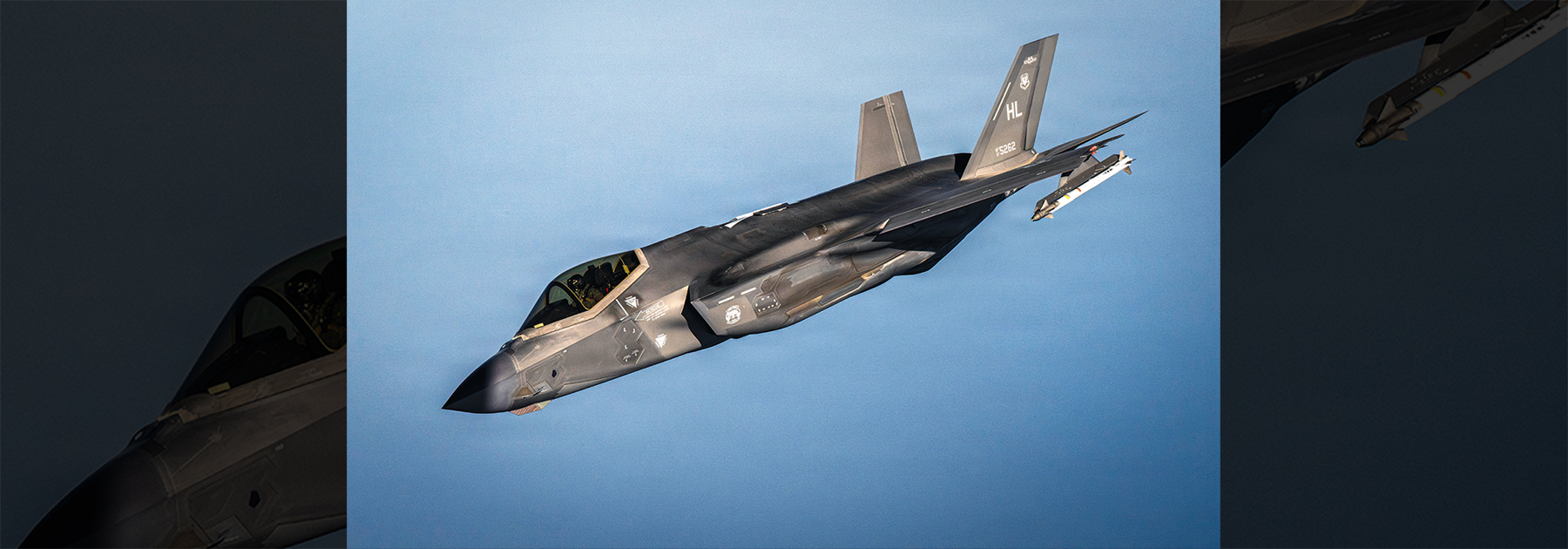
The Air Force and Space Force would face acute shortfalls if the reconciliation package remains at its present size. Some 8.3 percent—or $28.2 billion—of the Department of the Air Force’s $338.8 billion budget request was supposed to come through reconciliation, covering some of its planned F-35 fighter purchases, along with targeting satellites, and munitions.
Republicans passed their first reconciliation bill a year ago, officially naming it the “One Big Beautiful Bill Act.” The measure included $150 billion for defense. They passed a second in June to fund immigration agencies, which is why this latest package has been called “Reconciliation 3.0.”
Congress watchers have been skeptical that Reconciliation 3.0 would materialize at the scale the White House wanted. With narrow majorities in the House and Senate, Republicans in Congress can afford almost no defections as they seek to shepherd the bill through. Fiscal hawks oppose reconciliation funding without offsetting spending cuts in other areas, but moderates in competitive states and districts worry such cuts would cost them votes.
Byron Callan, managing partner and defense analyst at Capital Alpha Partners, has said for months that passing the $350 billion reconciliation package the White House wanted is “improbable,” given the political calculus.
Republican leaders appear to have settled on a narrower package in hopes they can get it though. House Budget Committee Chair Jodey Arrington (R-Texas), who has coordinated the reconciliation bill with Speaker Mike Johnson (R-La.), said in a statement that his committee will mark up the new package July 16. Johnson applauded the package on social media:
Because the House Armed Services Committee must still formulate spending plans for the $60 billion in the new reconciliation package, exactly what’s at stake isn’t clear yet. A spokesperson for HASC Republicans and Rogers did not immediately reply to a query.
Meanwhile, Congress has yet to take any action on the Iran war supplemental submitted June 24. If Republican leaders decide they don’t want to rely on Democrats’ votes for that bill, they could choose to direct the $60 billion toward the needs outlined in that request, which included $21 billion for munitions, $17.3 billion for operational costs, and $12.1 billion for classified programs, plus $4 billion for two Space Force programs—Airborne Moving Target Indication and Space Data Network Backbone.
Doing that, however, would leave other priorities originally targeted for reconciliation funding without earmarks, including:
- $7.8 billion for the Air Moving Target Indicator program
- $4 billion for the Space Data Network
- $2.3 billion for 14 F-35s
- $1 billion for 330 extended range Joint Air-to-Surface Standoff Missiles
- $990 million for Joint Advance Tactical Missiles
- $953 million for up to 618 Advanced Medium Air-to-Air Missiles.
But lawmakers could also try to pass both a war supplemental and the reconciliation bill. In that case, they would have to choose from among the programs originally targeted for reconciliation funding and what can be paid for with just 17 percent of the requested funds. If spending was cut proportionally, the $28.2 billion the White House request had sought for Air Force and Space Force programs would be reduced to just $4.8 billion combined.
Pentagon leaders have largely demurred when asked about how they would manage this problem, although several have acknowledged on background the likelihood that the original ask would be reduced.
That’s hardly surprising, Callan said. “I’d be shocked if they were somehow oblivious to this whole set of variables,” Callan said. “I’m sure the comptroller’s office and the services are kind of playing with” budget numbers. “That’s why it’s like a poker game. Why would you say, ‘Here are my cards now’ if it gave Congress an easy out to say, ‘OK, we don’t have to do reconciliation because they’ve got this other plan.’”