
To prevail in space, the Space Force must be able to challenge adversaries with
multidimensional dilemmas.
Space is now a warfighting domain, with growing threats to and increasing operational demands on U.S. space capabilities. New systems and operational concepts that increase the resilience and effectiveness of the U.S. military space architecture are needed. Approaches that increase the flexibility and maneuverability of space capabilities can satisfy both objectives.
Space operations must move away from a construct optimized for static mission sets and energy-saving
orbits and embrace dynamic space operations (DSO) in which satellite operators can frequently and rapidly change parameters to achieve mission effects. While “dynamic space operations” typically refers to repositioning satellites without regret for the fuel each maneuver expends, true dynamic space operations will require changes and practices associated with all segments of the U.S. space architecture. This encompasses orbital, terrestrial, link, and launch segments and will require new logistics infrastructure and concepts of operations as a foundation for future DSO. This broader application of DSO will increase the overall flexibility of the U.S. space architecture, thereby accelerating a greater application of long-standing principles of warfare, such as maneuver and surprise, which will in turn increase resilience and mission effectiveness. Furthermore, it will facilitate the employment of new missions and novel approaches to help U.S. forces maintain the initiative and create compounding problems for potential adversaries—ultimately strengthening the deterrent posture of the United States.
Col. Charles S. Galbreath, USSF (Ret.), is Director and Senior Resident Fellow for Space Studies at AFA’s Mitchell Institute for Aerospace Studies.
Download the entire report athttp://MitchellAerospacePower.org
Hesitancy to fully implement dynamic space operations at scale risks ceding valuable time and initiative to China. The Space Force must move decisively to embrace opportunities in this new operational paradigm. The Space Force is already moving ahead on many fronts, but now is the time to accelerate adoption of dynamic space operations holistically across the space enterprise.
Vulnerabilities of Existing Architecture
The criticality of today’s U.S. space operations cannot be overstated. Current systems have fundamentally changed the way the United States operates its military and conducts operations in all domains. The space architecture the United States operates today, however, is tied to an assumption that space is a sanctuary, not a warfighting domain, and results in an architecture with orbital, terrestrial, link, and launch segments that are all highly predictable and therefore vulnerable to disruption.
Every element of the space architecture has vulnerabilities that the United States must minimize to prevent adversary exploitation. But the segment in greatest need of more flexibility and maneuverability is the space segment. Even today, satellites are launched into a specific orbit for the duration of their mission life. They follow a highly predictable elliptical path largely defined by their velocity, altitude, and the inclination into which they were launched—making them easily targetable by would-be adversaries.
The predictable paths of intelligence, surveillance, and reconnaissance satellites make it easy for adversary forces to know when they will be overhead. At the appropriate times, adversaries can utilize protective or defensive measures such as camouflage, concealment, and deception (CCD), or they can simply halt their operations to thwart U.S. intelligence collection efforts. All other satellites have similarly predictable paths, making it relatively easy for adversaries to find, fix, track, target, and engage them. The Geosynchronous Space Situational Awareness Program (GSSAP) represents perhaps the leading edge of satellite maneuverability within the United States’ order of battle, but even GSSAP is easily tracked by potential adversaries due to a constrained maneuver profile driven by limited fuel.
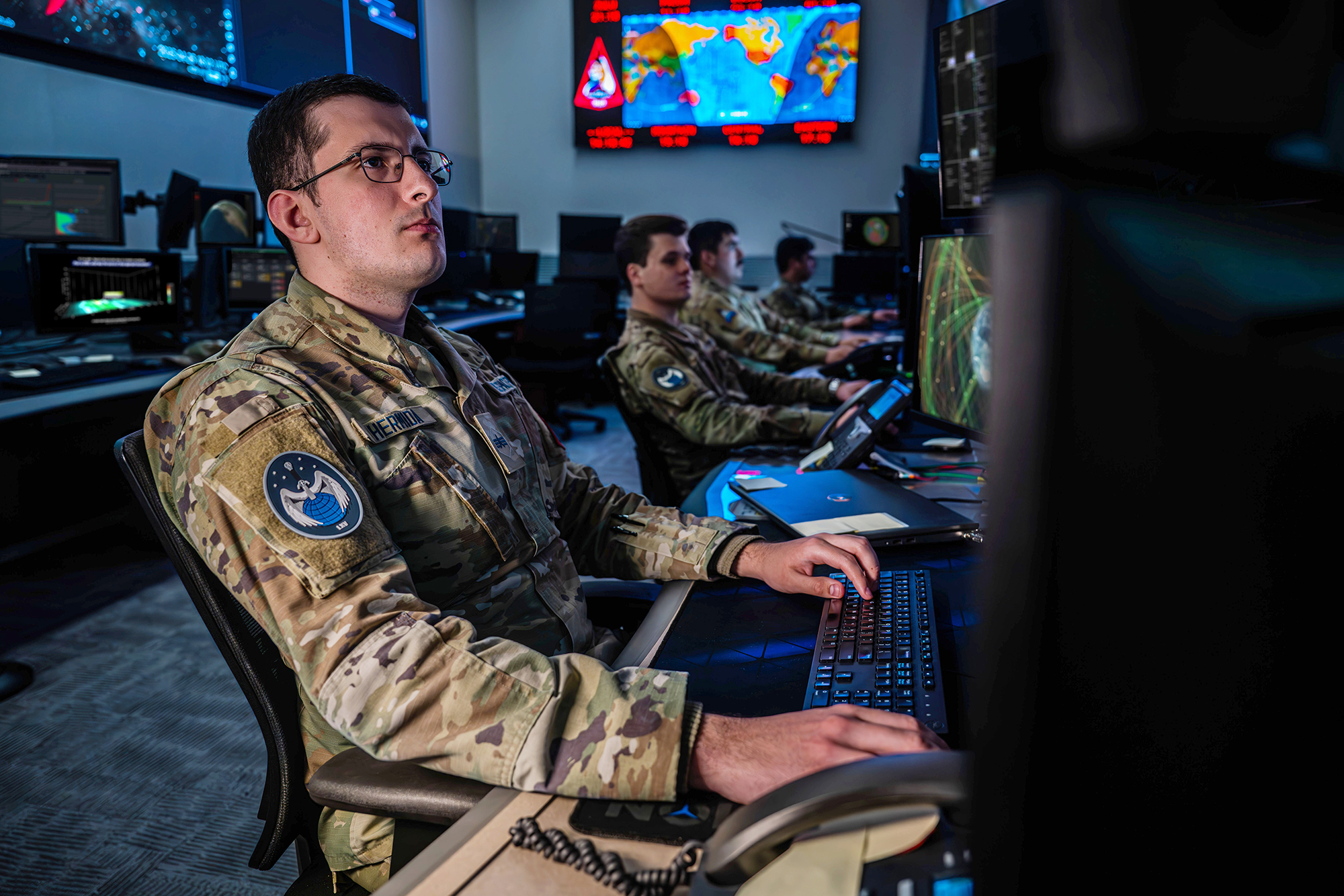
On the terrestrial front, most of the space architecture today is heavily reliant on a few fixed ground stations used for command and control and the downlink of mission data from satellites, which are in fixed locations and potentially vulnerable to attack. Primarily located at Buckley and Schriever Space Force Bases in Colorado, the USSF’s Space Operations Centers (SOCs) are where most Guardian operators perform their missions. The Space Force must plan to defend these locations should China or another adversary seek to use cyber or direct physical attacks against them or the infrastructure supporting them.
The link segment has its own set of sensitivities. The frequencies Guardians use to control and interact with satellites are fairly static and contained within well-established communications bands. The Satellite Control Network (SCN), the primary means to transmit and receive data from satellites, is a global network comprising 19 antennas at seven locations, some of which date back to the late 1950s. Like other terrestrial satellite infrastructure, these fixed sites will be likely targets in a potential conflict with China.
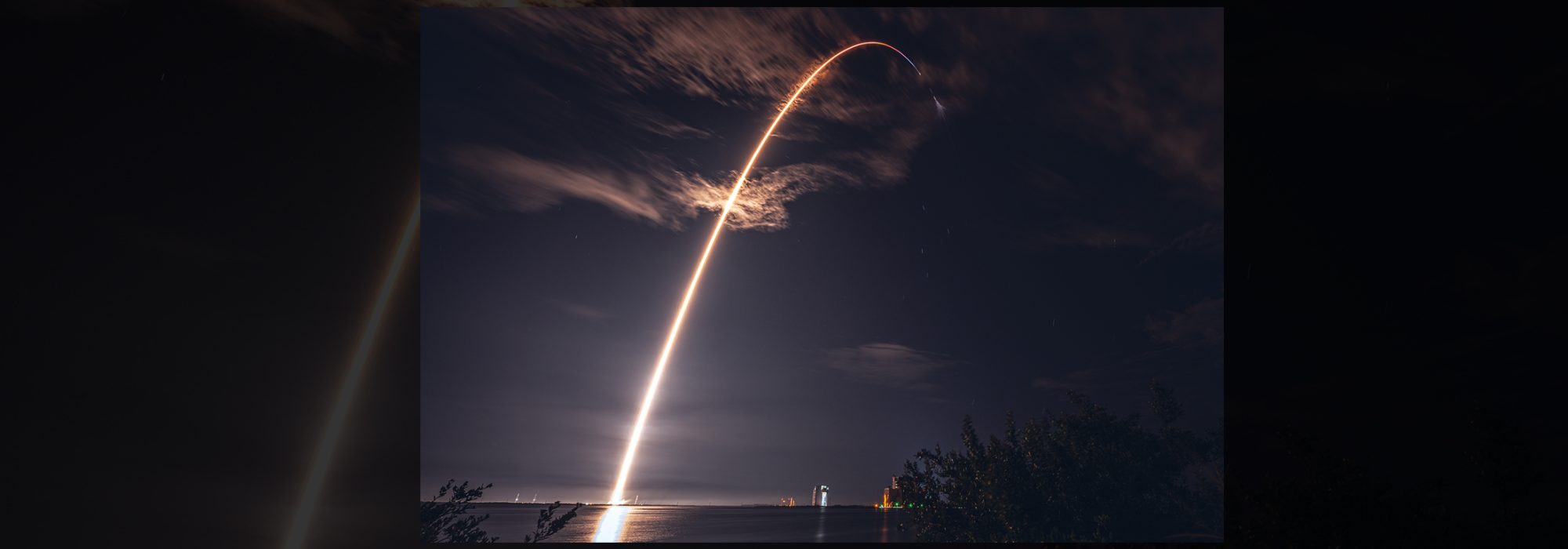
Finally, U.S. launch infrastructure vulnerabilities also arise primarily from predictability. Most U.S. launch capabilities are planned far in advance and governed by a launch-on-schedule manifest. Most spacecraft are launched from one of two bases, powered by boosters that take months and sometimes years to develop and field. There is little flexibility to replace payloads to meet urgent operational needs or respond to immediate threats. The entire infrastructure, including the launch systems supply chain, must be guarded against potential attack in the event of conflict.
The Threat from China
China has long recognized the asymmetric advantages the United States enjoys from operating successfully in space. As it develops its own capabilities to rival the United States and potentially create a kill web to enable and expand its anti-access/area-denial strategies, it is also developing terrestrial and space-based weapon systems designed to block the United States from delivering vital space effects.
Ever since 2007, when China used a direct ascent anti-satellite (ASAT) weapon to destroy one of its own defunct satellites, Chinese threats to U.S. and allied space systems has only grown. Today, China possesses ground-based direct-ascent ASATs, ground-based counter-space electronic warfare, ground-based lasers, and cyber and space-based weapons.
As China rapidly expands its space systems, it is pursuing methods to increase the maneuverability and flexibility of its own satellites. First, it has launched a series of satellites within the Shijian (SJ) family of spacecraft with maneuver, servicing, and counterspace capabilities. China has demonstrated the repositioning of a dead satellite to an alternate orbit using SJ-21, which is known to have a robotic arm.
Second, it is rapidly investing in technology to refuel and service existing satellites. Reports suggest that China’s SJ-25 may have already conducted refueling of the SJ-21, which appears to have conducted the largest delta-V maneuver ever seen in GEO afterward.
Finally, China has demonstrated the ability to control five satellites simultaneously, maneuvering and engaging in operations among one another—what the U.S. Space Force and media describe as “space dogfighting.” While it may be more akin to five dirigibles demonstrating warfighting tactics than a true aerial dogfight among 5th-generation fighters, it still demonstrates key technology required to conduct orbital warfare and establish a positional advantage.
These are all indications of China’s intent to develop the most robust space architecture possible to confront the United States and supplant it as the world’s leading space power. This will not only degrade the overall effectiveness of U.S. and coalition military operations in future conflicts, but it will also significantly diminish the U.S. led world order.
Principles of Warfare in Space
Recognizing that space is indeed a warfighting domain means that space operations and the military architecture must now fully embrace the principles of warfare that each of the other operational domains have executed and matured over centuries of conflict. An architecture based on dynamic space operations, built on a foundation of in-space logistics, will facilitate the greater application of these principles—particularly surprise and maneuver. Applying these principles presents opportunities for the Space Force to create multiple and compounding challenges for potential adversaries
For example, surprise is one of the most fundamental principles of warfare. Just as Chief of Space Operations Gen. B. Chance Saltzman’s theory of competitive endurance seeks to avoid operational surprise, the Space Force and U.S. Space Command must now seek to create surprise to catch their opponents off guard. The use of CCD to confound enemy understanding of a force’s intentions and capabilities is a time-proven practice for achieving surprise. In numerous historic examples, deception, combined with movement and maneuver, created the necessary surprise for mission success. Essential to achieving the requisite movement and maneuver in space is the logistics support to enable and sustain dynamic operations.
Enabling DSO
The Space Force is already pursuing capabilities that increase the dynamic nature of the satellite, ground, link, and launch segments of its operational architecture. The greatest opportunity for transformative change is in the orbital segment and includes increasing options for maneuver, servicing, and assembly on orbit. Technology demonstration efforts across the Department of Defense have proved the potential for increased operational flexibility and effectiveness of satellites through autonomy, rendezvous and proximity operations (RPO), docking/birthing, and refueling. In 2007, DARPA launched two satellites as part of the Orbital Express program to examine satellite refueling and reconfiguration. In addition to the prerequisite autonomous RPO and docking, the program successfully demonstrated two key technologies: refueling and component replacement.
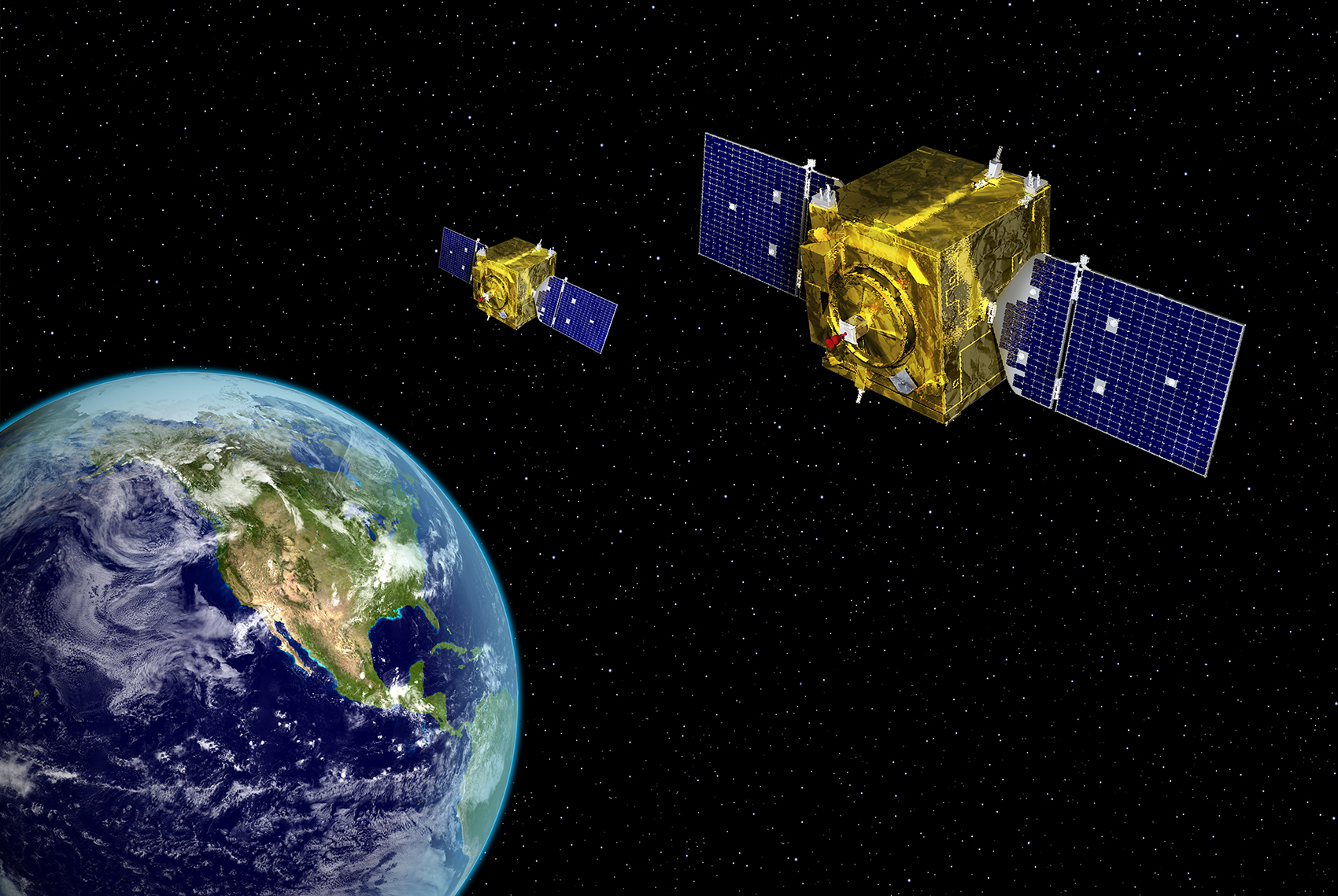
Concepts associated with In-space Servicing, Assembly and Manufacturing (ISAM), as well as Space Mobility and Logistics (SML) create bountiful opportunities for the United States to enhance the resilience and effectiveness of its on-orbit architecture. These include standardized connections and interfaces, as well as modular design, which are fundamental to the supporting logistics of a dynamic space architecture.
Advanced propulsion systems, such as nuclear thermal and electric propulsion are alternative means to increase maneuverability that could potentially extend the utility of satellites. However, both still require the ejection of a mass to create thrust, meaning they use fuel that must eventually be replenished.
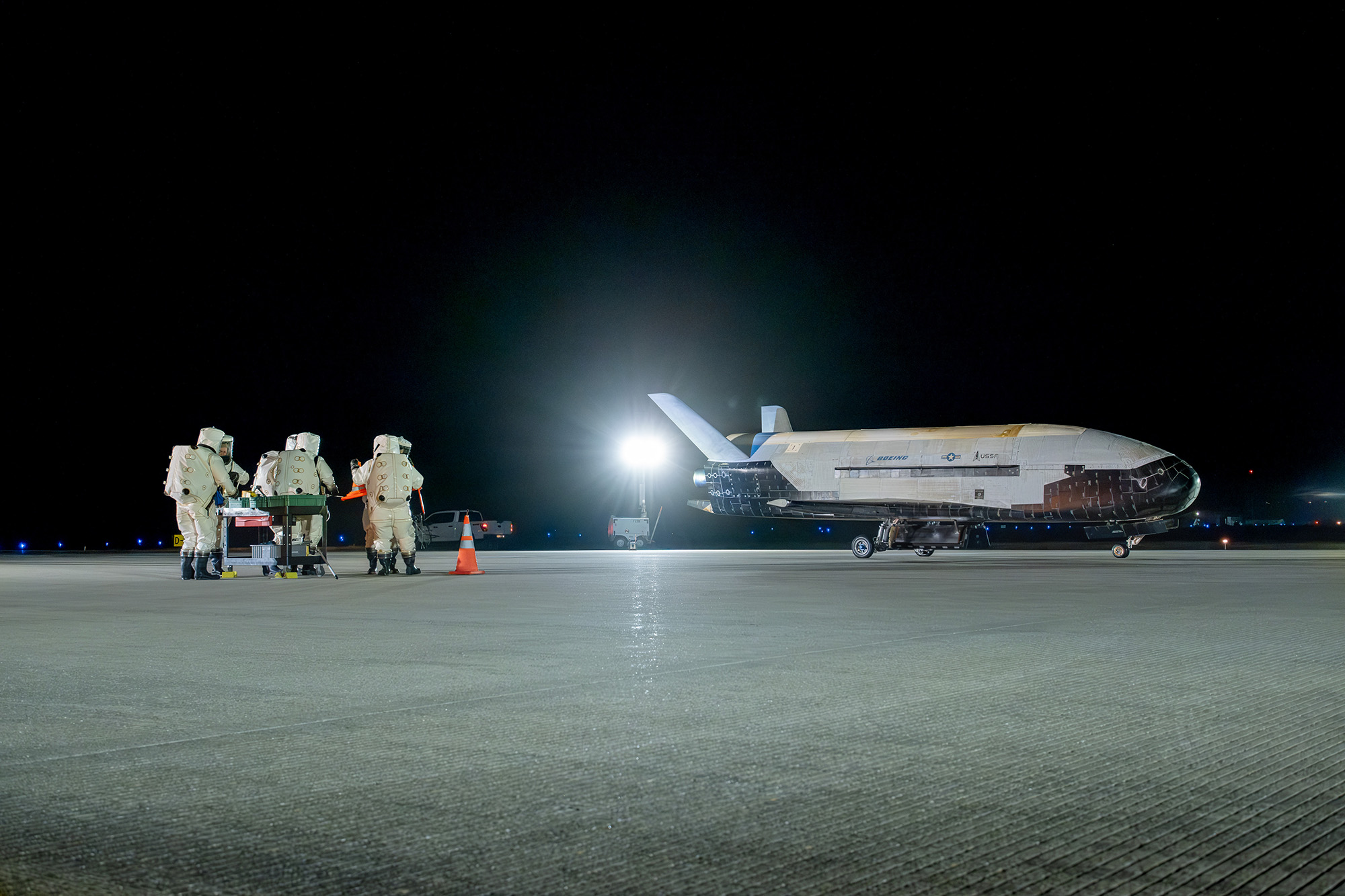
The adoption of modular designs is another way that satellites could gain flexibility. Traditionally, a satellite is unchanged throughout its operational life. If satellites can be serviced in space, that can change. The X-37B and the use of payload adapter rings to host modular payloads demonstrate existing capabilities that increase the versatility of spacecraft. The X-37B, in particular, has considerable maneuver capability and can host multiple payloads within its bay. Each payload can be swapped out after return to Earth, akin to reconfiguring a combat aircraft payload to carry a broad range of munitions, modular sensors, and fuel loadouts for specific desired effects. The inherent flexibility of a system like the X-37B, which is only a test vehicle, could be operationalized to significantly expand the dilemmas that the United States could present to potential adversaries.
The U.S. Space Force also currently hosts payloads on secondary adapter rings, connecting satellites to boosters. SSC’s Rapid On-Orbit Space Technology Evaluation Ring (ROOSTER) program allows payloads to remain attached to the ring or be deployed as free-flying satellites. By hosting multiple, diverse payloads on a single ROOSTER, this modular approach creates operational flexibility because each payload can perform different or complementary missions. The ROOSTER program and its predecessor—the Long Duration Propulsive EELV Secondary Payload Adapter (LDPE)—are already seeing widespread employment to advance technologies.
The Space Force has launched or plans to launch at least three LDPEs and at least five ROOSTER missions. ROOSTER-5 will be an integral part of the Tetra-5 mission, demonstrating on-orbit refueling. The flexibility of the X-37B and ROOSTER programs also enables the Space Force to obfuscate the true mission and capabilities of individual spacecraft. Operational planners can use this feature to induce an element of surprise in the minds of potential adversaries.
Taken to an extreme, modularity could facilitate the ability to swap or upgrade components of a spacecraft’s subsystems rather than replacing entire satellites. This would enable upgrades, mission extension, and mission change without incurring the cost of replacing the entire satellite.
Software also provides opportunities to change capabilities after deployment. With software-defined radios, for example, Guardians could reprogram a satellite to fundamentally change its mission even after launch. A communications satellite could be reprogrammed to deliver positioning, navigation, and timing signals, or potentially even transmit at higher power levels to generate disruptive jamming effects. While major mission changes via software may be years away, smaller changes, such as enhancements within a single mission, are almost here. The Air Force Research Laboratory (AFRL) will use a reprogrammable signal generator in its Navigation Technology Satellite 3 (NTS-3) demonstrator as a key element of the system.
In the terrestrial segments, the Space Force is making significant progress in transforming the traditional architecture of bespoke ground station and operations centers for each satellite family into a system with more dynamic, web-enabled operations. The fundamental role of the terrestrial segment is to command and control the vehicles in the orbital segment. Periodic, brief contacts with a satellite as it orbits the Earth are just enough to ensure that it is continuing to perform its mission and operate safely, and for some satellites to upload commands, execute payload operations, and receive the data coming from those payloads. But while this works in a peaceful environment, intermittent contacts would prove intolerable in a dynamic warfighting construct. The Space Force is therefore pursuing alternate methods to increase its connectivity between the terrestrial segment and the orbital segment.
One alternative approach is web-based command and control that can speed the delivery of capabilities and provide a more standard interface for operators. Web-based cloud infrastructure like the Rapid Resilient Command and Control (R2C2) program will enable Guardians to operate multiple satellites from any location and with the appropriate security measures. Phased array antennas that can contact multiple satellites simultaneously offer another means to change the way satellite C2 is performed, increasing connectivity with vital assets and minimizing the periods between contacts. R2C2 will employ phased array antennas under the Space RCO’s Satellite Communications Augmentation Resource (SCAR) program. SCAR antennas are transportable and capable of communicating with satellites as they maneuver on orbit. Mobile ground terminals will also increase the flexibility and maneuverability of the terrestrial segment.
Since all military space operations involve the transmission of data between the satellite and terrestrial segments, the link segment cannot be ignored. The link segment enables Guardians to operate satellites and their payloads, execute C2 functions, direct payload employment, and download mission data. One of the oldest methods of preserving connectivity through jamming is frequency hopping. Rather than using a static frequency for all communication, frequency hopping randomly moves between various frequencies. This approach can prevent an adversary from maintaining a lock on the link signal and intruding or jamming it.
Frequency hopping, which dates to WWII, provides secure, jam-resistant communications for a host of uses, including national command and control and NC3 systems such as Milstar and Advanced Extremely High Frequency (AEHF) satellites. While it is not standard practice on all satellites, it is a proven and applicable technology that could be operationally expanded.
Launch, while not traditionally included as part of the space system architecture, remains another area of vulnerability. The impact of predictable launch locations, boosters, schedules, and cost on the resulting space operations cannot be ignored. The entire U.S. military space enterprise currently operates out of two primary launch sites, Cape Canaveral, Fla., and Vandenberg Space Force Base, Calif. Additional launch sites in diversified locations would increase the resilience of the overall architecture by eliminating the risk of damage, degradation, or destruction at any one site, whether by natural events or cyber or physical attacks.
Limited launch sites add to the rigidity of today’s launch schedules, typically planned years in advance. But manifest planning does not need to be a multiyear process. With more frequent opportunities made possible by additional launch sites, the potential for rapid satellite deployment increases. Similarly, standardizing design tolerances so that satellites can match a wider range of launch profiles, could also reduce the limiting factors in manifest planning, further enabling dynamic space operations.
Objective Architectures & Conops
The Space Force is already exploring dynamic space operations by employing alternative methods of satellite delivery, operations, and sustainment to create multidimensional dilemmas for potential adversaries. But USSF must now take proactive steps to fully implement these concepts operationally.
Progress moves at the rate it is resourced, and constrained budgets have become a barrier to fully adopting DSO. The Space Force must be resourced to field space systems that can evolve beyond the current state of static launch, orbits, frequencies, and missions, all of which are easily understood and exploited by potential adversaries. Failing to do so puts America’s spacepower advantage at risk.
The broad application of dynamic space operations in the U.S. Space Force and U.S. Space Command should consider the following principles that increase the flexibility of the U.S. military space architecture and present challenges to adversaries from multiple aspects of their own space operations:
1. Fielding proliferated constellations significantly expands missions beyond a single or very few satellites to track and target. This approach to increasing architectural resilience is already in progress with the Space Force’s PWSA and must continue.
2. Enabling frequent maneuvers adds unpredictable trajectories, making it harder for adversaries to track and target satellites and their users.
3. Broadly employing frequency hopping, laser communications, and path-agnostic communications employs the principle of maneuver and resilience to the electromagnetic spectrum and will increase the resilience of the link segment.
4. Proliferating ground-mobile, phased-array antennas and web-based satellite command and control will increase the resilience and maneuverability of the terrestrial segment.
5. Making satellites more modular and enabling remote reprogramming will add mission flexibility, introduce further uncertainty in adversary planning, and help create operational surprise.
6. Employing a logistics-based space architecture enables resupply, refueling, augmentation, and the use of CCD techniques such as decoys.
7. Adopting dynamic launch manifesting and launch diversification will increase resilience and responsiveness to emerging operational demands.
Injecting these dimensions into U.S. space operations will support increased resiliency in the U.S. space architecture and provide increased mission capabilities, ultimately enabling new missions and presenting a compounding set of challenges to potential adversaries. The questions will undoubtedly arise, “How many dilemmas is enough?” and, “Is the incremental value of adding another dilemma worth the additional cost?” These are reasonable, but it is important to remember that the entire space architecture is required to deliver needed effects, and a failure or vulnerability in any one area could undermine the entire architecture and threaten mission success.
The Space Force must appreciate and embrace the fact that these approaches to improve the dynamic nature of space operations increase both the resilience and effectiveness of mission execution. Dynamic space operations can impose significant costs on an adversary’s system development and operations by creating a compounding set of problems for adversaries to calculate. The flexibility of a DSO architecture allows U.S. forces to withstand attack and simultaneously complicate an adversary’s understanding of U.S. systems, capabilities, assigned missions, and intent. These cumulatively help deter an adversary attack in the first place. All of this hinges on the Space Force decisively embracing the concepts of flexibility and logistics in its future force designs in a manner that will achieve DSO.