
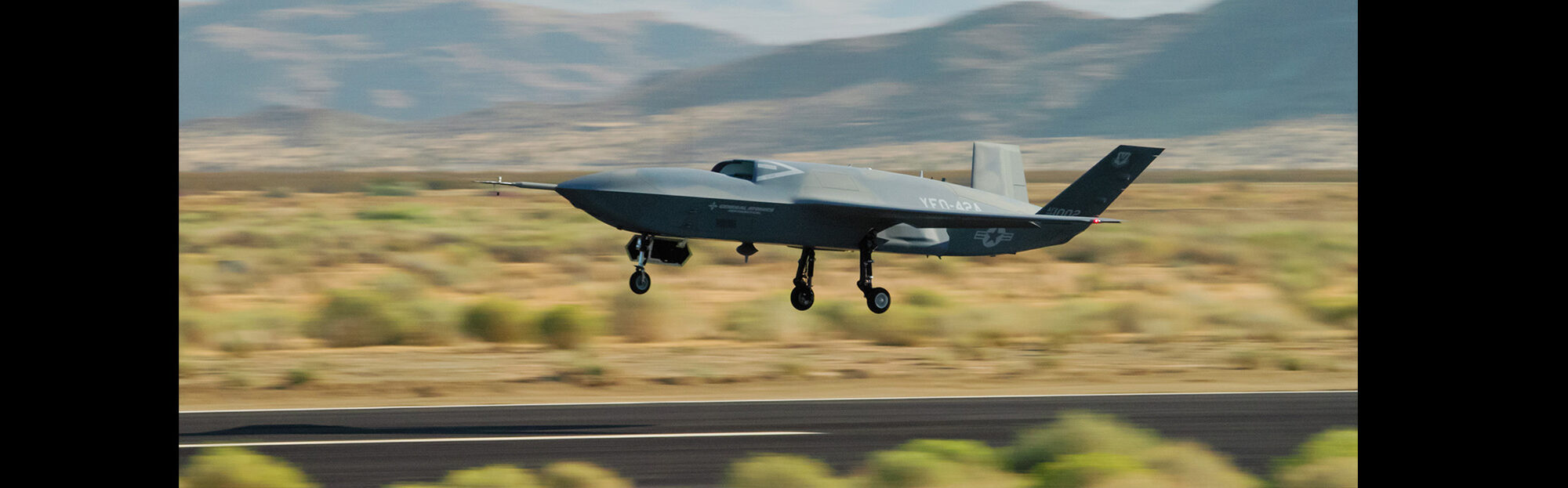
Imagining a future force of stealthy UAVs—and no manned fighters.
This article is excerpted from the book “Lethal Autonomy: The Future of Warfare, Whether We Like It or Not,” by Frank Kendall, and published by Knox Press. The article has been lightly edited for clarity and continuity and is used here with permission.
“The manned ‘fighter plane’ as we’ve understood it since World War I will ultimately become obsolete.” —Frank Kendall, 26th Secretary of the Air Force
When I became the Secretary of the Air Force in 2021, I believed we needed to consider some fundamental issues in the air domain that were not being adequately addressed.
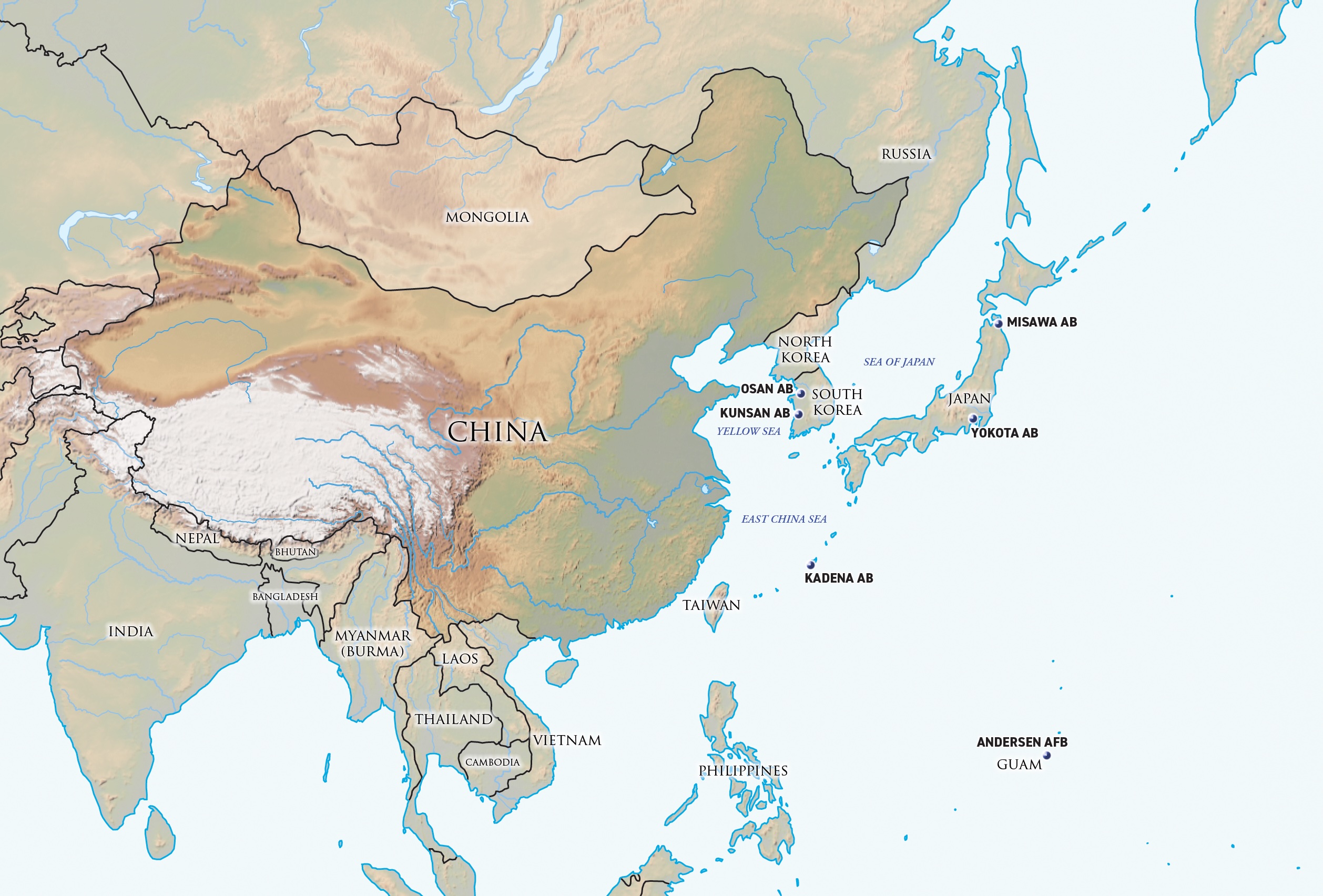
First, in the short-range air subdomain, the dependency on a small number of fixed and very targetable forward bases for conventional takeoff and landing (CTOL) tactical-range aircraft (a few hundred miles) is becoming, and may already be, untenable. This is true whether the aircraft is manned or unmanned. Fixed land air bases and aircraft carriers operating close to an opponent’s coast or border are not survivable enough against current and future threats. This is a development that has been coming for a long time; it was a major concern during the Cold War, even before the advent of long-range precision conventional ballistic and cruise missiles, to say nothing of hypersonic weapons.
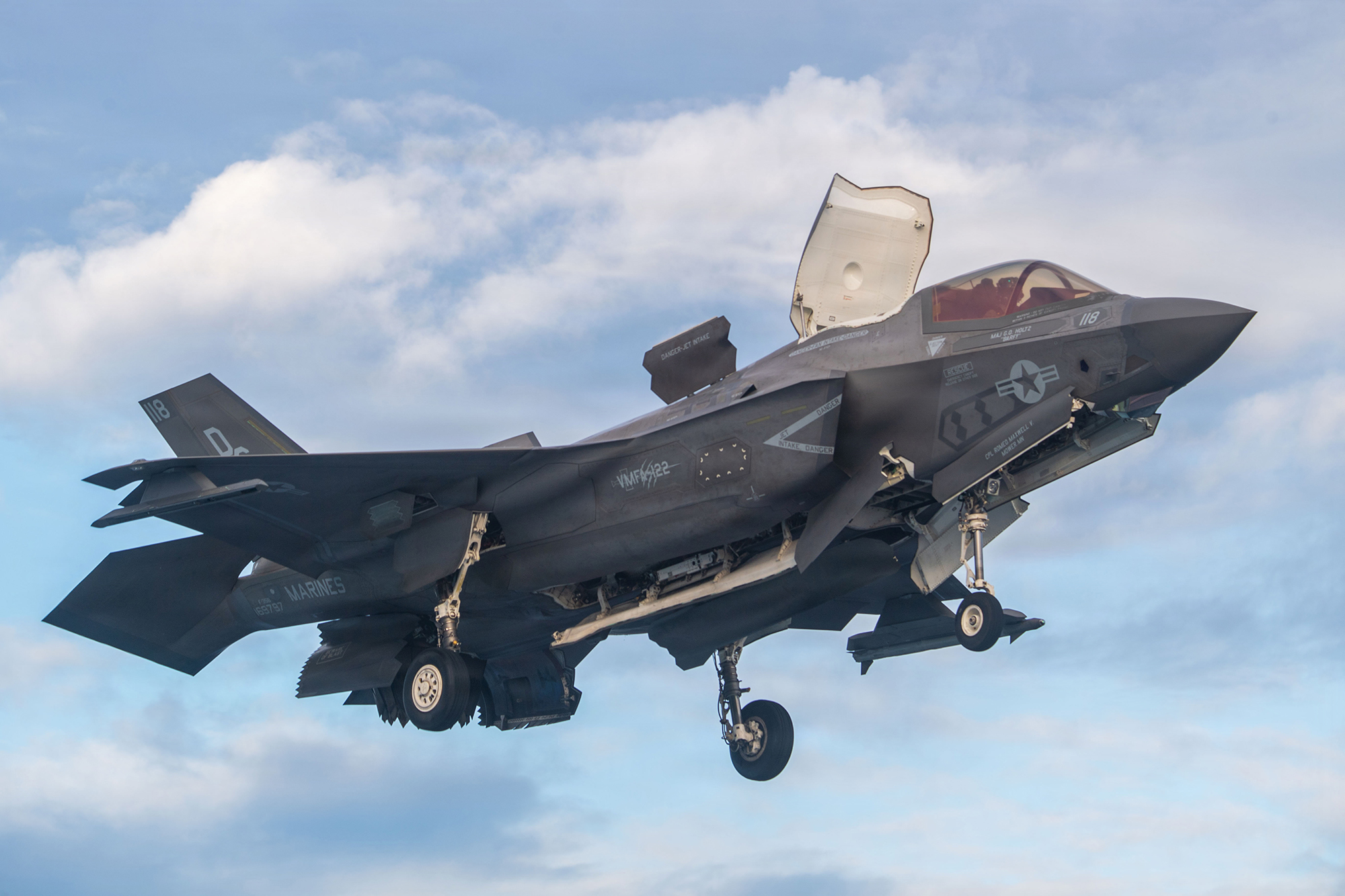
Second, the unit cost of modern tactical aircraft, for both long- and short-range air domain applications, their long production lead times, and their expected attrition rate against peer competitors, are prohibitive of the ability to afford a force that can conduct a long air campaign. In a protracted peer competitor conflict, the U.S. is likely to run out of airframes if it attempts to conduct operations over a period of weeks or months. The F-35 is a good example. I’m a big fan of the F-35; it’s a tremendous machine and a major step forward over its predecessors, but only if it can achieve high net cost-exchange ratios with very low loss rates against the threats it will face for the next few decades. That means limiting losses on the ground as well as in the air. If it can be based in a survivable way, the F-35 (with adequate investments in continuous upgrades, electronic warfare (EW); command, control, and communications (C3); and air-to-air weapons coupled with attritable UAVs) will serve the U.S. well for a long time. Unfortunately, its high cost (including sustainment cost), long acquisition lead times, and basing limitations—except for the Marines’ short takeoff/vertical landing (STOVL) F-35B model—will limit its potential to support a protracted conflict.
If these were the only challenges the U.S. already faces, it would be enough, but there’s more. China, in particular, has been working to develop capabilities that challenge the U.S. directly in the air. This includes attempts to achieve stealth, improved fire control sensors on tactical aircraft (optical and radio frequency), and especially superior air-to-air missiles of various types and ranges that in some ways exceed the performance of current U.S. weapons. This last category includes missiles intended to attack standoff nonstealthy counterair and strike support sensor and C3 systems like the Airborne Warning and Control System (AWACS) and JSTARS. Even tankers, which traditionally have been able to refuel fighters outside of the range of enemy engagement, are becoming targetable at long ranges.
Close Quarters
We don’t have time to waste as we sort out the right concepts for the next generation short- and long-range air subdomain solutions, but it is also essential we make the right decisions about the future of the air domain. The future concepts I’ll describe below can be thought of as the “force after next,” the “next” being the one I initiated as Secretary.
The choices the U.S. makes now and in the near future, including the ones I made as Secretary of the Air Force, won’t go as far as the concepts I’ll describe, but they take us partway there and make the path to that future shorter and easier. Conversely, if we make poor decisions, we will not shorten this path but increase its length and difficulty. One of my decisions as the Secretary was to develop and field at scale (meaning in significant numbers) uncrewed Collaborative Combat Aircraft (CCAs). The first increment of these uncrewed lethal platforms is well on the way to fielding in operational units.
I believe the CCAs are an important initial step in the right direction. My provocative conclusion is that the manned “fighter plane” as we’ve understood it since World War I will ultimately become obsolete. Neither the combination of speed and maneuverability as a design driver nor the emphasis on relatively close-in duels between manned aircraft appears in the concepts I’ll describe. Missile maneuverability and speed already dramatically exceed what a human is capable of, and future missile launchers or carriers can have similar characteristics—if they are not manned. Tactically required decision times, especially in engagements involving more than a very small number of opposing aircraft, will eclipse anything a human can ever accomplish. “Alone and unafraid” will not characterize aerial combat in the future. The systems carrying weapons (launchers) and the weapons (projectiles) themselves will not be alone, and inherent human capacity limitations will be an impediment, not an advantage.
In the short-range air subdomain, I see no alternative but to avoid as much as possible the long-runway dependency of current or projected crewed-aircraft conventional takeoff and landing fixed basing within range of enemy ground-launched precision missiles. Hardening, deception, rapid runway repair, and defenses (soft and hard kill), if we were willing to buy them at scale, can all improve the situation, but precision missiles will continue to make it highly problematic to operate from a small number of fixed and therefore easily targetable forward bases. Aircraft carriers can at least move back, and one can talk about using their mobility to do tactical “raids,” but sustained carrier operations within range of shore-based missiles are equally problematic. An obvious alternative is the one the Marine Corps has adopted: short takeoff and vertical landing concepts like the Harrier and F-35B. This is a current option, not a future of warfare potential, but it does point us in the direction of flexible, proliferated, and concealable basing for the forward air domain assets.
If we accept this, what should the missions be for a future tactical short-range air domain force, and how might they be accomplished?
Classically, we would talk about missions like offensive and defensive counterair, strike, interdiction, and close air support, as well as a number of supporting functions or tasks like ISR, EW, the suppression of enemy air defenses (SEAD), operational-level or above-air defense, and airspace management. What I would propose for the future is off-loading as much of these tasks as possible to other domains, especially space, and focusing the forward-based assets in the concept on efficiently delivering weapons against air and surface targets of interest, while achieving enough resilience that attrition levels are acceptable.
Integration and optimization using AI tools would also be part of a future concept but focused on enabling sound automated decisions at the operational edge at the tactical level. AI would also be used to support higher-level operational decisions and decisions for the force as a whole, where human interaction is more viable and valuable.
What I envision here for the shorter-range air subdomain is a clean-sheet-of-paper force design. A future tactical air dominance organization with the missions of providing offensive and defensive counterair and strike (including interdiction and support to ground operations and units), would consist primarily of a group of unmanned stealthy tactical aircraft with modest runway requirements serving as weapons launchers. These reusable UAVs would have the core function to operate collaboratively and autonomously in small formations of nominally squadron size (tailored to the operational mission) to deliver weapons against aimpoints or targets designated by off-board sensors. Targets directly relevant to controlling the air domain would include enemy aircraft, air bases, and air defense units.
This force would also deliver munitions against ground or sea surface and subsurface targets of interest in support of operations in other domains. ISR, including targeting for both air and ground targets, would come primarily from a combination of space, standoff air, and some ground-based sensors, but as much as possible from sensors and C3 located in space. (In the near term, a mix of air- and space-based surveillance is needed. The Air Force E-7 program, which was intended to replace AWACS, would provide that capability and offer increased resiliency and redundancy while space-based capability matures. It would also provide critical C3 and battle management capacity.)
Standoff or penetrating unmanned aircraft would provide ISR information as well. Efficiency in the concept comes from relatively inexpensive multirole unmanned weapons carrier aircraft (launchers) that can operate with acceptable attrition rates, and from the ability of resilient space-based assets to provide wide-area threat coverage and timely targeting quality information. Survivable C2 at various echelons would provide optimized weapon-target pairing and tactical cooperation among sensors, UAVs (launchers), and weapons (projectiles). Some UAVs could also be employed as decoys and threat weapon “magnets” to draw enemy engagements, thus forcing exposure, reducing threat weapon loads, and forcing premature operational and tactical commitment of threat assets. In addition to weapons, some of the tactical UAVs could carry decoys and/or countermeasures, including anti-radiation missiles, sensors, and EW modules. A key to cost-effective concepts is deciding what part of the concept is reusable and what part is expended in use. It’s the multi-sortie capacity and resilience against attrition that justify the high cost of current tactical aircraft. Uncrewed concepts can rebalance to lower-cost reusable platforms. (The very-low-cost drones that have proliferated in Ukraine are at the opposite extreme in cost and reuse.)
Once the need to try to keep every platform and pilot safe as much as possible is out of the equation, a whole new range of tactical options opens up. Operational analysis and simulations of CCAs have confirmed this. Heavy reliance on off-board sensors allows operation from greater standoff range for air-to-air weapons. Of course, adding range will raise the cost of those weapons. For the air-to-air problem in this domain, some sensing and countermeasure capability will probably be needed on the tactical weapons launcher UAVs. Passive sensors, working in bistatic and multistatic modes, would be attractive options to consider from a cost perspective. At this point, I would particularly try to solve the close-in air domain ground attack problem without relying heavily on target acquisition sensors located on the weapons delivery tactical UAV launchers. This might become necessary, but it significantly increases cost. It also means that those platforms, or a subset of them, have to operate close enough to acquire targeting quality threat data on ground targets from operational altitudes, a few tens of thousands of feet and with limited standoff ranges, implying much more challenging survivability features. This is the route to an unmanned progeny of the F-35—a penetrating multirole aircraft capable of operating independently.
If it is possible to rely on off-board space-based ISR plus a small number of penetrating, survivable, dedicated ISR platforms, this would be the preferable course of action. There is a whole new world ripe for exploration here, but the possibilities are quite different from current concepts. As the Air Force moves beyond the first increment of CCA, all these trades should be considered. (Australia is pursuing a concept that reflects my expectations and intent for CCA Increment 2—the Ghost Bat—developed with Boeing.)
Humans would be involved in C2, preferably at the equivalent of wing level, but possibly, and I think more likely, at squadron level, the numbers would be small, but multiple shifts would be required to support continuous operations. In the “next” force currently in development, crewed fighters provide tactical control of associated CCAs. Experimentation in simulators over the last few years has demonstrated that pilots in current fighters can control several CCAs simultaneously.
For reliable command and control, and because of the much better sensors they provide, I would expect teams of CCAs and crewed fighters to be the preferred configuration for the next several years at least. These C2BM cells, airborne or ground-based, would be high-value targets to an adversary, so tactics to provide resiliency and concealment would be of great importance. For the short-range air subdomain concept, I would expect these C2 cells ultimately to be ground-based, but limitations on communication networks might dictate airborne battle managers. For redundancy, some command and control might have to be airborne, but with as much standoff range as possible. For resiliency, it would be wise to have both options available in each case.
The job of command and control cells is to exercise human executive control over operations at the echelon where it becomes both necessary and practical. It can become necessary due to vaguely understood sensitive situations and to the limitations of communication networks, data integration, and force management algorithms. It can become practical where the speed needed for decision-making is relaxed enough that inserting humans is an acceptable time burden. The force concept would also include rapid refueling and rearming—also highly automated—to maximize sortie generation. Human fatigue should generally not be a factor that constrains operations.
For the shorter-range fight, forward air and missile defenses would be mobile and designed to support preferential defense of regional assets, both military and other high-value assets. Space-based and standoff airborne sensors would provide targeting and tracking data to support launch on warning or launch based on remote sensing depending on the threat. Operationally, air and missile defense systems would dynamically integrate subsets of sensors and launchers to optimally respond to an attack in real time. Ground-based launchers and sensors would be operationally mobile on short cycle times to enhance survivability. Directed energy is a possibility, but weather, threat hardening, and other factors make this questionable anytime soon against threats other than small UASs. Hardening and deception would be used extensively as would soft-kill (jamming and cyber) countermeasures for defense. I would envision at least a two-layer ground-based air defense arrangement with a higher-altitude regional or area defense coverage plus a terminal defense layer.
C3BM and airspace management would be fully integrated, and deconfliction between friendly air- and ground-based air defense would be significantly enhanced over current practice due to the elimination of concerns about human losses through fratricide. In my view, all air domain operations (offensive and defensive counterair and air defense) should be controlled by a single command using one highly automated C3BM system.
Both the short-range air dominance and the air defense concepts described should be subject to a host of design trades attempting to get the optimal mix and distribution of features across the elements of the force. These trades must include every design variable, but they will be driven primarily by cost and anticipated exchange ratios and other factors described earlier that determine operational effectiveness.
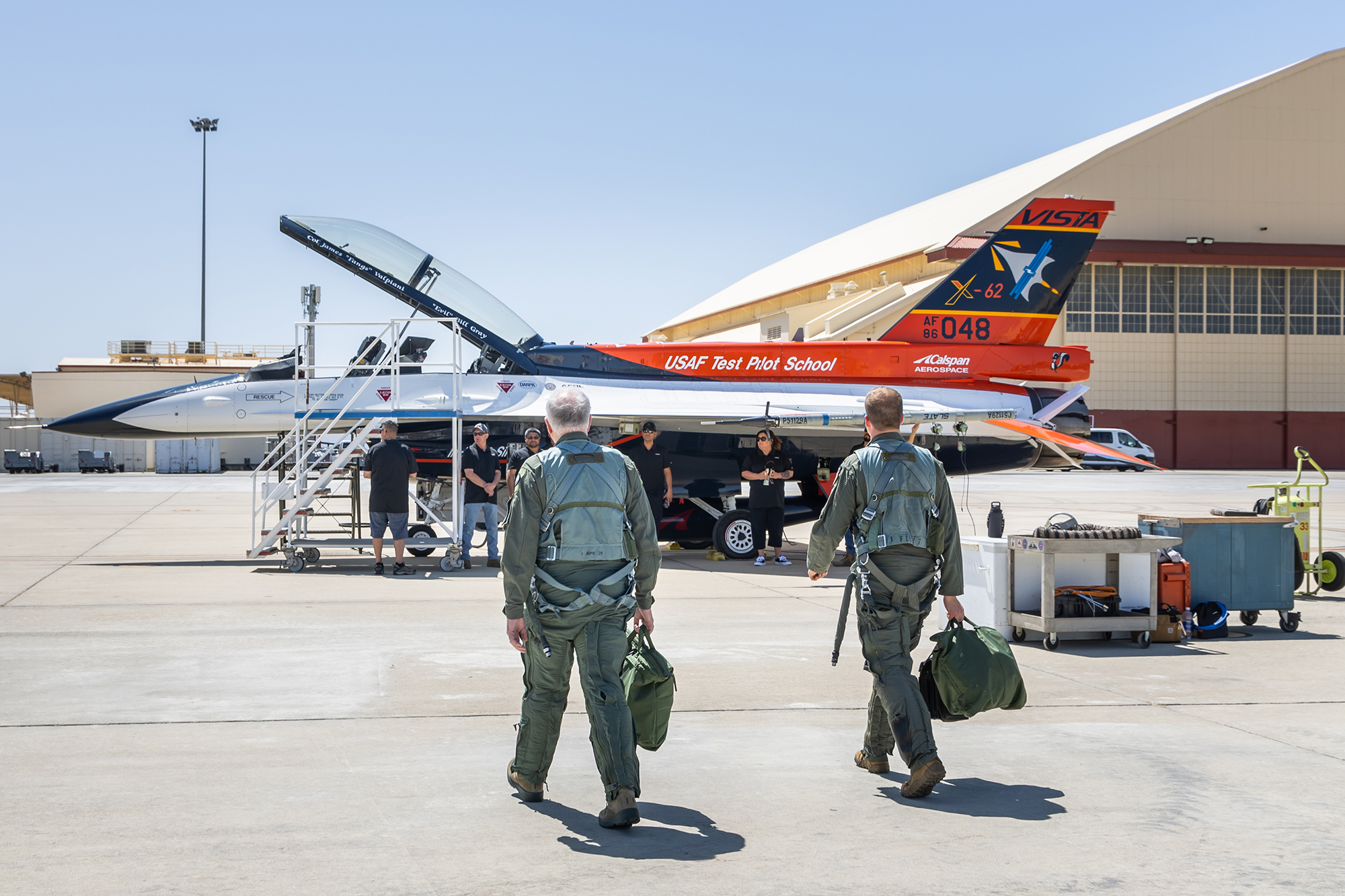
Frank Kendall was the 26th Secretary of the Air Force from 2021 to 2025. Over the preceding 40 years, he held multiple jobs in the Pentagon, including as Assistant Deputy Under Secretary for Strategic Defense Systems, Deputy Director of Defense Research and Engineering, and Under Secretary of Defense for Acquisition, Technology and Logistics.