


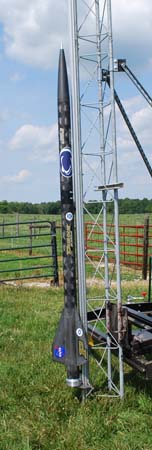
 The Air Force Office of Scientific Research and NASA joined forces earlier this month to boost a small, all-carbon-fiber, minimum-diameter rocket using an environmentally safe propellant, known as ALICE, for its aluminum powder and ice composition. The fuels team included researchers from Georgia Tech, Purdue University, and Pennsylvania University. Purdue’s Dr. Steven Son attributed the projects success to “a sustained collaborative research effort on the fundamentals of the combustion of nanoscale aluminum and water over the last few years.” He believes the ALICE propellant “can be improved with the addition of oxidizers,” making it a “potential solid rocket propellant on Earth” but also one that could be produced outside this planet, say on the Moon or Mars, “instead of being transported at a large cost.” (AFOSR report by Maria Callier)
The top Air Force commander on on the Japanese island of Okinawa has clamped down alcohol and issued a curfew for junior enlisted Airmen and Guardians at Kadena Air Base for the next month. The order came roughly two weeks after a U.S. Marine was arrested for allegedly robbing and…