


The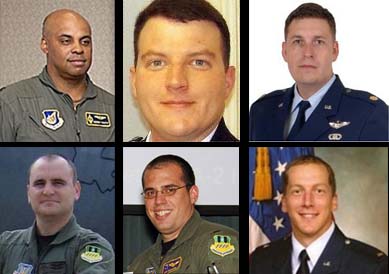 Air Force yesterday announced it had formally declared that all six airmen had died in the B-52 crash off the northwest coast of Guam on July 21. Search and rescue crews found the bodies of two airmen on July 21, and by July 23 they shifted from round-the-clock rescue operations to recovery mode. Five of the six airmen on board had deployed to Andersen AFB, Guam, from the 2nd Bomb Wing at Barksdale AFB, La. The sixth was a flight surgeon assigned to the 36th Medical Group at Andersen. The Barksdale airmen were: Maj. Christopher M. Cooper, 33, aircraft commander; Maj. Brent D. Williams, 37, navigator; Capt. Michael K. Dodson, 31, co-pilot; 1st Lt. Joshua D. Shepherd, 26, navigator; and 1st Lt. Robert D. Gerren, 32, electronic warfare officer. From Andersen was Col. George Martin, 36th MDG deputy commander. The massive rescue operations covered a 7,000-square mile area and included Air Force, Coast Guard, and Navy search teams and Guam emergency services personnel. “Losing this bomber crew has been a tragedy felt by everyone here and across the Air Force,” said Brig. Gen. Douglas Owens, 36th Wing commander, and added, “I extend our sincerest gratitude to the men and women involved with this [rescue and recovery] effort.” The 2nd Bomb Wing commander, Col. Robert Wheeler, said in a subsequent release, “We appreciate the military and civilian organizations who are continuing recovery efforts to bring our airmen home.”
The Pentagon has concluded a new agreement to buy laser-guidance kits that turn rockets into drone-killing weapons. BAE Systems and the Defense Department announced a framework deal of up to seven years for 25,000 Advanced Precision Kill Weapon System guidance kits annually for the U.S. military.