


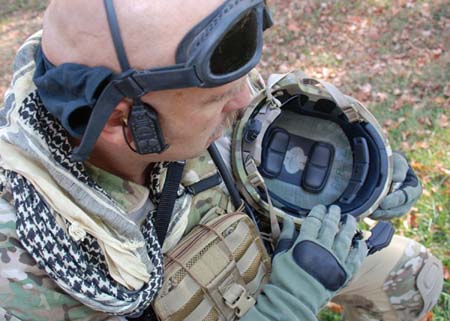
 Pararescuemen and medics will be able to determine a soldier’s health status on the battlefield remotely with two small-sized devices that QinetiQ North America has developed in coordination with the Air Force Research Lab’s human effectiveness directorate at Wright-Patterson AFB, Ohio. The Battlefield Automatic Life Status Monitor, or BALSM, consists of two sensors: a wireless unit that measures the amount of oxygen in the blood and estimates heart rate and respiration; and a wireless capsule that, when ingested, measures core body temperature. “The key was to make monitoring devices that were small enough, rugged enough, and able to perform remotely,” said Dianne Popik, AFRL’s program manager. The external sensor is worn against the forehead as part of a headband or integrated into a helmet. Both devices transmit information to computers that the pararescuemen and medics carry. (Wright-Patterson report by Elizabeth Long)
The top Air Force commander on on the Japanese island of Okinawa has clamped down alcohol and issued a curfew for junior enlisted Airmen and Guardians at Kadena Air Base for the next month. The order came roughly two weeks after a U.S. Marine was arrested for allegedly robbing and…