
T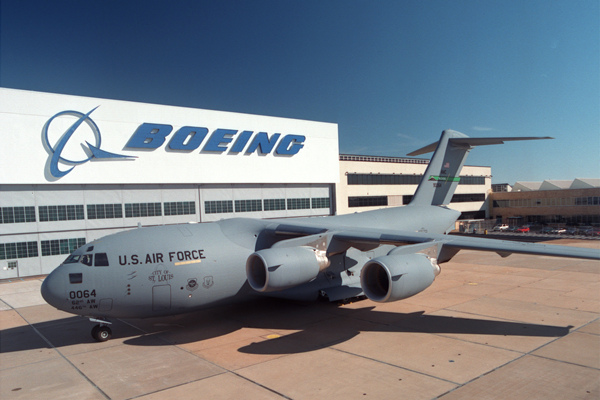 hree Senators are questioning whether the Air Force has “induced” Boeing into “assuming the business risks” of keeping its Long Beach, Calif., C-17 production line open beyond mid-2009 “until new Air Force orders materialize.” Two of the Senators—Tom Carper (D-Del.) and Ted Kennedy (D-Mass.) are staunch supporters of the C-5 airlifter. The third—John McCain (R-Ariz.)—is a frequent Air Force (and Boeing) critic. On Tuesday, the three released a letter they sent July 20 to Defense Secretary Robert Gates, in which they request copies of all communications from anyone in DOD or the Air Force with Boeing about an “Air Force request for 30 more aircraft.” Air Force officials have told Congress that they would prefer to retire the 30 worst aircraft in the C-5 fleet and purchase new C-17s in their place. The Senatorial trio notes that USAF has not yet formally requested funding for the additional C-17s and says the service told them that it would not do so in the 2009 budget request. So far, of course, Congress has prevented USAF from retiring any C-5s, but the service appeared to have gotten increased support for its position during budget hearings this spring. More recently Senators seem inclined to interject a pause in the C-5 vs. C-17 debate for DOD to deliver a new independent review of strategic airlift needs.
All 12 American bombers deployed in Britain rapidly returned to the U.S. on Oct. 4 following security concerns about a potential Iranian threat to their base in the U.K.