
When in Rome: 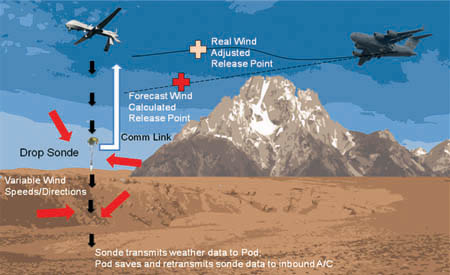 Air Force Research Lab engineers in Rome, N.Y., have devised a method called Single Pass Airdrop, or SPAiD, that allows cargo airplanes to conduct high-altitude airdrops in one pass. The current airdrop process requires platforms like the C-130 and C-17 to make two passes over the intended drop zone before releasing their loads, thereby putting the aircraft at greater risk to anti-aircraft threats, according to AFRL officials. SPAiD, conceived in response to an Air Forces Central urgent operational need, entails using an MQ-1 Predator remotely piloted aircraft to release a sonde that measures wind speeds and direction and transmits that information to the crews in the transport airplanes so that they can accurately deliver their cargo. AFRL engineers already have conducted a test to gauge the sonde’s form, fit, and function on a Predator’s Hellfire missile rail, said the officials. A final flight test and operational demonstration is tentatively scheduled for late 2012, they said. (Rome report by Brent Holmes)
B-52 Stratofortress bombers marked a new first in Operation Epic Fury when some of the BUFFs flew over Iran carrying JDAM-guided gravity bombs, according to people familiar with the matter. The development signals a weakening of Iranian air defenses and a new use for the venerable bomber in the nearly…