
Editor’s Note: This is the latest article in an occasional series exploring how Space Force infrastructure, policies, and processes are adapting to keep pace with the rapid growth in the rocket launch industry. Part 1, on the rise of reusable rockets, is available here. Part 2, on Cape Canaveral Space Force Station in Florida, is available here.
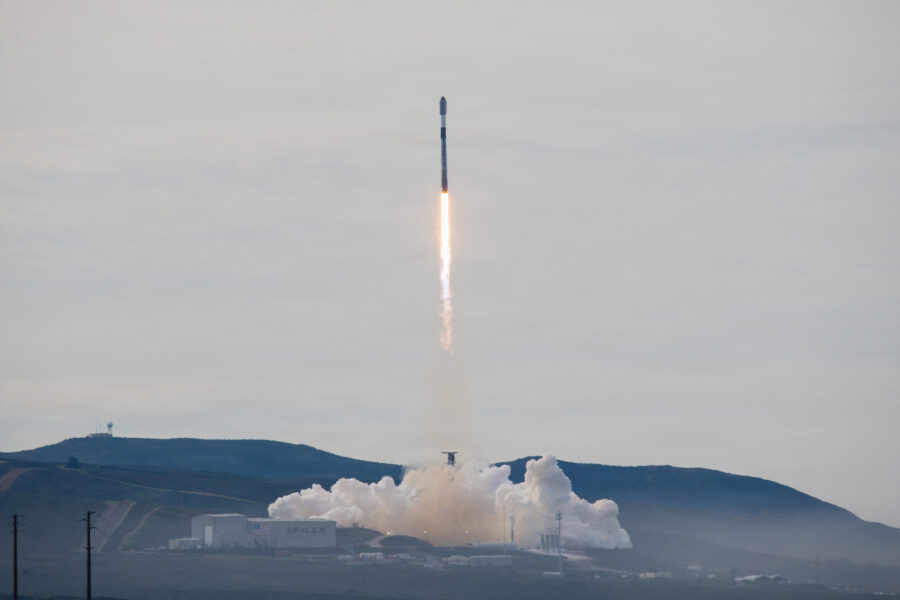
In the last five years, the annual launch rate at the Space Force’s West Coast range has surged from a handful of missions to 66 in 2025. Now, Vandenberg Space Force Base in California expects to support 150 launches in the next five years and upwards of 200 by 2036.
Navigating that kind of growth and planning for even more in the future has Col. James Horne, commander of Space Launch Delta 30 at Vandenberg, feeling a bit like he’s running a small business that’s on the rise.
“The way we executed launch operations in the past and how we do it today are so different,” he told Air & Space Forces Magazine in a recent interview. “Think of it like a startup scaling operations. We’ve changed the way we operate to get more efficient and to unleash our capacity. ”
The Space Force in recent years has been making initial investments to enable that growth, modernizing the infrastructure, architecture, operations, and business practices at its major ranges, as well as the policies that govern them. In 2018, it crafted a “Spaceport of the Future” strategy, which has guided a concerted effort to overhaul its ranges, and in fiscal 2024, Congress allocated $1.3 billion through fiscal 2028 to support the effort. Lawmakers have also passed policy changes that allow the service to collect more fees from the companies that use its facilities and reinvest them in infrastructure improvement projects.
The resources and strategic vision from the first phase of Spaceport of the Future have helped overhaul range operations, Horne said. But now, the service is planning for another phase of transformation to make sure Vandenberg and its East Coast range at Cape Canaveral, Fla., can handle the capacity to come. That campaign, Spaceport 2036, will lay out the service’s modernization needs over the next 10 years.
Expanding Access
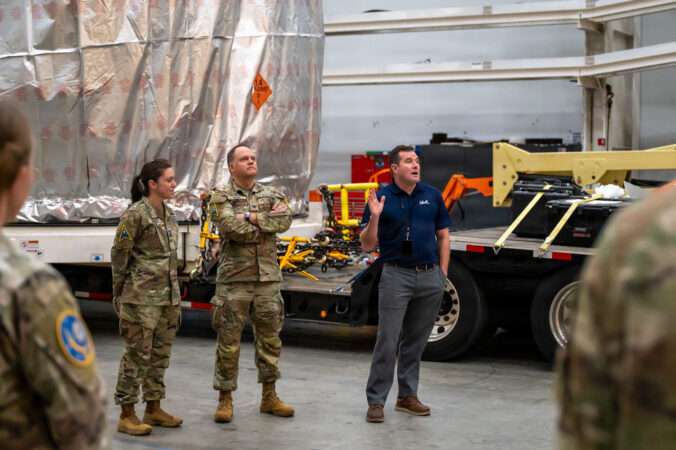
At Vandenberg, the initial infrastructure phase has focused on replacing and upgrading the base’s 1960s-era roads, bridges, and commodities to manage the growth happening now and the additional demand that it sees coming over the next decade. Horne said the base has a number of projects underway to address the wear and tear on its roads from the trucks used to carry commodities to launch pads. Today, it takes about 70 commercial trucks to supply the necessary propellants, liquid oxygen, and other resources needed for a single launch.
Another major project was upgrading the base’s electrical grid. The range’s location on the California coast makes it susceptible to both corrosion and wildfires, so the project focused on putting in fireproof electrical poles and bringing the grid up to modern standards. The range is also modernizing its communications network—replacing copper cables with fiber optic lines.
Looking ahead, Horne said the next phases of infrastructure funding will focus on expanding access to the range in a few ways. One area that needs attention is the base’s harbor, which companies rely on to transport rockets and recovered boosters. Today, choppy waters and surf mean the base’s harbor is only accessible about 30 percent of the time, Horne said. A deeper, more modern harbor with a sea wall would protect those transport routes and allow for more shipments.
“We’re trying to increase accessible days per year in the harbor and create more of a modern harbor like you see in Long Beach or LA where you have a sea wall that protects you from surf so the waters are calmer,” he said.
The base is also trying to make room for more launch companies, which requires developing land in the southern area of the range and making sure new pads have access to things like water and power. Horne estimated the range has room for between four and seven new pads and is in the process of filling those spots.
Two complexes are under active construction: Space Launch Complex-3, which United Launch Alliance is converting to host its new Vulcan rocket; and SLC-6, which will host SpaceX’s Falcon 9 and Falcon Heavy. In December, Vandenberg announced plans to lease land for a new launch complex, SLC-14, that could support super heavy rockets like SpaceX’s Starship, and Horne said an announcement is coming soon on that effort.
“So we’re already starting with planning, and then in the next couple of years, execution of those activities to build the roads and the commodities and everything that needs to get out to the pad,” Horne said. “And then you’ll see construction starting to pick up in the next three to five years for an operational capability in the 2030 timeframe for SLC-14.”
A fourth pad at SLC-9 could also come online in the next few years, Horne said, and the base has an agreement with an unnamed company for a fifth pad at SLC-5.
“There are a couple of other properties that we could open up after the ones I just mentioned, if there’s interest from industry, and there are companies that want to build here in various other locations,” he said. “Beyond that, we’d be pretty limited.”
Along with these infrastructure projects—some of which have been funded by the Spaceport of the Future effort and others of which came through broader Air Force installation support funding—Space Launch Delta 30 has also been using technology to make its processes more efficient. In 2024, Vandenberg’s Digital Transformation Office established the Crucible Innovation Lab to prototype new capabilities.
The range has used the lab to develop a digital model that it can use to run various mission scenarios and get feedback on potential chokepoints and opportunities to make a process more efficient.
“That allows us to focus our Spaceport of the Future efforts, whether it be infrastructure investment in the harbor, which is one of the bottlenecks or in payload processing, which is another bottleneck,” Horne said. “It’s showing us the areas we need to invest in.”
Beyond Launch
The growth at Vandenberg isn’t just limited to its space launch range. The base hosts 54 tenant units, or “strategic partners” as Horne calls them. Those include Space Forces-Space—the service’s component to U.S. Space Command—the 18th Space Defense Squadron, and Space Delta 1, a Space Force training unit.
The base also has units from NASA, Air Force Global Strike Command, the Missile Defense Agency, and was recently designated as a homeland defense alert base for U.S. Northern Command, which means more activity is coming. The range has also seen an uptick in demand for test support for missions like hypersonic systems and the Air Force’s Sentinel intercontinental ballistic missile, which will begin operational testing next year.
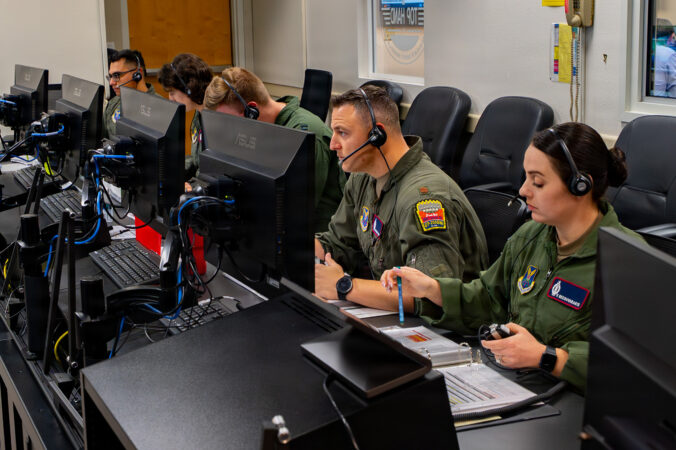
Horne said Vandenberg expects the number of personnel on base to double over the next five years from around 10,000 to 20,000. Many of the infrastructure upgrades in the works through Spaceport of the Future will help manage that growth, he said, but Vandenberg is also working with the Air Force—which provides base support to the Space Force—to make sure it has the resources to make room for more personnel and mission sets.
“It’s going to require quite a bit of investment and facilities beyond just the launch piece to support those mission partners, like dorm rooms for students and office space for new missions like Sentinel,” he said. “And we’re seeing that happen.”
Scaling Challenges
As with any startup trying to ramp up capacity, Horne said Vandenberg has had its share of challenges, particularly as the base tries to mitigate its impact on the environment and on surrounding communities.
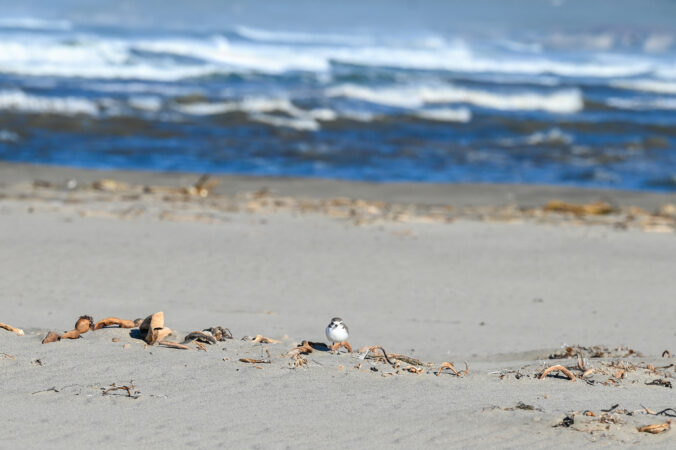
Environmental consideration is top of mind at most U.S. spaceports, which typically operate in coastal areas. Horne said Vandenberg has a team of about 40 environmental experts that help the base manage its impact on the central California coastline, a uniquely biodiverse region. The base itself has 470 miles of streams, 9,100 acres of sand dunes, and 7,800 acres of wetlands. It also has a “thriving population” of marine mammals, Horne said, and even hosts an endangered species, a bird called the snowy plover.
The base is also home to a number of historical heritage sites for indigenous communities, including the Chumash, a Native American tribe that spans California’s southern and central coast.
“This was their traditional living area on the coast, so we partner very closely with them to protect those natural resources and historical resources as well,” Horne said. “It’s not necessarily a challenge, but just one of those things that we have to pay very careful attention to and impacts how we think about things and make decisions.”
Another variable Horne’s unit has had to contend with is the increase in sonic booms generated by launches at the range. As Vandenberg broadens the types of missions it supports to include more commercial launches, it has had to use launch trajectories that fly closer to land, which means nearby communities can hear the sonic booms created by those launch vehicles.
Two years ago, the base announced a partnership with Brigham Young University and California State University Bakersfield called ECOBOOM to study sonic booms and how to reduce their impact on local populations. As a result of that work, Vandenberg has implemented new policies, like minimizing its nighttime launches.
“There are certain times that you have to launch in a certain window to get where you need to in orbit. You just can’t avoid it—it’s just the physics of the orbit,” Horne said. “But if we can choose to launch those in the daytime, we do now, so that if there is a sonic boom, it’s not interrupting folks’ sleep and things like that. And we’re looking at other ways to minimize our impacts to the community.”