


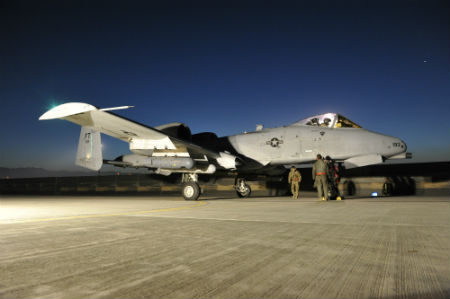
 If Congress prohibits the Air Force from divesting its fleet of A-10s, other cuts will have to be made in the bomber force as well as further F-16 retirements, a senior Air Staff official said. The Air Force will see a net savings of some $4.2 billion across the next five fiscal years by divesting the entire A-10 fleet, said Maj. Gen. James Jones, assistant deputy chief of staff for operations, plans, and requirements. “If we were to try and get that same level of savings, we looked at a number of things,” such as the divestment of the entire B-1B fleet, or cutting another 350 F-16s from the force structure, he told reporters at the Pentagon Tuesday. Because the A-10 retirement takes the depot and sustainment infrastructure along with the retirement of the aircraft, in order to get the same savings from other platforms, larger cuts would have to be made. If Congress prevents divestment, and does not provide more funds (known as ‘total obligational authority’ in budget-speak), the service will have to “go back and evaluate what the options are,” Jones added. If no changes to TOA are made and the retirements are rejected, USAF will have no other choice but to take funds out of operations and maintenance. “There will be an impact on readiness,” he said.
Audio of this article is brought to you by the Air & Space Forces Association, honoring and supporting our Airmen, Guardians, and their families. Find out more at afa.orgKearfott, a 108-year-old company, is seeing renewed demand for its inertial navigation...
