
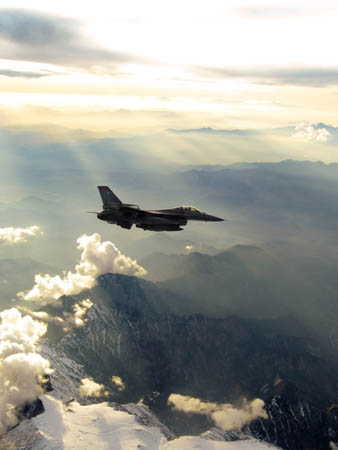
 Air Force strike aircraft dropped more than 9,000-pounds of munitions through solid cloud cover to stave off an intense assault on a US combat outpost in Paktika province, Afghanistan, last week. According to reports, F-15E Strike Eagles from the 335th Expeditionary Fighter Squadron and F-16s with the 121st EFS killed up to 70 Taliban fighters while preventing a single coalition casualty during the battle, Nov. 8. “I requested the Dudes and Vipers because I needed a lot of ordnance and fast,” said SSgt. Seth Pena, the joint terminal attack controller with the 817th Expeditionary Air Support Operations Squadron, who called in the strikes. “RPGs had already hit inside [COP Margah] and things were getting serious. There was a large enemy force moving towards us from multiple positions and we were taking a heavy amount of small arms fire.” The severe weather prevented the aircraft from using targeting pods and flying below the cloud deck, so Pena relayed coordinates from the outpost. “There was a lot of coordination and confirmation that happened in a short amount of time before we dropped and everything worked out well,” said Maj. Todd Dyer, 335th EFS F-15E pilot. (Bagram report by SSgt. John Wright)
Celebrating 100 Years of Liquid-Fueled Rockets
March 11, 2026
March 16, 2026, marks 100 years since Dr. Robert H. Goddard launched the world’s first liquid-fueled rocket. Over the past century, new and ever more capable liquid-fueled rockets have literally propelled humanity into space. Why liquid-fueled rockets?