
The 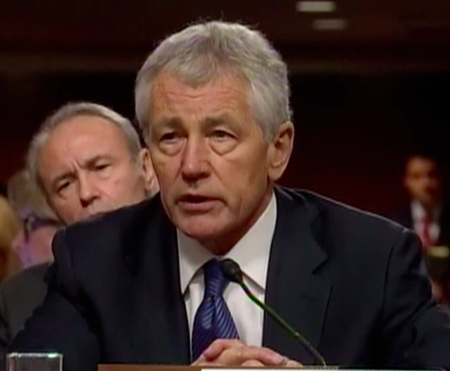 Senate on Tuesday confirmed former Sen. Chuck Hagel to be the next Defense Secretary, ending a nearly two-month, contentious approval process that saw most Senate Republicans oppose Hagel as President Obama’s pick to succeed Leon Panetta. Hagel’s swearing-in is planned for Wednesday, according to a Pentagon release. “I will be counting on Chuck’s judgment and counsel as we end the war in Afghanistan, bring our troops home, stay ready to meet the threats of our time, and keep our military the finest fighting force in the world,” said Obama in a statement on Feb. 26 following the vote. The Senate approved Hagel’s nomination by a vote of 58 to 41. Joining the chamber’s Democrats and Independents in favor of the nomination were just four Republicans: Sen. Thad Cochran (Miss.), Sen. Mike Johanns (Neb.), Sen. Rand Paul (Ky.), and Sen. Richard Shelby (Ala.). Sen. Frank Lautenberg (D-N.J.) did not vote. The confirmation vote came several hours after a cloture motion passed by a margin of 71 to 27, ending debate on the nomination and clearing the way for the final vote. Pentagon Press Secretary George Little told reporters on Tuesday that Hagel “has spent a great deal of time over several weeks getting briefed up on the work ahead.” (Includes AFPS report by Jim Garamone) (Little transcript)
CCA’s AI Pilots Step into the Spotlight
March 9, 2026
Just one year ago, Collaborative Combat Aircraft took center stage as then-Chief of Staff Gen. David W. Allvin designated the two competing jets prototypes as the first unmanned fighters in Air Force history: General Atomics’ YFQ-42A and Anduril Industries’ YFQ-44A. Twelve months later, it’s the autonomy software that’s flying those aircraft garnering the attention. Autonomy software, more than hardware, may prove the most valuable and enduring element of the CCA program.