
The year-long p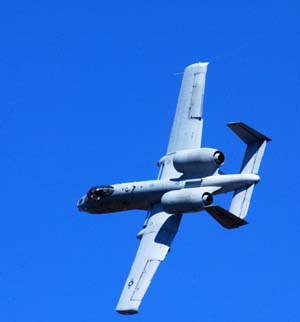 lanning that went into the just-concluded Hawgsmoke 2008, the biennial A-10 bombing and gunnery competition, included a provision for civilian spectators—news media and community leaders—to view the weapons portion of the event from a hilltop at the Kansas Air National Guard’s 34,000-acre range near Salina. The competition, though downsized by the recent A-10 standdown order, offered the spectators a short-course in A-10 dynamics. Bank executive Rob Exline said: “The noise intrigues me more than anything. I can’t imagine being on the receiving end. … It has absolutely lived up to my expectations.” Competing in this year’s event were airmen from 14 active-duty, ANG, and Air Force Reserve Command squadrons, who utilized 30 A-10s provided by the Air Guard and Reserve units. AFRC’s 303rd Fighter Squadron at Whiteman AFB, Mo., hosted the 2008 competition after winning the 2006 Hawgsmoke. (Competition reports from MSgt. Bill Huntington Oct. 15 report and Oct. 14 report and SSgt. Kent Kagarise report)
The Air Force has finished modifying and testing the new VC-25B Bridge aircraft that will serve as a temporary Air Force One, the service announced May 1. All that’s left now is to finish painting the jet before it starts flying this summer.