
Recent reports suggest there is a divide between operations and acquisition in the U.S. Space Force, potentially undermining future combat capabilities. The reality, however, is quite the opposite.
The Space Force is advancing the integration of operations and acquisition specialties far beyond those of any other service. Claims that the Space Force is divided or somehow failing to promote acquisition specialists into leadership roles ignore progress made in the past six years. Worse, undue focus on the wrong issues could overshadow real challenges facing space acquisition today, where losses in the civilian acquisition work force and lapsing authorities pose very serious challenges for the service.
The fact is, half of all Space Force officers are acquisition specialists, more than any other service. And two-thirds of USSF leadership positions are occupied by officers with acquisition experience.
No other service comes close. Only 4 percent of Army officers, 10 percent of Air Force officers, and 15 percent of Navy officers have acquisition expertise.
The unique nature of space systems, where up to 70 percent of life cycle costs are expended before launch and almost every mission function is underpinned by advanced technology, drive home the importance of system development and acquisition expertise.
The Space Force is applying the proven practice of giving acquisition professionals a foundation of operational experience. The Space Force’s new Officer Training Course establishes a common baseline for all officers, fostering a unifying culture before sending new officers to their first operational assignments, regardless of career field. As a result, future acquisition officers in the Space Force will all have operational experience early in their careers. This approach is similar to the proven practice in the Navy and Army where officers transfer to acquisition specialties mid-career. Even in the Air Force, there is a long history of employing an operations experience assignment early in the careers of acquisition personnel.
Another Space Force initiative focuses on the value of tightly coupling operations and acquisition. The Space Force’s new integrated mission deltas, or IMDs, consolidate responsibilities for operations and sustainment in one organization, pairing core operators and acquirers to seamlessly execute the authorities and responsibilities necessary to ensure combat readiness. IMDs and the newly established systems deltas are intended to align acquisition and operations within mission areas, deepening expertise in core areas. This is a significant leap forward from what space professionals experienced before the Space Force was formed.
Calls for the Space Force to have more acquisition representation at the highest levels ignore the unprecedented times we are now witnessing. Gen. Michael Guetlein, a career space acquirer, prematurely left his position as Vice Chief of Space Operations to lead the Golden Dome for America effort. That sudden change disrupted a pattern where the first two VCSOs were acquirers—like Guetlein, Gen. David “DT” Thompson, the first vice chief, was also an acquisition expert—while today’s vice, Gen. Shawn Bratton, is a career operator. But that should not be taken as a sign that operators are ascendent while others are not.
Indeed, the Space Force’s openness to filling senior roles with officers of varying backgrounds is clear: at both Combat Forces Command and U.S. Space Forces-Space, two key operational commands, the current commanders are, respectively, Lt. Gen. Gregory Gagnon, a career intelligence officer, and Lt. Gen. Dennis Bythewood, a career space acquirer. Given their senior roles, both will be in the running for potential fourth stars, suggesting the very real possibility that future Chiefs of Space Operations can have any kind of space background.
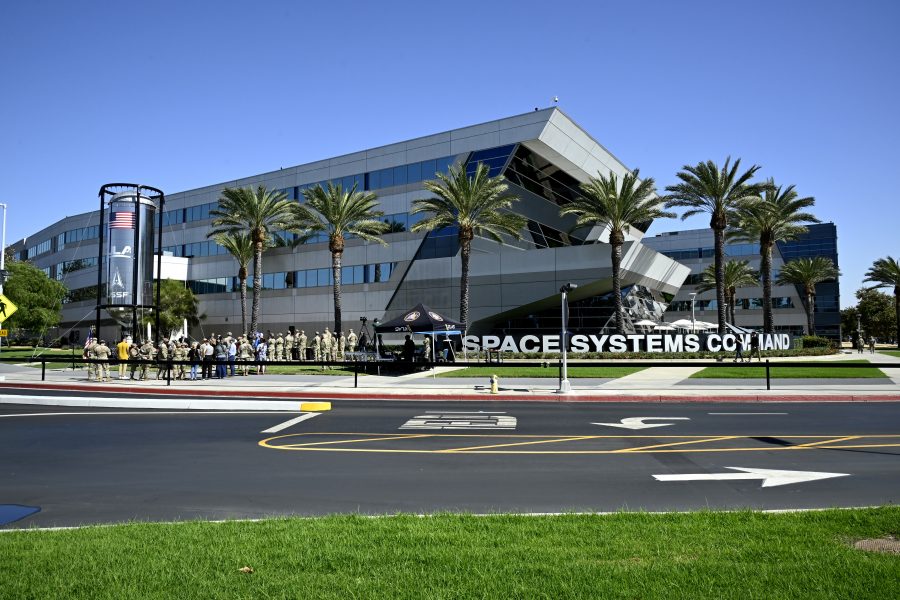
None of this is to say that there aren’t challenges in Space Force acquisition. While Secretary of Defense Pete Hegseth recently stated the acquisition workforce is “Obi-Wan Kenobi; you are our only hope,” the unfortunate fact is that, like Obi-Wan Kenobi and the Jedi in the original 1977 classic Star Wars film, the numbers of civilian space acquisition professionals are dwindling. Reductions in force, effected in the name of “government efficiency,” cost the Space Force 14 percent of its civilian workforce. The losses were even greater at Space Systems Command, where estimates rise to 20 percent across the command and even 30 percent among critical contracting personnel.
Those losses must be replenished. Congress should authorize the Space Force to hire—and rehire—the civilian acquisition professionals needed to execute contracts, run programs, and oversee systems development and delivery. Today’s Space Force needs more, not fewer, acquisition civilians.
Another problem is the recent lapse of authorities used to run the Small Business Innovative Research and Small Business Technology Transfer Research programs, often called SBIR/STTR. Congress allowed these authorities to expire at the end of September, and Senior Space Force acquisition leaders have voiced concern about the lapses since then. SBIR and STTR are valuable tools to accelerate and advance new technology and innovative solutions. Over the past six years, the Space Force has effectively used SBIR/STTR contracts to develop new product lines and expand the space industrial base—both critical to its acquisition transformation strategy. Congress should reauthorize both programs.
Mandating arbitrary quotas for senior positions or making other knee-jerk changes in direction won’t help Space Force acquisition. Restoring lost civilian acquisition professionals and critical contracting authorities will. These actions can help Space Force leaders better organize, train, and equip Guardians to achieve space superiority.
At just six years old, the Space Force has already made significant progress in adapting its policies and pipelines to more rapidly and effectively meet operational needs. Clearly, the Space Force will continue to evolve. But rather than imposing preconceived solutions, Congress should focus on defining end-goal results and empower Space Force leaders to achieve the desired effects. It’s time for Congress to give the Space Force the hiring and contracting authorities it needs to accelerate advancement even more.
Col. Charles Galbreath (USSF, Ret.), is Director of the Mitchell Institute’s Spacepower Advantage Center of Excellence. He was a Senior Materiel Leader for space systems in the Air Force and concluded his military career as the Space Force’s Deputy Chief Technology and Innovation Officer.