
Although 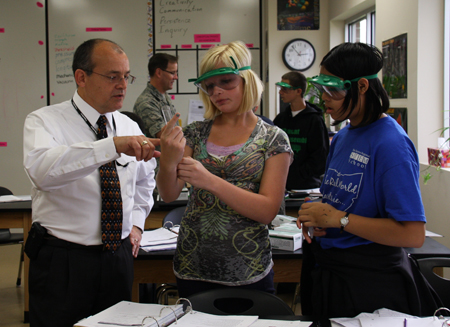 military leaders and industry executives continually stress the acute need for US students well steeped in science, technology, engineering, and mathematics so that the United States can meet tomorrow’s daunting national security challenges, there is hope out there, said Zachary Lemnios, assistant secretary of defense for research and engineering. “It’s not all doom and gloom,” Lemnios told members of the Senate Armed Services Committee’s emerging threats panel Tuesday. He said this summer more than 400 young Americans will enter the Defense Department’s laboratories through a program under which “first-rate undergraduate students” offer a year of service for every year that they receive a STEM scholarship. “It couples us with rising stars in their freshmen and sophomore years and, in many cases, we hire those folks,” said Lemnios. He also noted that the labs are producing “just shy” of 600 patents per year, or slightly less than two patents per day. “That’s on par with the best in class of companies around the world,” he said. “The numbers I’m seeing give me a sense that . . . we are not in second place.” (Lemnois’ prepared testimony)
Space Force leaders are looking at allowing Guardians stay at the same base longer than the standard three-year tour.