
With 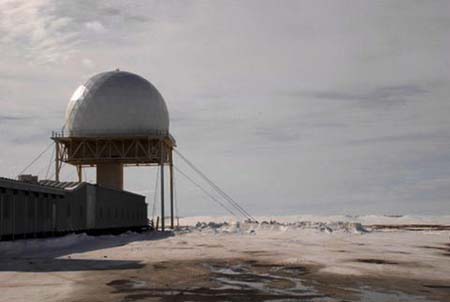 Arctic sea lanes becoming increasingly navigable to commercial and military traffic alike, US and Canadian cooperation through NORAD is growing in importance, said Canada’s Chief of Air Staff Lt. Gen. André Deschamps. “Awareness of sovereignty in the Arctic is certainly high in our government and they have great faith in NORAD,” he told the Daily Report in an interview. Established between the US and Canada in 1958, NORAD remains “the primary tool for that bi-national defense,” said Deschamps. He continued, “As we see things trending right now, I see that growing and not diminishing.” For example, he highlighted the recent addition of “maritime awareness,” to NORAD’s continuing mandate. “The next horizon for NORAD,” he said, “is to look at DEW line replacement in the next decade,” given that today’s Distant Early Warning network of radars—now dubbed the North Warning System—dates to the 1980s. “There are different options,” including any combination of satellites and high-altitude aerostats, combined with the current ground-based radar chain, explained Deschamps. He warned that although the notional timeline for fielding the replacement may “seem like a far horizon, . . . for this kind of change in technology, it’s almost tomorrow.”
U.S. Northern Command plans to sign an agreement with its European and Pacific counterparts to enhance coordination and close security seams in the Arctic, a strategically vital region that spans all three commands. The agreement comes at an important moment in NORTHCOM's evolution, as its mission grows more complex.
