
The 2026 National Defense Strategy, released in January, took a markedly different approach from the 2018 version produced by the President Donald Trump’s first administration. But don’t expect a similar overhaul in a new Nuclear Posture Review—the Pentagon has no plans to produce one.
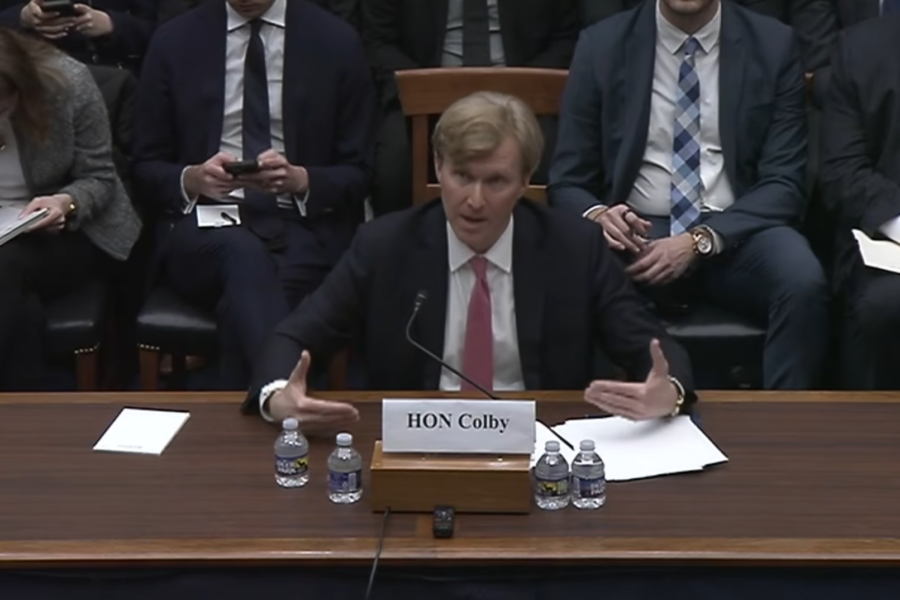
Undersecretary of Defense for Policy Elbridge Colby told the Senate Armed Services Committee March 3 that his team will not conduct a formal review of nuclear policy, arguing that the first Trump administration’s 2018 review is sufficient.
“I don’t think we plan to do a kind of formal nuclear posture review,” Colby told lawmakers. “I think the declaratory policy and so forth from the first Trump term was very good.”
The 2018 Nuclear Posture Review stated that the U.S. “would only consider the employment of nuclear weapons in extreme circumstances to defend the vital interests of the United States, its allies, and partners.” Such extreme circumstances could include “significant non-nuclear strategic attacks,” it added—notably not defining nuclear weapons’ “sole purpose” as deterring nuclear conflict. The policy also leaves open the potential for the U.S. to make a nuclear first strike in the event of conflict—a choice that embraces strategic ambiguity.
By contrast, the Biden administation’s 2022 Nuclear Posture Review had a “goal of moving toward a sole purpose declaration” for nuclear forces.
The Trump administration’s 2018 policy otherwise is consistent with the last administration, with a focus on modernizing the B-21 bomber, the Long-Range Standoff Weapon, and the Minuteman III replacement now dubbed the Sentinel intercontinental ballistic missile, along with the nation’s nuclear command, control, and communications system. All those programs are now on track.
The 2026 National Defense Strategy also promises to “modernize and adapt our nuclear forces,” and Colby reiterated that position March 3: “Rest assured, nuclear forces are at the top of our priority list.”
What has changed is the strategic environment. China has grown its nuclear forces and now possesses its own nuclear triad. And the New START agreement that limited the Russian and U.S. nuclear programs expired at the beginning of February. This does require some level of revision, Colby said in a second hearing, March 5, before the House Armed Services Committee.
“We’re actually thinking about a nuclear strategy,” he told lawmakers. “… We are going to focus in on a few problems that I can’t get into in open setting.”
New START was one of the last remaining nuclear arms control treaties in effect, capping the number of warheads on ICBMs and the number of nuclear-capable bombers in each nation. China’s maturing nuclear capabilities adds more complexity.
It remains unclear whether the Trump administration will add warheads or equip more bombers to carry nuclear arms. The 2018 Nuclear Posture Review stated the administration is “prepared to consider arms control opportunities” provided the agreement ensures compliance, predictability, and transparency. It also said the administration would be “receptive to future arms control negotiations if conditions permit and the potential outcome improves the security of the United States, its allies, and partners.”
The 2018 posture document acknowledged China’s growing nuclear arsenal, which has only grown stronger since. The 2026 National Defense Strategy does not mention China’s nuclear forces, but does state that the U.S. will seek to deter China from conflict through strength rather than “confrontation.” The administration will focus on “strategic stability and on deconfliction and de-escalation,” with regard to China, the strategy states.
The 2018 nuclear posture review, meanwhile, call for the U.S. to “seek a meaningful dialogue with China on our respective nuclear policies, doctrine, and capabilities in pursuit of a peaceful security environment and stable relations.”