
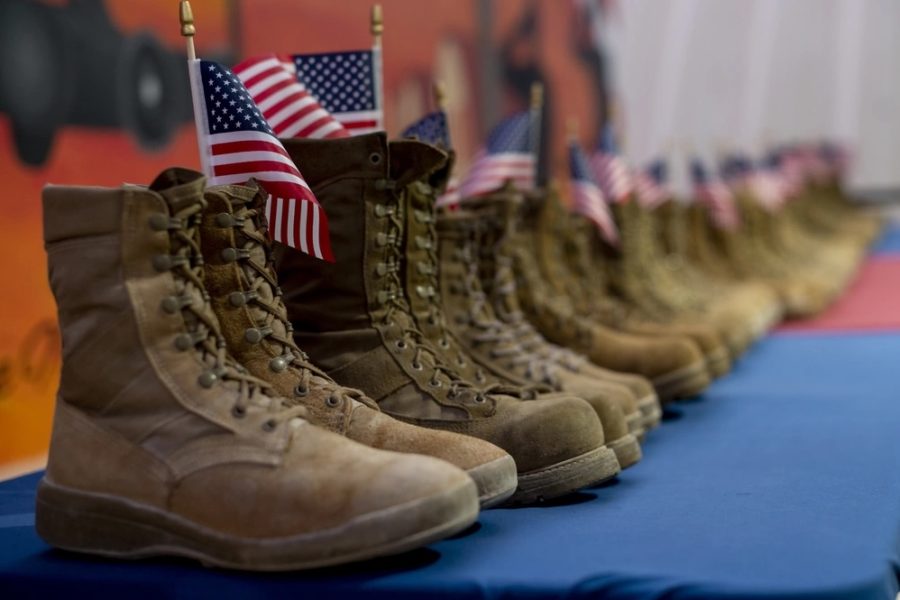
Nearly 90 Airmen and Guardians died by suicide in 2024, according to the Pentagon’s annual suicide report released March 31, about a nine percent decrease from 2023.
The decline was driven by a drop in deaths among Active-Duty Airmen, while the Air National Guard had a slight increase. The Space Force and Air Force Reserve stayed essentially flat. Across the entire military, the trend was broadly similar: decreases in the Active and Reserve components, but an increase in the National Guard.
Continuing a yearslong trend, the Active components of the Air Force and the other services are still seeing an overall increase in suicides and suicide rate dating back to 2011, with a peak in 2020 during the COVID-19 pandemic.
“The lower Active Component suicide rate in 2024 compared to 2023 is an encouraging sign. However, it is too early to say whether this short-term change signals the start of a shift in long-term trends,” the report states.
The Pentagon released the 2024 report later than usual and did not make officials available to reporters to discuss the report, a break with precedent in recent years. Task & Purpose previously reported that the delay was due to the government shutdown last fall.
Officials recorded 89 confirmed and suspected suicides in 2024 across the Department of the Air Force, down from 98 in 2023:
- Active-Duty: 60 in 2024 vs. 71 in 2023
- Air National Guard: 17 in 2024 vs. 13 in 2023
- Air Force Reserve: 9 in both 2024 and 2023
- Space Force: 3 in 2024 vs. 2 in 2023
The report typically includes rates of suicides per 100,000 individuals but does not list a rate when there are fewer than 20 total deaths in a particular category, because the small sample size makes statistical analysis less reliable.
The Active Air Force rate was 19.0, down from 22.2 in 2023. In both cases, the rate was lower than the Army and Marine Corps but slightly higher than the Navy.
As in years past, officials say the majority of military suicides were among enlisted men under the age of 30, similar to the general population.
“Overall military suicide rates have not differed meaningfully from those of the U.S. population for most years since 2011,” the report states. “This result indicates that the military suicide rates resemble trends in the country as a whole.”
Similarly, the report noted that suspected contributing factors in many military suicides are similar to those in the civilian population: intimate relationship problems, financial difficulties, and a previously diagnosed mental health condition.
Notably, of those Active component service members who died by suicides, 34 percent experienced “workplace difficulties” in the year prior to their death, the report found—10 percent greater than in 2023 and the highest number officials have reported since they started including the data in 2021 report.
More Data
The 2024 report differs from previous editions in that it includes more detailed data on suicides by service members’ occupational codes, drawn from the Department of Defense Suicide Event Report system that records contextual data on each suicide.
The change was mandated by Congress in the 2025 National Defense Authorization Act, after lawmakers previously directed the Pentagon to release a separate study on suicides by job code in the 2023 NDAA. The department released that report in July 2024, covering data from 2011 to 2022.
The occupational data is something advocates have long said is needed to better understand whether specific career fields are at greater risk of suicide.
The 2024 suicide report noted 20 suicides among enlisted Airmen working in “Electrical/Mechanical Equipment Repairers,” more than any other category. The maintenance career field is one of the biggest in the enlisted Air Force, and some advocates have argued the specialty is at higher risk of suicide given the physical and mental stress of the job.
The report also recorded another eight suicides among enlisted Air Force “craftsworkers,” a smaller career field, and 11 among enlisted communications and intel specialists.
Notably, the report did not break the data down by individual career fields, something advocates say is necessary to drill down on specific stressors and problems. Officials say, however, that going too granular in the data would invite “statistical instability.”
Prevention
The new report also detailed the Pentagon’s progress in implementing dozens of “enabling actions” recommended by the Suicide Prevention and Response Independent Review Committee, formed by congressional directive in 2022. The committee’s final report, issued in 2023, included 127 recommendations, and then-Defense Secretary Lloyd J. Austin directed the department to immediately implement 10 of them. After that, the department developed 83 enabling actions “modified from the remaining SPRIRC recommendations.”
As of November 2025, the new report states, the Pentagon has implemented and “closed out” 27 of those actions. Most of those implemented are under the “Foster a Supportive Environment” line of effort, to include extra funding for military spouse career and education programs and standardizing “warm hand-offs” between mental health providers to ensure service members don’t fall through the cracks of the system.
When it comes to revising suicide prevention training, however, the Pentagon has completed just one of 19 enabling actions. The department has also only completed two of 18 recommendations for addressing stigma and other barriers to care.
Some pending moves may face uncertainty or changes given the sweeping personnel reforms implemented by Defense Secretary Pete Hegseth and the Trump administration, though.
For example, some of the enabling actions developed under Austin called for modernizing the military promotion process through diversity, equity, and inclusion “sprint initiatives,” while Hegseth has directed the military to cease all DEI initiatives. Hegseth has also signed a memo directing reduced mandatory training requirements, while the enabling actions included expanded and revised mandatory training.
“Recognizing that every death by suicide is a tragedy, the Department will continue to take action to support our men and women in uniform and their families, promote the well-being and resilience of the force, and take steps to prevent suicide in our military community,” the Pentagon said in a press release. “The Department continues to develop its support services, in part, by expanding the availability and accessibility of clinical services, such as telehealth.”
The report highlighted three initiatives by the Department of the Air Force:
- Wingman Guardian Connect, a program where participants learn resiliency and mental health skills in a more collaborative, group environment as opposed to a classroom-style lecture. The program is currently offered at the First Term Enlisted Course at nine bases and will expand to 16 more in 2026, before going department-wide in 2028.
- Airman and Guardian’s Edge, a program that teaches “peer mentors” to impart skills for “stress management, sleep hygiene, resilience, motivation, and suicide prevention” to their peers. Operational tests are planned at five bases in 2026.
- Suicide Postvention Command Support Team, a team of mental health professionals that deploy to support command teams when more than one suicide has occurred at an installation.