

Libya highlighted the danger of NATO’s European members regarding the alliance as a replacement for indispensable national capability. “It is a very nice concept but one that doesn’t work at the 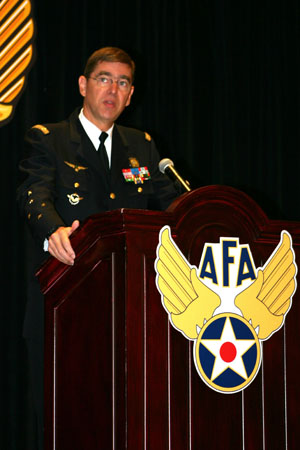 country level,” said French Air Force Gen. Stephane Abrial, commander of NATO’s allied command transformation. “What Libya ultimately proved is that the alliance as a whole has relied too much on the US. … We could not have performed to the same level of effectiveness without heavy contribution from the US” most disturbingly in targeting and combat enablement, Abrial warned at AFA’s Air & Space Conference, Tuesday. “Having realized where the gap is and having understood the model of Libya could be replicated” each country must decide “what she needs to meet what she feels are her threats and challenges,” emphasized Abrial. NATO members are committed to mutual defense, but for out-of-area operations such as Libya, the US could just have easily have opted out, he said.
NASA Boss: Race to Moon Has National Security Stakes
Sept. 15, 2026
NASA is pushing hard to get astronauts back to the moon by 2028—and the urgency is driven in no small part by the national security implications of doing so before China does, Administrator Jared Isaacman said Sept. 15.
