
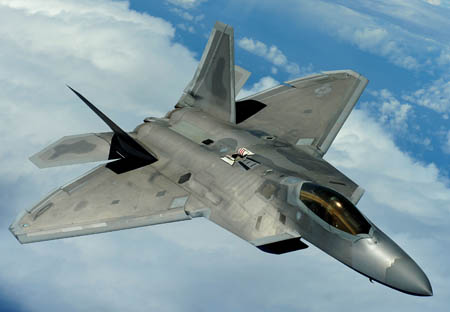
 Sen. Mark Warner (D-Va.) and Rep. Adam Kinzinger (R-Ill.) sent a letter to Air Force Secretary Michael Donley on July 10 expressing their appreciation for the service’s efforts thus far to ensure the health and safety of F-22 pilots, but also voicing their continued concerns over recent hypoxia-related incidents with Raptor pilots. Specially, they cite a “hypoxia-related in-flight emergency declared by an F-22 pilot” at JB Pearl Harbor-Hickam, Hawaii, on July 6; a “restricted airflow” incident at JB Langley-Eustis, Va., in late June; and a mishap at Tyndall AFB, Fla., on May 31 in which an F-22 “reportedly impacted the runway without extending its landing gear.” Warner and Kinzinger ask for a briefing within 30 days to get updated information on the aircraft’s onboard oxygen-generation system and whether it provides enough oxygen to pilots at higher altitudes while they are sustaining powerful G-forces. They also seek information on the pilot’s survival gear, including the upper pressure vest, which has come under scrutiny again of late as potentially restricting the pilot’s airflow and possibly contributing to the cases of pilots’ disorientation and dizziness.
An important U.S. Air Force E-3 Sentry AWACS command and control plane was among the aircraft damaged in a March 27 Iranian missile and drone attack on Prince Sultan Air Base, Saudi Arabia, people familiar with the matter told Air & Space Forces Magazine.