
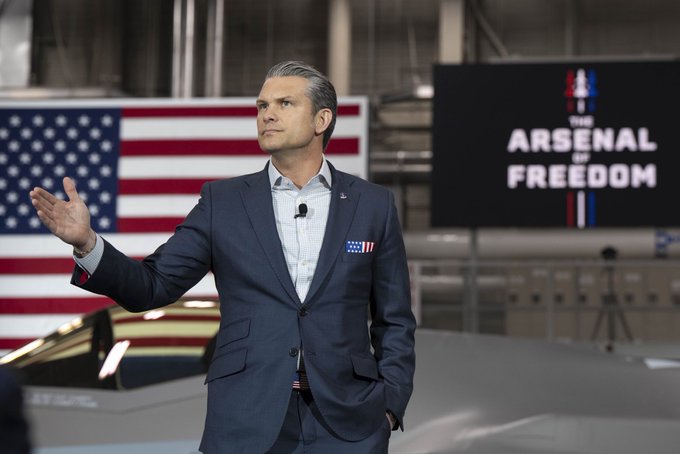
Defense Secretary Pete Hegseth foot-stomped the Pentagon’s push for acquisition speed and contractor accountability in a Jan. 12 speech at Lockheed Martin’s production hub in Fort Worth, Texas—the heart of the department’s biggest acquisition program, the F-35.
“We’re changing the game to incentivize speed, to incentivize efficiency, competition, open architecture at cost—ensuring that big companies like this one, and small ones, can compete,” Hegseth told employees who work at the plant.
The factory floor has become a sort of stage for Hegseth in recent weeks as he travels the country to defense firms large and small as part of his “Arsenal of Freedom” speaking tour, which started Jan. 5 at an HII shipyard in Newport News, Va. The campaign comes as both the Defense Department and the White House push for reforms across the defense industry, targeting waste in the Pentagon and the companies it buys from.
Hegseth in early November released a sweeping acquisition reform strategy meant to restructure Pentagon organizations and processes and inject more competition and accountability into weapon development programs. On Jan. 7, President Donald Trump issued an executive order that seeks to bar underperforming defense contractors from issuing stock buybacks and tie executive compensation to program execution. The order bemoans “years of misplaced priorities” by defense contractors and states that prioritizing “excessive dividends” over on-time capability deliveries harms military readiness and “betrays the American people.”
The F-35 is perhaps one of the most cited examples of a troubled DOD acquisition program with an estimated lifetime cost of $2 trillion, and Lockheed has drawn criticism for development delays and cost overruns. Hegseth acknowledged in his speech that he has “had some pretty tough words to say” about defense primes in recent months as he pushes for change in the acquisition system.
But he also struck a conciliatory tone toward Lockheed leadership. He highlighted the company’s recent successes—a record 191 F-35 deliveries in 2025, and a recent agreement with the Pentagon that could triple the firm’s delivery of Patriot Advanced Capability-3 missiles for the U.S. and its allies—and said he believes Lockheed will “step up” to meet the Defense Department’s demands.
“If you create the best and the fastest at cost on behalf of taxpayers and the warfighters, you’re going to win,” he said. “I hope, based on what Lockheed Martin can do, that you win a lot. Because you make incredible, exquisite platforms.”
Hegseth’s acquisition reforms call for more competition within the defense industrial base, opportunities for non-traditional vendors and adoption of commercial buying practices. The objective, he said, is to deliver systems that service members need on time and with less waste, not to displace larger defense firms.
“We ultimately don’t care what the name is on the side of the missile or the plane or anything that’s made at the War Department,” he said, using the alternate title for the department authorized by Trump. “We just want the best. And our expectation is that every company competes and every company competes on a level playing field.”