


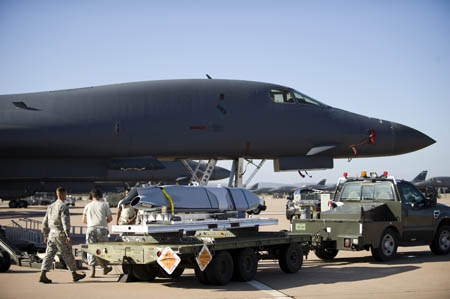
 Testing of Lockheed Martin’s Long-Range Anti-Ship Missile on the B-1 bomber reflects efforts to give the bomber greater relevance in the maritime environment, according to an Air Force release. This activity is consistent with the Pentagon’s AirSea Battle concept that promotes closer collaboration of air and naval assets to address capability gaps and overcome adversaries trying to deny the United States access to areas on land or at sea. LRASM is a technology demonstration program that DARPA and the Navy are sponsoring to validate this type of anti-ship weapon design in anti-access environments and lay the foundation for the potential follow-on acquisition of an operational system. The 337th Test and Evaluation Squadron at Dyess AFB, Tex., wrapped up the first captive-carry test of LRASM on the B-1 in mid-June, states Dyess’ July 15 release. “This is a big stepping stone toward fielding an anti-surface warfare cruise missile,” said Maj. Shane Garner of the squadron. The unit plans to hold the first live-fire test of LRASM from the B-1 in several months. The B-1 already can deploy naval mines, according to the Air Force’s fact sheet on the bomber. (Dyess report by SrA. Charles V. Rivezzo) (See also AirSea Battle Office Releases Summary Document.)
US Space Command Should Always Be Led by a Guardian
Sept. 12, 2026
General Stephen Whiting took command of U.S. Space Command in January 2024, and if customary three-year tenures hold, his tour would end in January 2027. The question now before the President and Senate is who should follow him? Whoever they choose, it has to be a Guardian—and so should every successor…
