
The Air Force’s D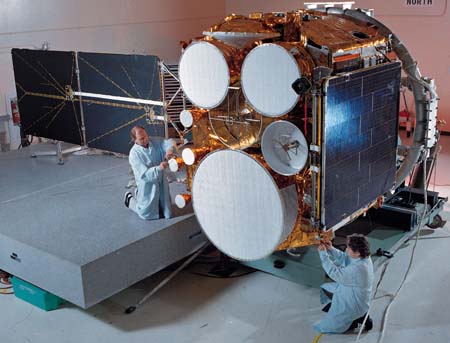 efense Satellite Communications System III constellation has surpassed 200 years of on-orbit operations, Lockheed Martin announced Feb. 17. The company release notes that the DSCS III spacecraft generally exceed their expected 10-year design life “by several years” through operators’ judicious management of fuel usage. In fact, Lockheed says that 10 current DSCS sats “provide or have provided service for a total of over 71 years beyond their design lives and continue to perform with outstanding results.” The DSCS III constellation provides secure voice (over a wider but less protected bandwidth than Milstar communication satellites) and high-data rate communications for the US military. Lockheed also built the Milstar constellation, which the company says will surpass 50 years of on-orbit operations by April. Replacing Milstar will be the Advanced Extremely High-Frequency satellite, the second of which, Lockheed reports, has just completed the thermal vacuum testing the company began earlier this month. The Air Force expects to launch the first AEHF sat in 2010.
Space Force leaders are looking at allowing Guardians stay at the same base longer than the standard three-year tour.