Daily Report

April 7, 2026

The Soul of Aerospace Power: It’s the People, Not the Machines

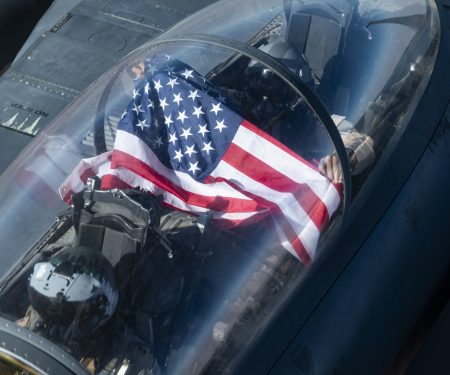
For weeks, Operation Epic Fury showcased the breathtaking reach, precision, and persistence of American air and space power: more than 13,000 combat sorties and more than 12,300 targets struck by April 1. But numbers do not tell the most important story. What is truly important is what happened on April 3, when an F-15E Strike Eagle was shot down over Iran. In an instant, this war was no longer just about sorties, targets, and battle damage assessments, but about the survival and rescue of two American Airmen on the ground in hostile territory, separated, exposed, and in mortal danger.

KC-135 Crews Receive Distinguished Flying Crosses for Combat Missions

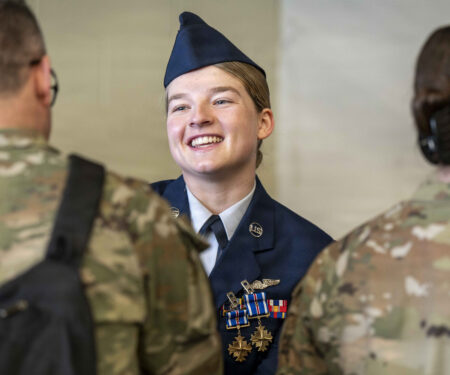
More than a dozen Airmen with the 92nd Air Refueling Wing received decorations for “flying complex and dangerous missions in contested airspace,” the Washington-based unit announced April 1. The 15 airmen were honored for providing critical refueling that enabled other Air Force aircraft to continue their mission and return home safely, according to the release. The aircrews were recognized on March 31 at Fairchild Air Force Base for flying complex and dangerous missions in contested airspace.

Radar Sweep

How A Dusty Strip Deep in Iran Can Be Turned into a US Special Operations Base in Hours

The War Zone

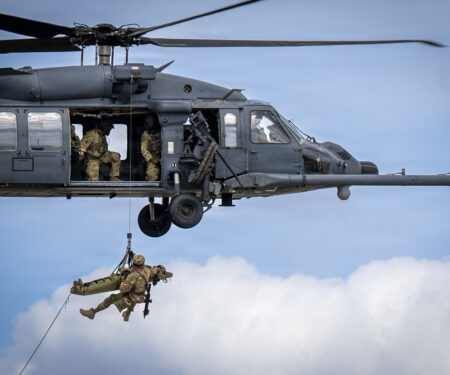
The rescue of the F-15E weapon systems officer (WSO) missing in Iran after his fighter was shot down was one of the most complex and dangerous missions the U.S. military can undertake. These kinds of operations can come in many forms. In this case, before the WSO was finally recovered from the mountain crevice where he was hiding, a forward arming and refueling point (FARP) deep inside enemy territory had to be rapidly set up and secured so that it could act as a staging area for the aircraft, equipment and troops taking part in the mission. This is an exact mission set U.S. special operations forces train for extensively.

Gift link

Ukraine’s Lesson for Trump: Military Dominance Opens Waterways

The Wall Street Journal

As the Trump administration grasps for a way to reopen the Strait of Hormuz without sending in ground troops, attention is turning to the United Nations-backed deal struck with Ukraine and Russia in 2022 to try to restart critical grain exports.

White House Seeks $17.5 Billion for Golden Dome, but Most Funding Hinges on Reconciliation

Federal News Network

The Trump administration’s Golden Dome missile defense system might get $17.5 billion in fiscal 2027 after receiving a $23 billion down payment through a reconciliation bill passed last summer. But almost all the funding for President Donald Trump’s ambitious missile defense shield hinges on another reconciliation bill – the White House is asking Republicans to pass a significant portion of the president’s massive $1.5 trillion defense budget request through the party-line reconciliation process.

One More Thing

That Time Neil Armstrong Survived Ejecting from His Fighter Jet in Korea

We Are The Mighty

On September 3, 1951, a 21-year-old Navy ensign walked onto the flight deck of the USS Essex. The aircraft carrier was stationed off the coast of Korea, and as the young pilot prepared for his seventh combat mission, it was a beautiful, albeit cold, morning. Catapulted into the air, the pilot’s F9F Panther jet flew by Mount Fuji and over the Sea of Japan before crossing into Korea.