
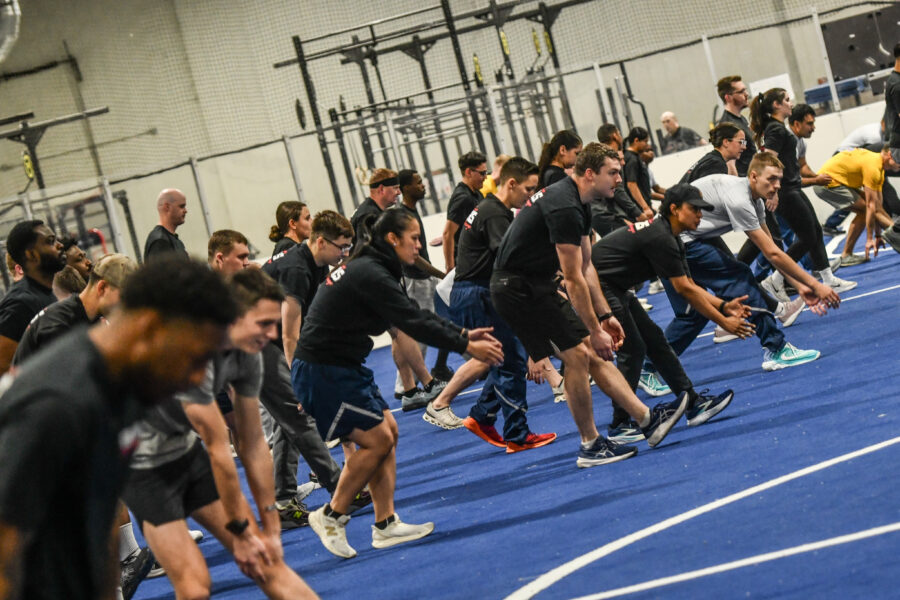
In an era of high-tech weapons, fast computers, armed drones, and layers upon layers of satellites, it’s easy to overlook a still-crucial element of military capability: a physically fit Active-Duty, Guard, and Reserve force.
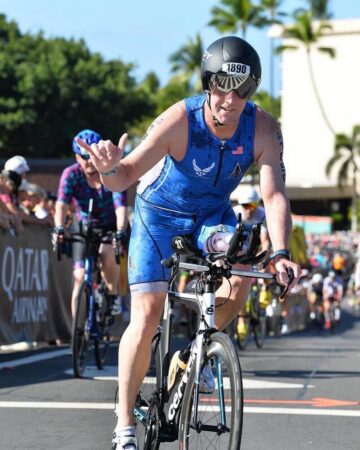
Ensuring our forces are physically fit is just as important today as it was years ago. That’s why fitness is a priority for Secretary of War Pete Hegseth, and why both Air Force Chief of Staff Gen. Ken Wilsbach and Chief of Space Operations Gen. Chance Saltzman recently raised testing standards for Airmen and Guardians. I know the benefits of being fit from my personal experience while preparing for and participating in multiple IRONMAN events.
IRONMANs taught me firsthand that you can accomplish anything if you dedicate your mind to a task—even if, as in my case, you don’t perfectly fit the profile. I wasn’t an elite athlete, but I was determined, and that’s what helped me succeed. It also brought unexpected benefits. My fitness journey improved my leadership skills and my mental health—in addition to the physical benefits I hadn’t possessed before.
These qualities are essential in the defense of our nation. Recent studies showed nearly two-thirds of our service members are overweight or obese, raising serious concerns about our military readiness. This doesn’t escape our competitors’ notice. They will take every opportunity to portray the U.S. military as weak and lazy, aiming to degrade U.S. credibility.
The new tests and the broader “Culture of Fitness” we are working to establish in the Department of the Air Force align with our National Security Strategy, which is the blueprint for maintaining America’s stature as the world’s most powerful and capable military. The urgency is real, which is why new standards are being phased in starting this month with requirements that Airmen will begin meeting in July.
A healthy force is both credible and ready. Achieving and maintaining that standard demands an environment capable of organizational and lifestyle change, which means we must shift from a test-focused mentality to embracing a sustained commitment to fitness. Success requires a holistic Culture of Fitness.
At the same time, Airmen and Guardians must also understand that this culture change is not just about physicality. It’s also about professional leadership development and mental health. As Gen. Douglas MacArthur wrote, “On the fields of friendly strife are sown the seeds that on other days, on other fields will bear the fruits of victory.”
This quote embodies the “warrior ethos,” the lessons, values, and character traits necessary to succeed in battle. When Air Force and Space Force leaders cultivate a Culture of Fitness within squadrons and deltas in peacetime, that culture will translate into success against a near-peer adversary if called upon to “ … bear the fruits of victory”.
Generals Wilsbach and Saltzman, along with Secretary Hegseth, have sent the signal. Now it’s time for commanders to seize the initiative, turning fitness into a team-building enabler that fosters camaraderie and esprit de corps. For example, consider forming organized sports leagues, or holding educational workshops on fitness, wellness and nutrition.
Research also shows another important truth: Fitness is a key component of leadership, adaptability and collaboration. Dr. Michelle Cleere outlined this connection in “Why Athletes Make Great Leaders.”
Cleere’s research highlights how athletes quickly develop new skills and work well with others. Athletes are effective time managers and strive to balance work and life. They also have the drive and motivation to practice tasks relentlessly until they succeed.
These are traits Airmen and Guardians should hone throughout our careers, and they are easily transferable to both organizational and individual force development.
To truly enable this culture shift, however, senior officers and enlisted leaders must lead by example. As MIT Research Fellow Micheal Schrage has written, “Serious leaders understand that, both by design and default, they’re always leading by example.” Airmen and Guardians are watching. Command teams must set an example and make fitness a part of their organization’s daily life and ensure troops can participate in exercise and sports regularly.
Integrating fitness into an organization’s daily routine strengthens leaders and builds resilient teams. By being actively involved in the Culture of Fitness, Airmen and Guardians will master selflessness, accountability, resilience and other valuable attributes.
Perhaps most importantly, military leaders must recognize that physical fitness directly contributes to good mental health. Research shows that physical activity increases levels of endorphins, which help produce feelings of happiness and euphoria. In addition, by enabling a Culture of Fitness leaders will foster the group activities and social interactions needed to offset time isolated time on personal devices and social media.
The changes to the fitness standards championed by Generals Wilsbach and Saltzman and Secretary Hegseth will enable a culture of fitness and enhance the readiness of all Airmen and Guardians.
This is about aligning with the fundamental goal of building a force capable of deterring adversaries and ensuring peace through strength. This isn’t simply about a test; it’s about building a ready force.
Maj. Gen. David W. Smith is currently serving on Active duty as Deputy to the Chief of the Air Force Reserve and has almost 34 years of active and reserve service. He is a seven-time IRONMAN full-distance athlete, has qualified for and competed in the IRONMAN World Championships in Kona, Hawaii, and was a Division I athlete at the U.S. Air Force Academy.