
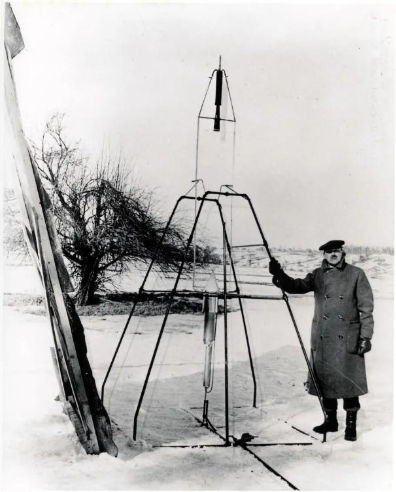
March 16, 2026, marks 100 years since Dr. Robert H. Goddard launched the world’s first liquid-fueled rocket.
Goddard used a combination of gasoline and liquid oxygen (LOX) to propel a rocket for two and a half seconds, reaching an altitude of 41 feet and traveling over 184 feet down range. While this may seem like a small accomplishment, it is on par with what the Wright Brothers achieved with their first powered aircraft flight in 1903.
Like the Wright Brothers before him, Goddard’s breakthrough opened the door to a new domain and the exploration, operations, and economic development that have evolved ever since.
Over the past century, new and ever more capable liquid-fueled rockets have literally propelled humanity into space.
Why liquid-fueled rockets?
Black powder, or gunpowder rockets, had been used for centuries in missiles and fireworks. However, once a powder rocket starts, it burns until its fuel is exhausted. The need to throttle thrust and to stop and restart rocket engines, both essential to spaceflight, was only achievable with liquid-fueled rockets. The excellent efficiency and thrust performance are other advantages. Solid rocket motors can offer higher thrust, which is why many launch systems use additional solid rocket motors for added lift.
Liquid-fueled rockets employ a combination of an oxidizer and a fuel source. The oxidizer improves engine performance and allows for the combustion of the fuel even in the vacuum of space. LOX is the most common oxidizer, used both on Goddard’s first flight and on modern rockets today. While LOX has been a consistent staple as an oxidizer, the fuel has evolved from gasoline, to include kerosene, liquid methane, and liquid hydrogen.
Some liquid rockets use hypergolic fuel, two liquids that, when combined, are volatile and instantly ignite, to generate the explosive thrust necessary to propel boosters and space vehicles. Commonly used hypergolic propellants include Aerozine or hydrazine and nitrogen tetroxide. By eliminating the need for an igniter, hypergolic engines can be simpler and reliable, making them ideal for propulsion once in space. It’s important to remember that liquid-fueled rocket engines are not just for the boosters, but also upper stages to maneuver satellites to their final orbits, attitude control, and propulsion on board spacecraft, particularly those requiring significant maneuverability.
Evolution of Liquid-Fueled Rockets
After Robert Goddard’s seminal flight, multiple efforts to advance liquid-fueled rockets progressed around the world. Most notably the Germans developed rocket technology in World War II, leading to the V2 rocket. Following the war, Wernher von Braun and other German-born scientists brought their know-how to the United States, providing critical expertise to advance U.S. rocket technology. Their work led to the development of intercontinental ballistic missiles and the rocket boosters needed for spaceflight.
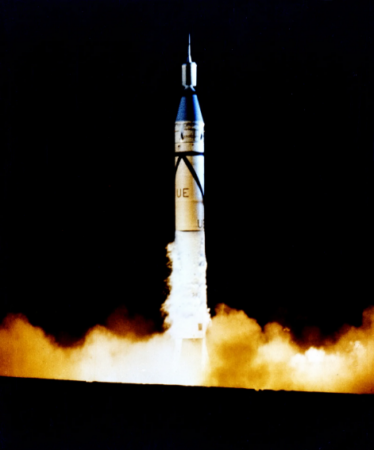
In the 1950s the Army, Navy and Air Force developed rocket systems to field ballistic missiles. Some of the first successes in spaceflight came from the Army’s efforts, under Wernher von Braun. The adaption of the Army’s Jupiter-C intermediate ballistic missile launched the United States’ first satellite, Explorer 1, in 1958. Then on May 5, 1961, a similar vehicle launched the first U.S. astronaut, Alan Shepard, on a suborbital flight into space.
In the Air Force, Gen. Bernard Schriever at the Western Development Division led programs to field the Atlas, Thor, and Titan boosters. These systems led to other notable achievements, including John Glenn’s orbital mission, Friendship 7, which launched atop an Atlas rocket, and the deployment of the first reconnaissance satellites atop a Thor rocket. Subsequent missions such as the Gemini program used Titan boosters.
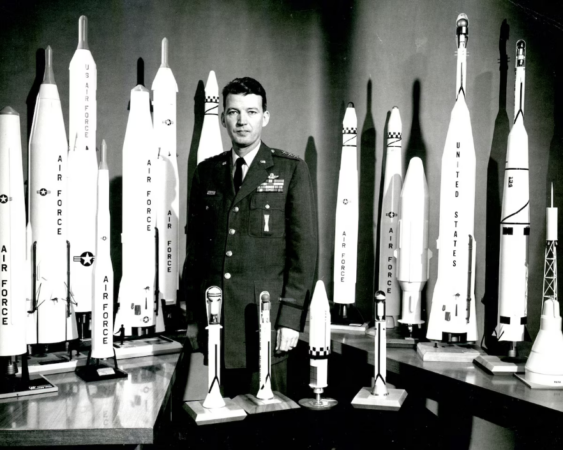
Over the years, systems like Titan and Atlas became the workhorse boosters for U.S. national security missions, launching humans as well as equipment and satellites into space.
Of course, one of the crowning achievements of liquid-fueled rockets was the Saturn V, launching the Apollo 11 crew in 1969. Launching from Cape Canaveral, Fla., the mission landed Neil Armstrong and Buzz Aldrin on the surface of the Moon and successfully returned them to Earth, along with Michael Collins the Command Module pilot.
In the 1960s and 1970s, liquid-fueled rockets deployed much of the early U.S. space satellite capabilities including the first global positioning system (GPS) satellite. In the 1970s, the Space Shuttle program made possible reusable liquid rockets. The Space Shuttle System, with its first operational flight in 1981, effectively made the shuttle a reusable upper stage and could only be possible because of its liquid-fueled rockets.
After the Challenger accident in 1986, NASA refocused shuttle crew missions and re-invigorated the expendable launch market. Programs like the Atlas II and Delta II supported the launch of smaller satellites and payloads into orbit. Expendable boosters continued to evolve, leading to the Atlas V and Delta IV medium and heavy launch systems. These two programs organizationally aligned under the United Launch Alliance in 2006.
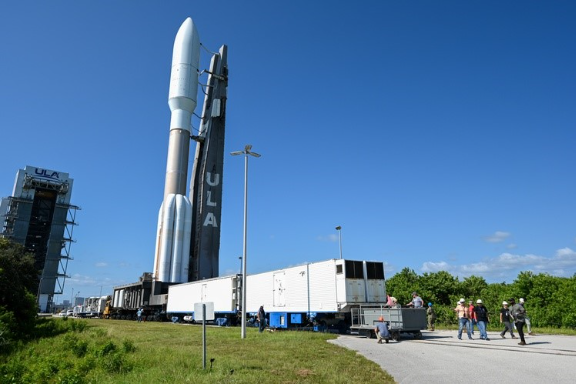
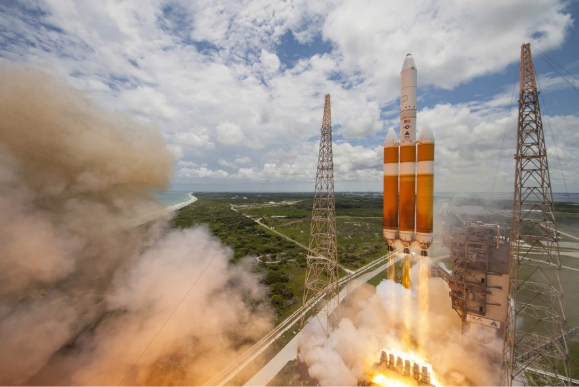
In 2008, SpaceX entered the picture as a commercial provider and in 2015, demonstrated the reusability of Falcon 9 and Falcon Heavy booster systems.
Today, a growing number of launch providers and boosters are available or planned to support national security launch operations, including ULA’s Vulcan, Blue Origin’s New Glenn, Firefly’s Alpha, and Rocket Lab’s Neutron, in addition to the SpaceX systems.
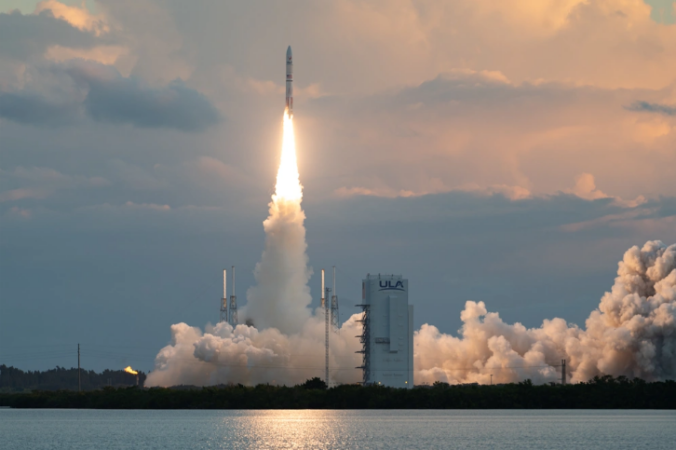
New launch systems such as Artemis and Starship will return Americans to the Moon and, perhaps, beyond. And it all began a century ago in a field in Massachusetts.
Whether you’re a Space Force Guardian, spacepower enthusiast, or just love rockets, take a moment to reflect on this milestone and the progress we’ve made over the past 100 years.
Robert Goddard’s first liquid-fueled rocket rose barely four stories toward the sky. But that small step started us on a journey with giant leaps and a boundless future.
Charles Galbreath is Director of Mitchell Institute’s Spacepower Advantage Center of Excellence, and John Reed is Chief Rocket Scientist at United Launch Alliance.