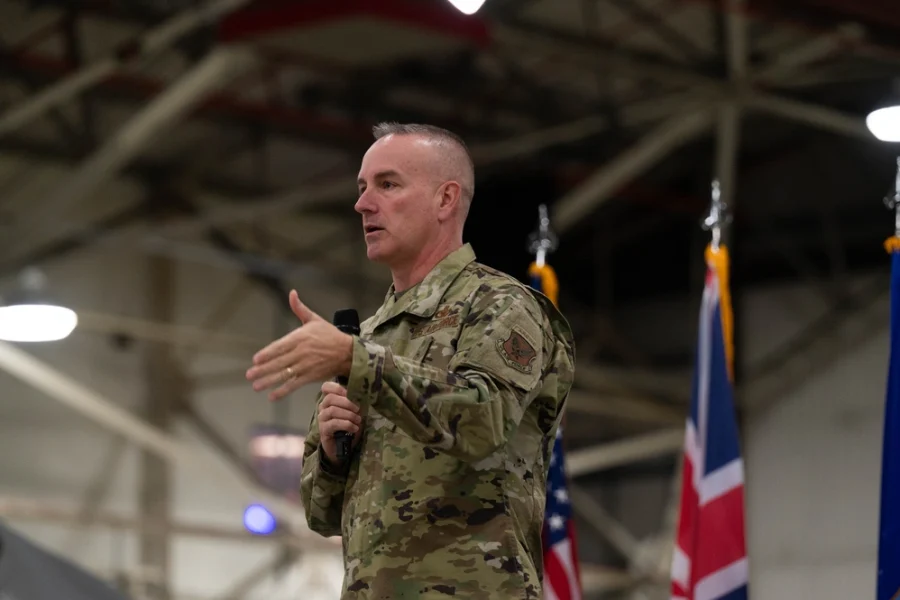
Chief Master Sergeant of the Air Force David R. Wolfe will deliver his first keynote speech to the force this week at AFA’s 2026 Warfare Symposium—a talk aimed at helping Airmen understand what they can expect from the service’s top enlisted Airman and how their performance will be judged.
“I think everybody comes to work every day and wants to do a good job, but if they don’t know what the expectation is of their leadership, then they’re going to probably fill in the blanks, and maybe they’ll hit the mark, and maybe they’ll get way off track,” Wolfe told Air & Space Forces Magazine in a recent interview.
A former security forces Airman, Wolfe has only been CMSAF for about 11 weeks, after taking on the job Dec. 8, but he has already moved quickly in announcing changes and priorities, rooted in part in his history with Air Force Chief of Staff Gen. Kenneth S. Wilsbach. The two have worked closely as the commander and command chief of Pacific Air Forces, then Air Combat Command, helping them bond as a leadership team well before they began leading from the Pentagon late last year.
Already, the two have made a high priority on communicating directly with the force through memos and social media about meeting standards.
Normally, it takes time for a CMSAF to adjust to a new service chief’s leadership style, which can be a challenge, said former Chief Master Sergeant of the Air Force Gerald Murray, who served in the position from 2002 to 2006.
“There is, and has long been, a great respect between the positions, but there is a little bit of getting to know each other—how you communicate, how priorities are set there—and that’s one thing that between Wilsbach and Wolfe that they didn’t have to at all,” Murray told Air & Space Forces Magazine. “Right out of the gate, they were on the same page.”
The most recent example of this was a Jan. 30 memo signed by both men, directing all security forces Airmen to sharpen up their greetings at base entry control points to show visitors that the base they are entering is “protected by vigilant Defenders and reflects our identity within the profession of arms.”
Both leaders place a high priority on maintaining standards, but so far they have reserved using strict, corrective measures for solving an issue in the force rather than as a way of punishing Airmen.
For example, the leadership duo sent out a mid-December message that they were dialing back a requirement for units to conduct quarterly, force-wide “standards and readiness reviews” to once per year. The shift in direction came 10 months after then-acting Air Force Vice Chief of Staff Lt. Gen. Scott L. Pleus directed unit commanders to conduct SSRs four times a year as part of a push for stricter enforcement of standards.
But it’s not as simple as the new leaders rolling back the decisions of their predecessors. Wolfe noted that while those quarterly inspections were instituted across the Air Force under then-Chief of Staff Gen. David W. Allvin and then-CMSAF David A. Flosi, “the reason the former team did it was because a commander at ACC named Wilsbach and a command chief at ACC named Wolfe wrote the original guidance to Air Combat Command that said ‘thou shalt do all of these things,’” Wolfe said. “We started it at ACC, and the Air Force said ‘that’s a good idea. We agree with that. Let’s do that,’ and that’s where they came up with the standards and readiness reviews.”
Wilsbach and Wolfe instituted quarterly inspections at ACC in summer 2024 because “we felt like there was a fear in our leadership teams of holding people accountable, that they were going to get an inspector general complaint—that they were going to get taken to some type of process to investigate them if they tried to tell someone that they were wearing their uniform wrong, or that they were doing something out of standards,” Wolfe said.
Murray said last year that many senior noncommissioned officers in the Air Force have “felt like that they could not or should not be enforcing standards of discipline,” a climate that likely contributed to Secretary Pete Hegseth’s sweeping crackdown on appearance standards such as shaving waivers.
Quarterly inspections, Wolfe said, were “at the time, a way to just focus everybody’s attention back on it’s OK to look at somebody and say, ‘your hair is not to standard, your uniform is not to standard, your Servicemembers Group Life Insurance is not up to date—all of the things that go into making a ready Airman.
“And we feel like the heat and light was put on it for a long enough time period,” Wolfe said. “The message I hope people received in the rollback to [annually] was: thank you, we trust you, do it once a year.”
During his keynote address at the Warfare Symposium on Feb. 25, Wolfe plans to talk about the key areas he intends to focus on during his tenure. He also wants to talk about how he intends to judge Airmen’s performance.
“I think my number one job as the Chief Master Sergeant of the Air Force is to teach,” Wolfe said. “How do I see an Airman’s performance being measured? I’m going to do it through teaching people what actual performance looks like.”
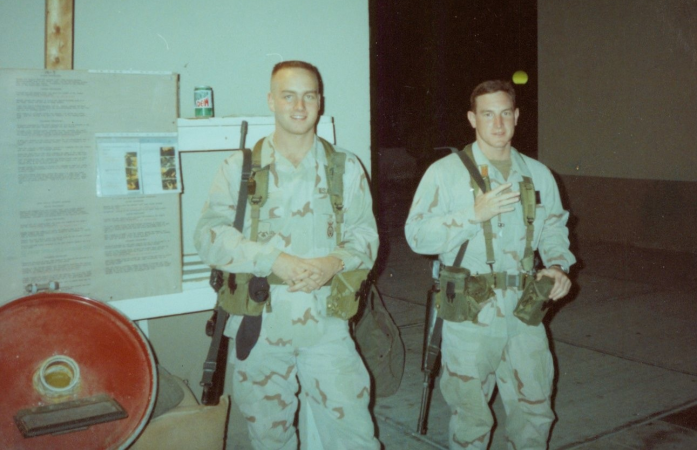
Wolfe is no stranger to maintaining standards as an Airmen. During his 33-year career, he trained in security forces, the Air Force’s military police. As he moved up through the ranks, he worked in missile security, space warning security, logistics, and as an elite guard.
He intends to place a strong emphasis on competence, commitment, and attitude, which are key parts of performance. “So how are we going to measure my performance?” Wolfe said. “I’m going to try to be the most competent person in the room, I’m going to be committed as all hell, and I’m going to have a great attitude every day.”
There is more to it than that, but Airmen can start by focusing on standards.
“Your adherence to the standards that we have set out is an outward demonstration of your commitment,” Wolfe said. “And if I know you’re committed to the small things, I don’t have to worry about small things, and I have to worry a lot less about big things because you have built trust with me that you’re committed.”