

Established in 2022, the Polaris Awards honor individuals and teams who embody the highest standards of the Guardian Values—Character, Commitment, Connection, and Courage. Each year officer, enlisted, and civilian Guardians across the Space Force are nominated. Chosen from more than 15,000 eligible Guardians, these four individuals and one team are the future ambassadors of the Space Force and the 2025 Polaris Award awardees.
CHARACTER
The first value because it lays the foundation for trust, teamwork, and good order and discipline.
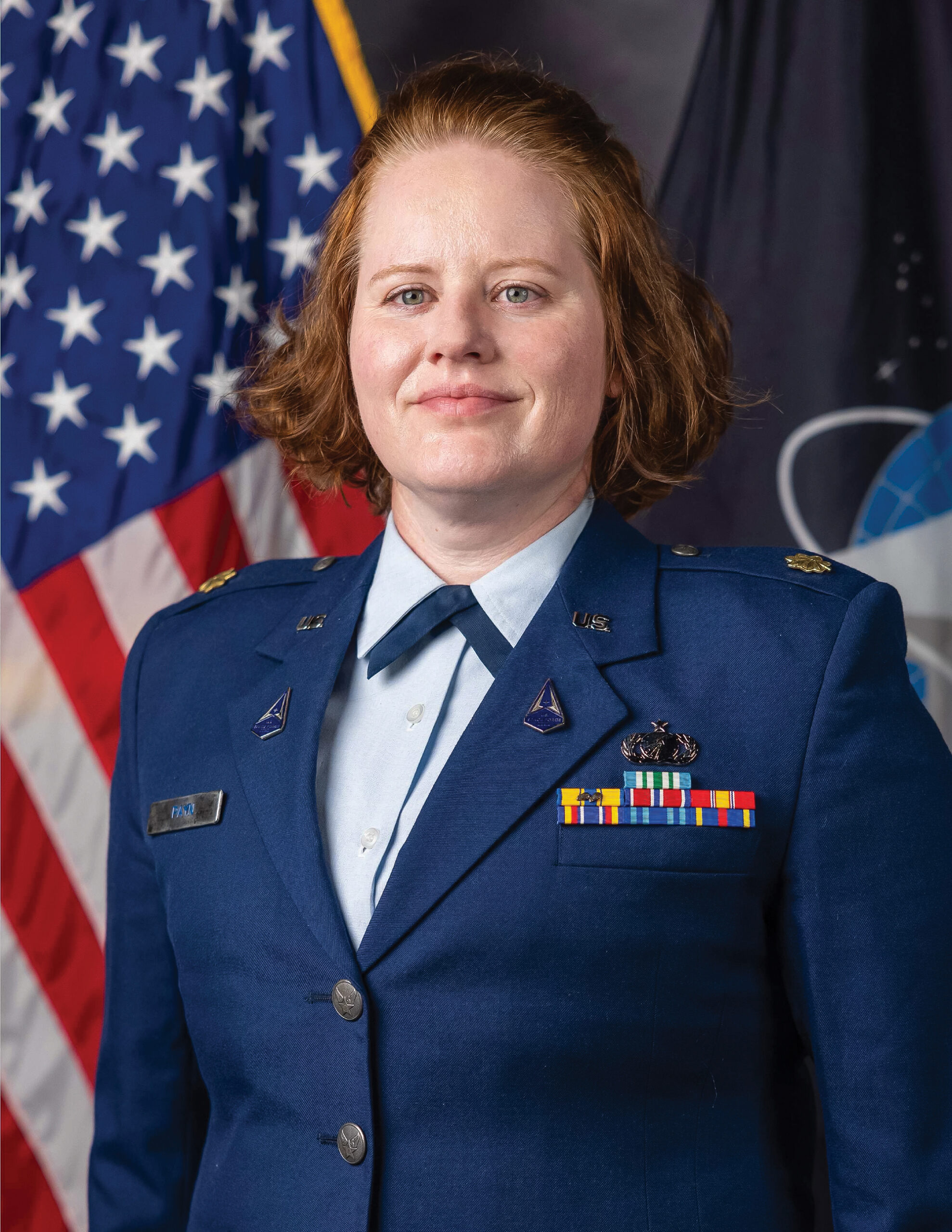
MAJOR ADRIANE PAYN
Chief, Mission Assurance Branch
National Reconnaissance Office
Major Adriane Payn exemplifies what it means to be a Guardian through her leadership, accountability, and unwavering dedication to mission success. After graduating with honors from the University of the Pacific and earning a master’s degree from Troy University, she commissioned in 2016 and has consistently delivered excellence in every role. Currently serving as a Mission Assurance Branch Chief, Major Payn leads a team of more than 150 personnel responsible for safeguarding the nation’s most critical space assets. She oversees the quality assurance of more than $6 billion in satellite hardware, ensuring systems meet the highest performance and reliability standards. Over the past year, she reviewed more than 1,600 manufacturing requests, identifying and resolving issues that could have jeopardized mission timelines. When unapproved parts were discovered, she acted decisively and kept senior leadership fully informed. Major Payn also identified a critical flaw in a software tool, saving more than $300,000 and a month of program execution time. When contractor performance fell short, she led a comprehensive investigation and implemented corrective actions across multiple programs. Beyond the mission, Major Payn is a dedicated advocate for women in STEM, helping raise more than $12,000 in scholarship funding. Her integrity, courage, and commitment set a powerful example for Guardians across the Space Force.
COMMITMENT
This value is defined as the pursuit of mastery of themselves, their profession, and domain.
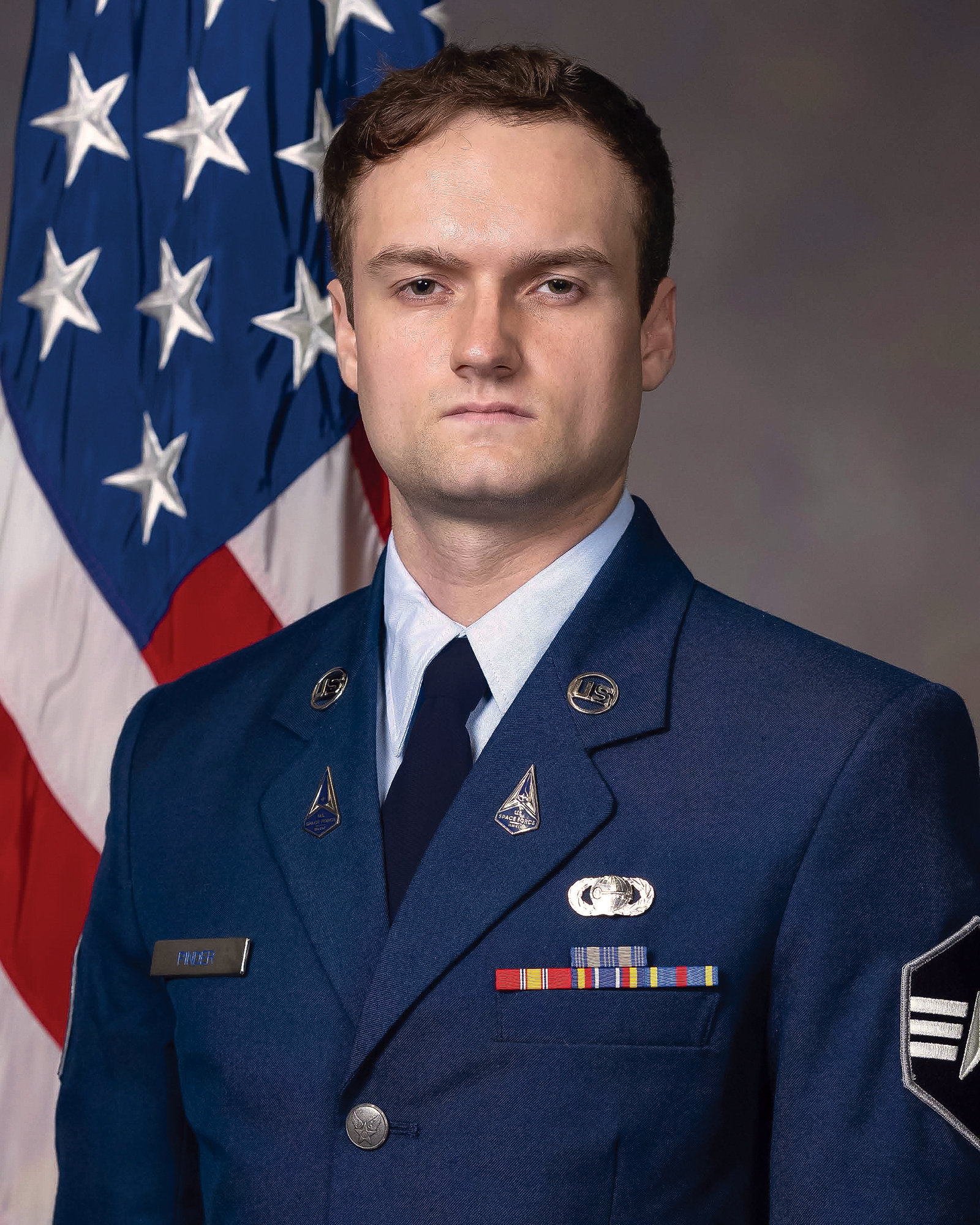
SPECIALIST 4 LOGAN PINDER
Multiple Intelligence Fusion Analyst
Space Operations Command
Specialist Four Pinder demonstrates extraordinary commitment and initiative through his mastery of operational intelligence and rapid impact across the Space Force. Since joining the service in March 2023, he has distinguished himself through unmatched dedication, innovation, and technical expertise. Pinder played a key role in establishing the Space Force’s first real-time intelligence squadron, directly shaping how intelligence supports operational decision-making. Leveraging self-taught programming skills, he developed a data converter that reduced file processing time from 100 hours to five minutes, saving $850,000 and enabling a critical capability for a new satellite sensor. He also created the Space Force’s first multi-intelligence training program, teaching analysts to integrate multiple intelligence disciplines into a single operational framework. This program is now used across multiple missions and earned recognition from the Chief of Space Operations. Pinder’s efforts directly supported seven Special Operations Forces missions in Europe and the Indo-Pacific. He trained 57 analysts to integrate space intelligence with joint operations, enabling coordination with more than 300 warfighters and protecting assets. Selected for elite cyber programs, Pinder’s expertise strengthens integration across space, cyber, and intelligence.
CONNECTION
This value emphasizes that Guardians are connected by a common purpose greater than themselves.
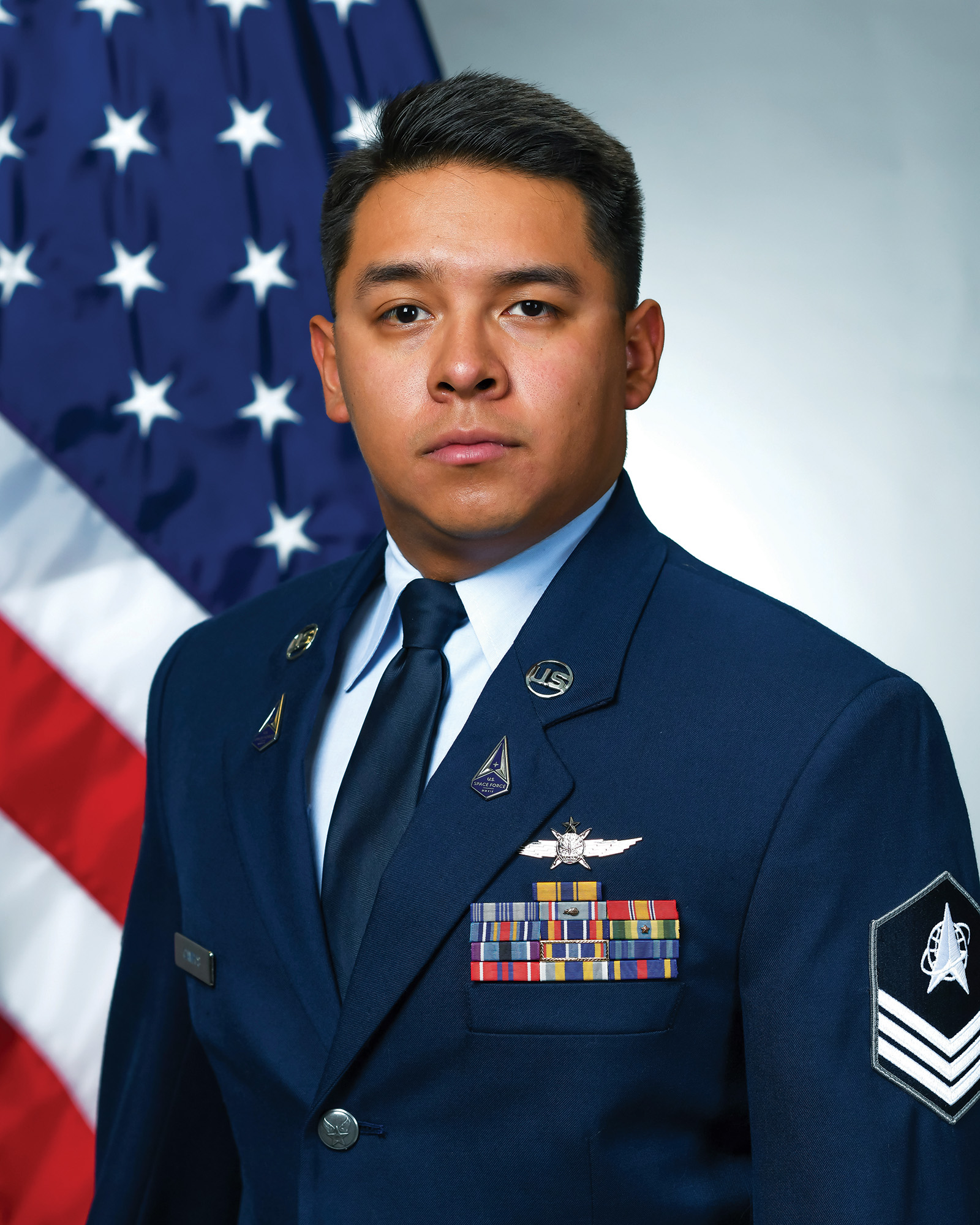
SERGEANT MICHAEL CAMPOS
Crew Chief, Cyber Aggressor
Space Training and Readiness Command
Sergeant Campos embodies connection—to the mission, his teammates, and the United States Space Force—by delivering advanced training that prepares Guardians to defend critical space systems against cyber and space threats. He began his career in the Air Force in 2019 as a network technician, earning an early promotion to Senior Airman. During a deployment supporting Operation Enduring Freedom, he was selected as one of the first Airmen to transfer into the Space Force. Campos strengthens the force through collaboration and shared expertise. In 2025, he hosted cyber training seminars for 60 leaders, bridging the cyber and space communities. He also trained a team for Space Flag 25-2, a large-scale exercise preparing Guardians for complex, contested space operations. During the Cyber Spartan exercise, Campos led his team in adversary operations, simulating nation-state cyberattacks to train 20 operators and help secure a $10 billion national launch. Beyond mission execution, he prioritizes people, leading 19 physical training sessions, providing individual mentorship, and preventing a suicide by dedicating 60 days to safeguard a fellow Guardian. Through mentorship, resilience, and dedication, Campos builds the connections that unite Guardians, strengthen the mission, and reinforce the Space Force community.
COURAGE
This value ensures Guardians do what needs to be done, and say what needs to be said, because it is the right thing to do.
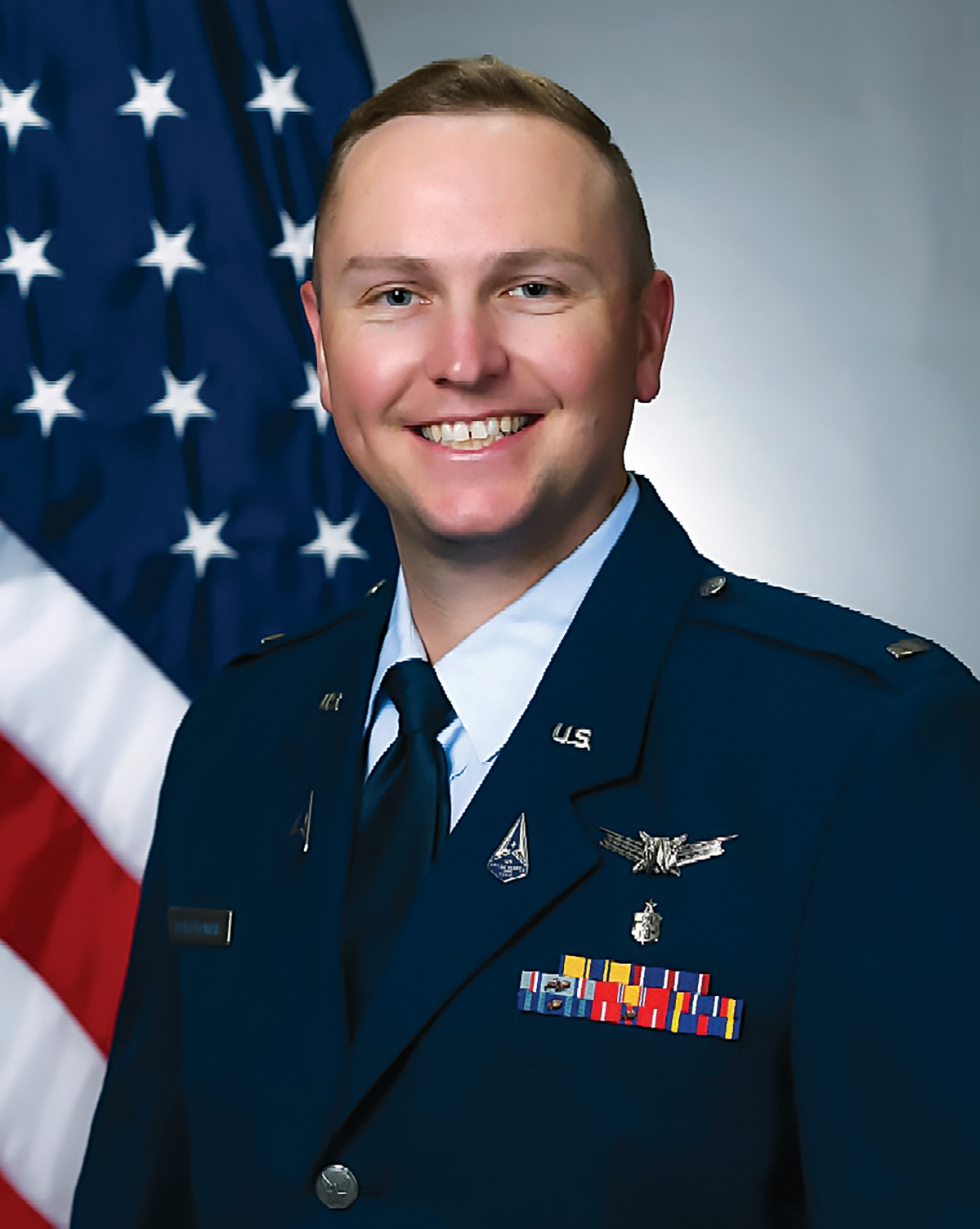
FIRST LIEUTENANT ROBERT BARTKOWIAK
Orbital Warfare Test, Project Officer
Space Training and Readiness Command
Lieutenant Bartkowiak exemplifies courage, leading with boldness, innovation, and a willingness to take smart risks to accomplish the mission. As a lead test director, he is shaping the future of orbital testing for a $12.3 billion program. He began his career in the Air Force in 2012 as a biomedical equipment technician before earning his degree and commissioning into the Space Force, graduating at the top of his class. In 2025, he performed the duties of a field-grade officer, securing $42 million to reactivate a dormant satellite for testing. During a high-stakes test, he made the critical decision to reposition satellites, overcoming a major network failure and keeping the mission on track. When a key system lost contact, his quick thinking restored control through a previously impossible solution, now adopted across Space Operations Command. In recognition of his leadership, he was by-name requested to lead a $21 million U.S. Space Command test involving 57 personnel across five locations, advancing innovation across the command. Through bold decision-making, technical mastery, and relentless dedication, Lieutenant Bartkowiak embodies the courage, initiative, and forward-thinking essential to the Space Force mission.
TEAM EXCELLENCE
Team embodying all four Guardian values: Character, Commitment, Connection, and Courage. It is a premier, annual service-level honor highlighting teams that display exceptional innovation and teamwork to achieve mission success.
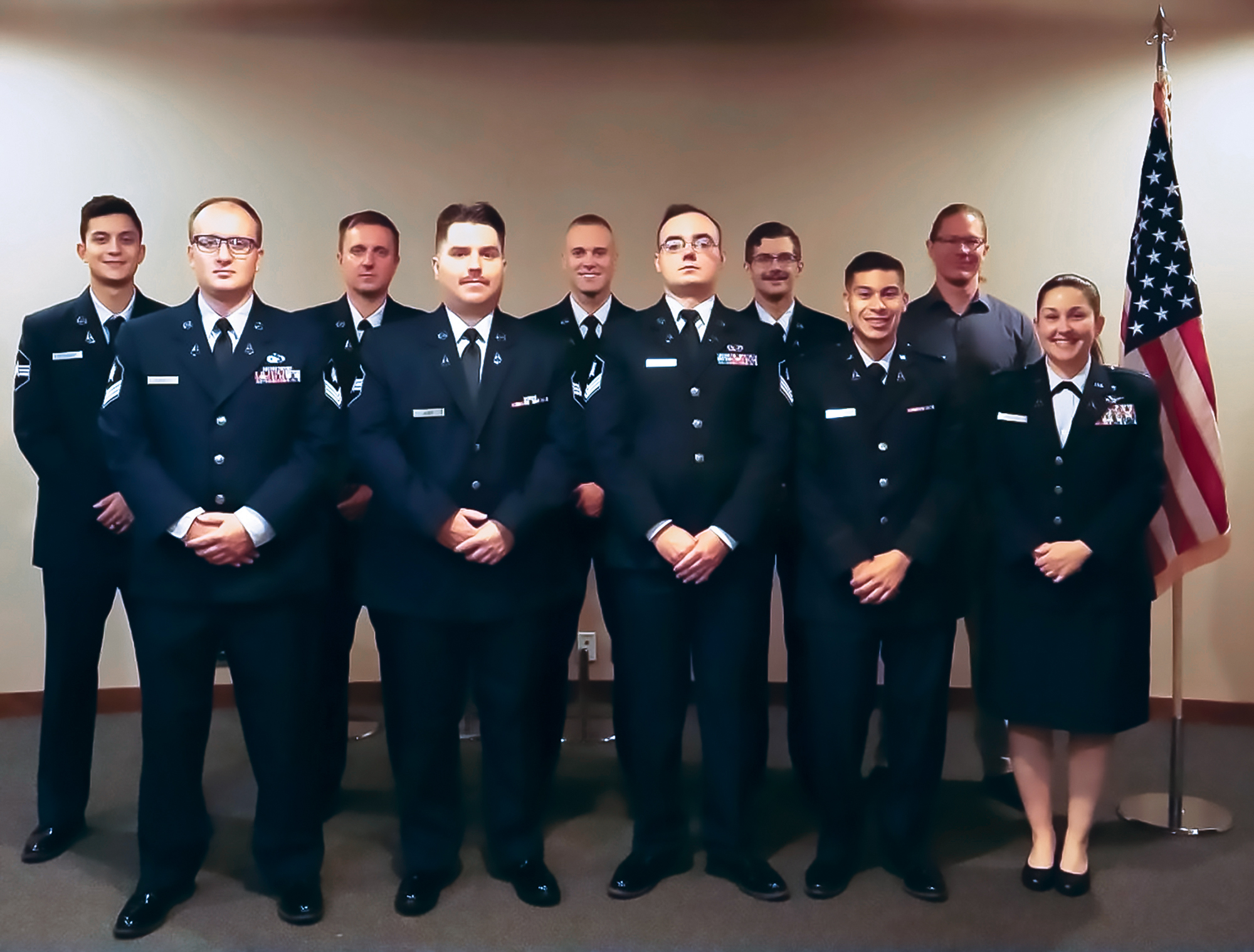
ARCHER TEAM
Space Operations Command
The Archer Team truly embodies the Guardian values of Character, Commitment, Connection, and Courage. The team demonstrated exceptional character by leading Guardian Arena III, helping 18 Guardians qualify for the national event. They also led their base’s Combined Federal Campaign, raising $2.2 million for 5,000 charities and becoming the No. 2 contributor in the national campaign. Their pioneering culture earned them the Department of the Air Force Guardian Intelligence Award and Space Operations Command’s Innovator Team of the Year. To build connections, the team supported the STEM to Space initiative, running robotics competitions for 1,600 students across 10 states. They managed 150 volunteers, raised $125,000 for local STEM programs, and created a professional development forum to cultivate peer networks among local leaders. Their commitment to service was clear when they helped finalize the Space Force’s first advanced intelligence training program, closing critical readiness gaps and getting six new tactics approved. They also developed coding tools that accelerated analysis for 47 global sensors, improving operational speed and effectiveness. Displaying true courage, the team led a $1.7 million intelligence system installation with no prior experience, finishing two days early and increasing operational support capacity by 130 percent. They also coordinated intelligence assets that enabled 15 successful operations against adversary space targets.