
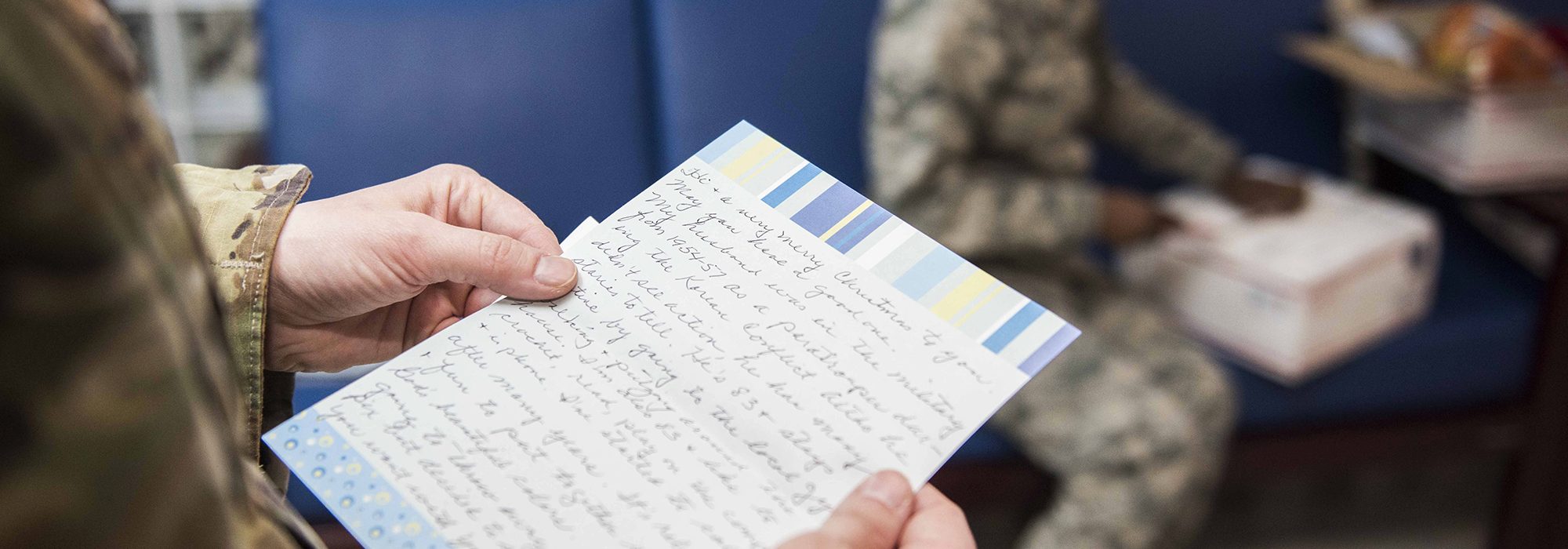
We love letters! Write to us at letters@afa.org. To be published, letters should be timely, relevant and concise. Include your name and location. Letters may be edited for space and the editors have final say on which are published.
Assurance
I have rarely agreed with Gen. Merrill McPeak. But I do agree with his comments on flying hours in the November/December 2025 issue [p. 2].
Flying hours is the baseline program for all types of aircraft, not just the fighter world that he talks about. It also figures into things that support those all-important hours in the air building pilot proficiency. Things like fuels, life support and maintenance requirements, without which there would be no flying.
Proficiency isn’t limited to combat pilots, McPeak’s term, it’s just as important for the tanker, airlift, and special ops world. Those combat pilots can’t do their job without proficient tanker and airlift crews. Halfway to the fight you want to know the crew in the tanker is proficient and will be at the refueling track when scheduled.
It would be next to impossible to get the support people and equipment to forward operating locations quickly without proficient airlift crews. And knowing the rescue teams are fully proficient before climbing in that jet is more than reassuring.
So, I suppose determining which item to fund at what level for Air Force planners can be a tough problem. But the Air Force mission is to fly, fight, and win.
The only way to do that is get aircrews and everyone else connected to flying as proficient as possible. And that means fully fund Air Force flying hour programs.
CMSgt. Bill Leistiko,
USAF (Ret.)
Wichita, Kan.
Plan Ahead
Tobias Naegele wrote an excellent editorial entitled “Deterring Now Costs Less Than Winning Later,” [January/February, p. 2]. He notes that the outstanding successes of Operations Midnight Hammer and Absolute Resolve do not indicate the capacity of the U.S. air forces to “sustain a multiday attack plan.”
Despite the superior equipment and tactical excellence of the U.S. air forces, the current lack of “aircraft, weapons reserves, and trained personnel” need to be resolved in the near term. President Donald Trump’s $1.5 trillion budget is a good start to enhance preparedness and readiness.
While I agree with everything stated by Naegele, I believe Congress needs to pass a bill that will authorize the administration to execute any possible operations that would defend American forces, people, facilities, and interests against foreign and domestic belligerents, terrorists and enemies, as required to maintain the peace and security of America.
This would also ensure the administration’s domestic political opponents do not try to upset any operations after the fact.
Lt. Col. Russel A. Noguchi,
USAF (Ret.)
Pearl City, Hawaii
Opposing Forces
“Instant Thunder and the Roots of Desert Storm” [January/February, p. 37] ranks among the best articles in the history of Air & Space Forces magazine, and I very much look forward to reading the rest of the series. Contained in the article were revelations that helped fill in a few gaps that until now never did make much sense to me, namely how the man universally credited with the basic Gulf War air plan, Col. John Warden, could have been relegated to D.C. vice be a part of the operations team who implemented the strategy.
Sadly, seeing the background provides another very disappointing reminder that at the heart of so many decisions lie the ugly beasts of human ego and prejudice. Gen. Chuck Horner was certainly a very courageous air warrior in Vietnam, but his treatment of Warden in that briefing was the epitome of unprofessional abuse of authority. I have since learned additional information about events in that briefing, how Horner continuously interrupted Warden, peppering him with condescending questions until finally, after implying that Warden ignored the threat of an Iraqi armored invasion of Saudi Arabia, Warden stated that Horner’s concern was overwrought, and then apologized after saying it.
It seems everything Horner did in that briefing was designed to elicit just that sort of reaction, to justify taking Warden’s plan but shunning Warden to the sidelines. Many reasons have been offered for this abuse, but the most repeated reason was Horner’s prejudice that anyone out of Washington would ruin the air war in Kuwait and Iraq, same as John McNamara and Lyndon Johnson had done in Vietnam. This blind prejudice was inexcusable given Warden’s own vast combat experience in Vietnam.
Warden was not some civilian egghead. He was a seasoned combat aviator just like Horner, from the same war, holding the exact same level of outrage over how the air war in Vietnam was restricted. Vice this being a common tie between the two men, Horner allowed his prejudice and ego to cloud his judgment. Warner’s plan was proven effective, but Horner wanted to sideline him, to dismiss him as nothing more than another McNamara style egghead who could write papers but couldn’t lead an air war. Warden remained a colonel until he retired, and Horner retired three years after the end of the Gulf War.
It seems evident that both men’s careers would have faired better had Horner managed to show proper objectivity and decorum in that briefing back on Aug. 17, 1990.
Maj. Ken Stallings,
USAF (Ret.)
Douglasville, Ga.
Mission Critical
The current issue arrived today and, as is my custom, I started to read. This started well with an excellent article, “Telling USAF’s Story is a Critical Mission” [January/February, p. 7] where author John Tirpak takes an unidentified Air Force colonel to task for being too modest during an interview carried by NBC.
I found myself nodding in agreement, until a few pages on I found Gen. Michael Guetlein, director of the Golden Dome project, saying he was being quiet not talking to the press, think tanks, or even Congress “to preserve this capability to defend the nation from our adversaries.”
While mulling this over, another excellent article, “Instant Thunder and the Roots of Desert Storm,” reminded me that Gen. Mike Dugan was fired as Air Force Chief of Staff after an interview carried by the LA Times where his advocacy of airpower was thought to be too strong by more senior officials.
Perhaps a future issue can sort this out and relieve my whiplash.
Col. Michael R. Gallagher,
USAF (Ret.)
Eugene, Ore.
John A. Tirpak’s “Telling USAF’s Story is a Critical Mission” calls attention to what may well be the difference between whether the U.S. wins or loses a future conventional war.
Given limited defense budgets, U.S. political and military leaders must recognize the critical need to devote sufficient resources to ensuring the USAF possesses the most advanced assets in sufficient numbers even if it means the Army suffers from a smaller share of the defense budget. Ensuring the USAF receives sufficient resources requires that USAF leaders be able to explain to our political leaders, as well as the American public, why our airpower will be the key to warfighting success at the lowest possible cost in terms of American lives. Being able to tell why airpower is the key to success requires being able to explain how advances in technology have changed the way conventional wars on land must be fought.
Even as far back as World War II when airpower still depended on an aircrew’s unaided vision to find enemy land forces, air power was changing how wars were fought. As German Field Marshal Rommel explained, “Anyone who has to fight, even with the most modern weapons, against an enemy in complete command of the air, fights like a savage against modern European troops, under the same handicaps and with the same chances of success.” But now, thanks to truly significant advances in technology, finding enemy land forces no longer depends on an aircrew’s unaided vision and thanks to advances in technology it is also now possible to precisely destroy these forces.
It is quite possible that Army leaders howled at Gen. Merrill McPeak’s assertion about U.S. airpower’s effectiveness in Desert Storm because they knew and feared the way that advances in technology were changing how conventional wars on land needed to be fought posed a threat to the size of their share of the defense budget.
While Secretary of Defense Robert Gates was right that F-22s were not critical to the counterinsurgency campaigns in Afghanistan and Iraq, the real question that he should have addressed was whether the U.S. should have even chosen to fight these insurgencies that were consuming such a large portion of the defense budget and costing so many American lives.
It appears that both Gates and the Army failed to recognize why the U.S. has a very poor record of success in fighting insurgencies just as they have failed to admit that it is past time to change how the U.S. fights conventional wars on land.
Lt. Col. Price T. Bingham,
USAF (Ret.)
Melbourne, Fla.
Revolution or Evolution
The “Digital Revolution” began in the U.S. over 50 years ago in the early 1970s [See “Beasts in the Machine,” January/February, p. 48]. Defense systems requirements and money largely funded the surge in digital systems research and development and brought together America’s best and brightest computer hardware and software talent! Subsequent advancements increased our capabilities exponentially.
Our national deterrence strength surged, which greatly contributed to our Cold War victory. Today, adversaries and economic competitors are challenging our national security and continued world technical and economic dominance. It has become politically necessary to communicate our renewed emphasis to increase essential funding for both those long-standing digital initiatives and the continued evolution and domination of new emerging technologies.
The recent adoption of the new collective and “catchy” term “Artificial Intelligence”—“AI”—was deliberately chosen to make this happen! The “Digital Revolution” continues, and those early and subsequent initiatives are now conveniently if not deliberately “morphing” into today’s preferred new term AI, the natural advancement, progression and “evolution” of digital data technology systems over the past 50-plus years, and our future.
Perhaps a more appropriate interpretation of the acronym “AI” is “American Ingenuity.”
Lt. Col. Stephen Pedone,
USAF (Ret.)
Naples, Fla.