
The biggest airlift campaign in history wasn’t always pretty. But it worked.
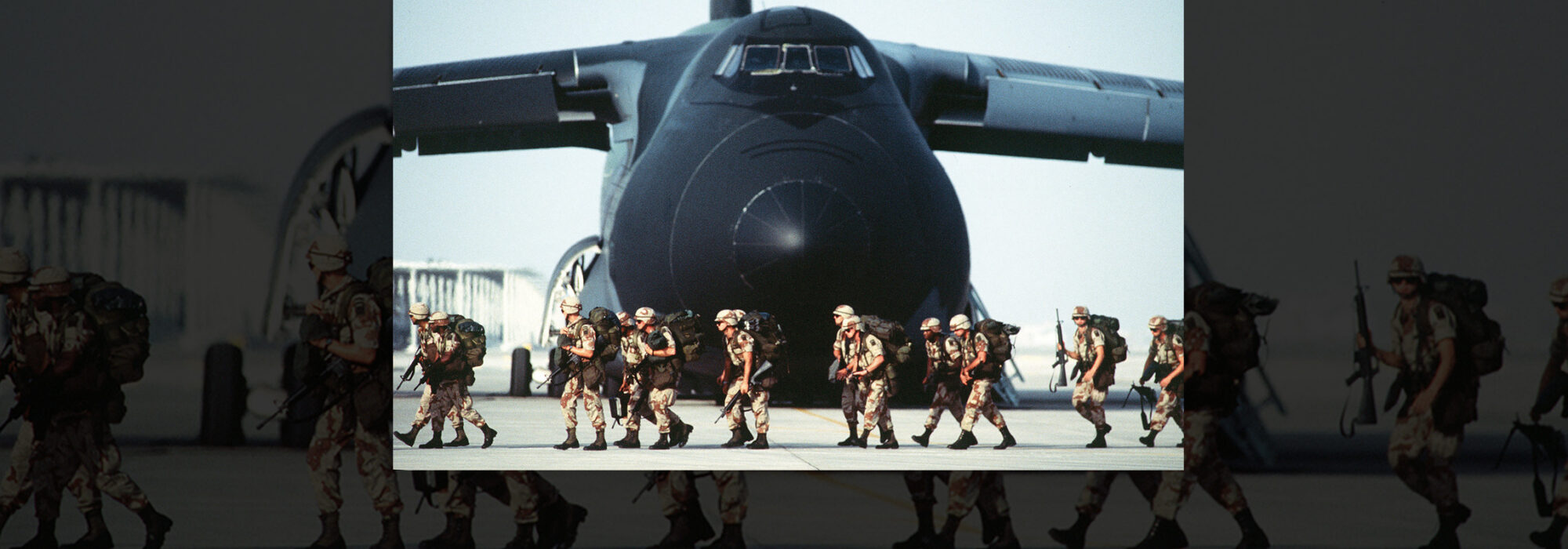
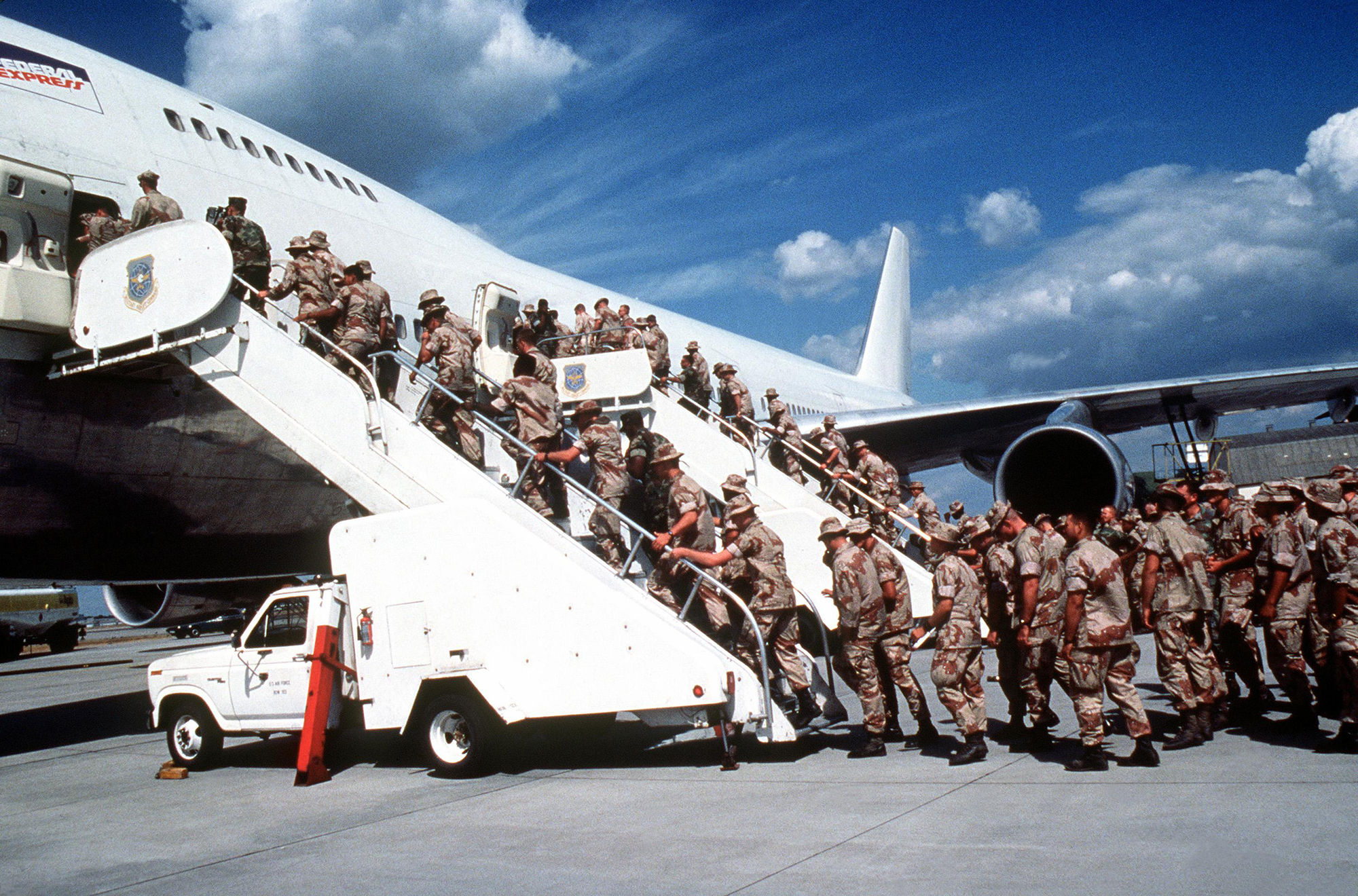
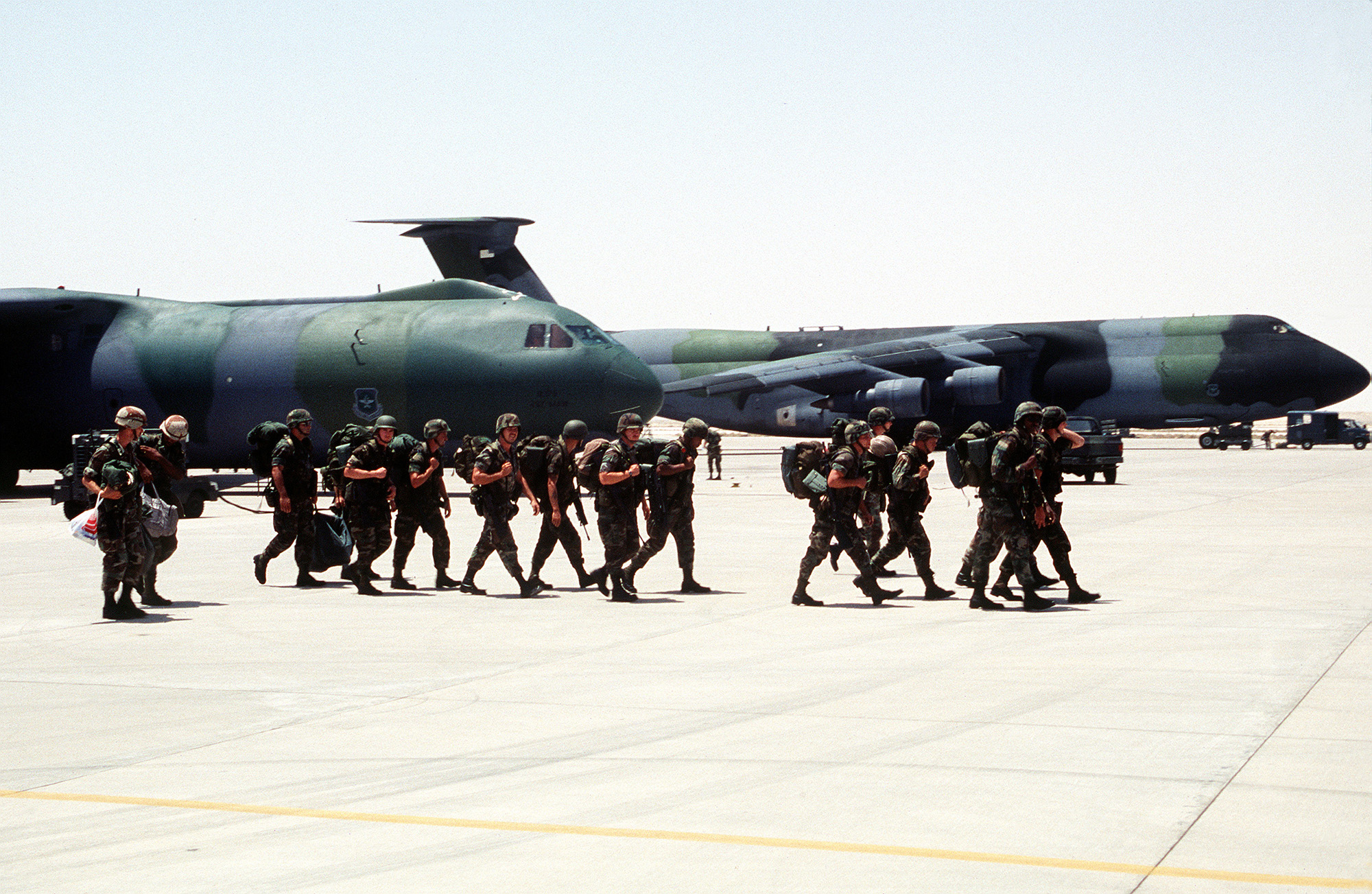
It was like picking up the population of a mid-size American city—Atlanta, Kansas City, Sacramento—and moving it halfway around the world. More than a half million people, vehicles, weapons, equipment, most of it moving by air from bases and stations across the United States, Europe and the Far East, to the deserts of the Arabian Peninsula.
It was a heavy lift—and a rush order.
Saddam Hussein’s Iraqi Army flooded south into Kuwait Aug. 2, 1990, crossing the border to seize Kuwait’s oil fields and then forging forward to take the entire country in a single, bold stroke. Iraq’s battle-tested force had endured years of war with Iran, was armed with Soviet tanks and ground weapons, and backed by Soviet- and French-built fighter aircraft. It was the fourth-largest army in the world, and there was nothing but miles of open desert between it and the capitals of Saudi Arabia, Bahrain, the United Arab Emirates, and Qatar. If Saddam seized those countries, Iraq would control 40 percent of the world’s oil supply.
Part 2 in a series about Operations Desert Shield and Desert Storm.
Stopping him was instantly an international priority. As President George H.W. Bush and his national security team strategized in Washington, D.C., Army Gen. Norman Schwarzkopf, commander of U.S. Central Command, had the job of orchestrating a defense of America’s Arab allies. But 1990’s version of CENTCOM was hardly the organization it is today. The U.S. had no military bases in the Middle East back then and CENTCOM’s Tampa, Fla., headquarters was best known as a sleepy command, an attractive destination for end-of-career officers planning their retirements.
On Aug. 3, a day after the invasion, Schwarzkopf outlined a preliminary force package to stop Saddam. Schwarzkopf wanted one Army corps, one Marine division, three aircraft carrier battle groups, the Air Force’s 1st Tactical Fighter Wing, and 12 follow-on fighter squadrons as soon as he could get them into the region.
There was only one problem: According to the Air Force’s Gulf War Air Power Survey, developed after the war to capture its history, airlifting all that into theater “exceeded Military Airlift Command’s (MACs) capacity by a factor of six to seven.”
Logistics were now at the top of everyone’s agenda.
Gen. Hansford T. Johnson, commander of U.S. Transportation Command, stood up a Crisis Action Team on Aug. 4 to launch what would become one of the biggest airlift operations in the history of the world. Military flights began shuttling equipment to the desert on Aug. 7, followed by commercial flights Aug. 8.
Airlift requirements grew by the day. “Nobody wanted to travel light,” the Airpower Survey’s authors observed.
CENTCOM used a planning system called JOPES—Joint Operation Planning and Execution System—to track and understand transport requirements. But JOPES was overwhelmed by the sheer scale of Operation Desert Shield and the speed and frequency with which its users made changes. Commanders pulled out plans built years before by officers who had long since retired, and—predictably—viewed those as a mere starting point.
Between Aug. 11 and Aug. 13 alone, requirements for the first seven units to deploy rose 60 percent, according to the Gulf War Air Power Survey. Airlift requirements continued to exceed capacity for the next 40 days.
Finding where to put incoming military units was no less challenging. Host countries weren’t eager to have the public know U.S. operators were in residence on their bases. As Michael Gordon reported in the New York Times that August, journalists accredited by the U.S. military were told they could not name the bases where U.S. forces were establishing a presence in Saudi Arabia—even if it would be relatively obvious to anyone with a map. In Bahrain, he wrote, a government official held a press conference to endorse U.S. support—but refused to be quoted by name.
Conditions for troops were often primitive, Gordon wrote, describing Soldiers at what others confirmed to be Saudi Arabia’s King Abdulaziz Air Base in Dhahran, resting under the shelter of a makeshift tent—boards laid across the space between two tanks.
Air Force units accustomed to routine deployment rotations where bases were ready to host them found the desert comparatively inhospitable. Col. Jerry Nelson was the vice commander of USAF’s 401st Fighter Wing based at Torrejón Air Base, in Spain, and became the provisional wing commander when the wing’s 614th Fighter Squadron deployed.
Departing Spain days ahead to set things up for the squadron, the wing staff got held over in Germany for 24 hours before they could fly into their deployment destination: Doha, Qatar.
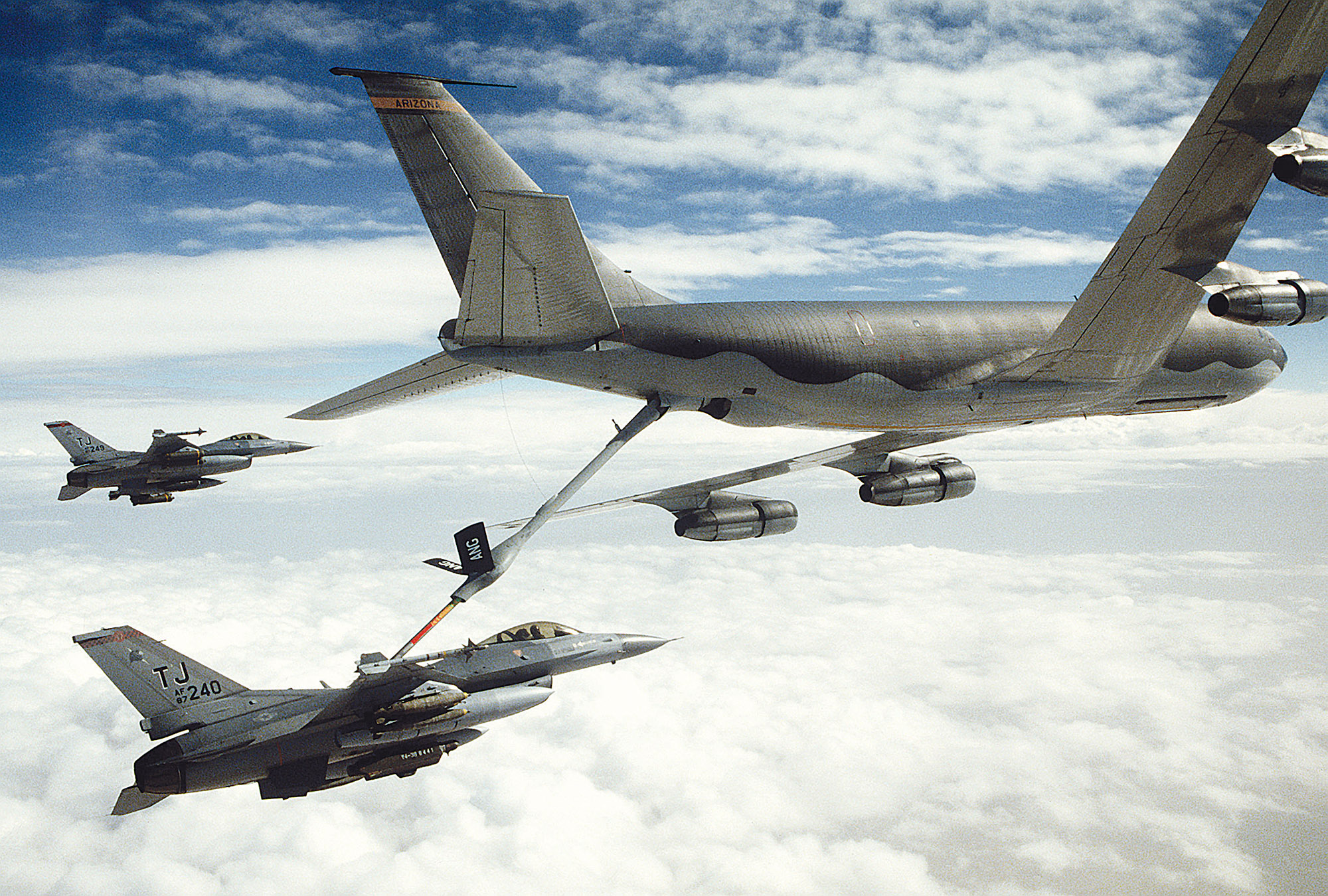
Then-Lt. Col. Bruce “Orville” Wright, the squadron commander for the 614th, said most of his Airmen needed a map to figure out where they were going, never having heard of Qatar. Unsure what they might face en route, the squadron’s 27 jets took on AIM-9 air-to-air missiles as they prepared to take off before dawn, radios off, their ground crews already loaded aboard two KC-10 tankers that would refuel them along the route.
“We thought we might have to fight our way in,” recalled Wright, who retired as a three-star.
Though the unit deployed regularly, rotating through Turkey for their Cold War nuclear mission and falling in on working and living spaces as well as equipment, the air base in Qatar had none of those friendly features.
Wright described the scene: “It’s 110 degrees on the ramp and the KC-10 guys, young captains, just kept their airplanes sitting there with the APUs [auxiliary power units] running so the crew chiefs could get on and off and take care of the airplanes. The KC-10s were our hangar because there was no prep at all.”
Nelson, who had arrived first, had no time to prepare for the incoming fighters, and even unloading gear proved to be difficult. “Usually when we would deploy, you’d deploy on a C-5 or a C-141, and you lower the back door and you drive off whatever your equipment is,” he said. “But you can’t do that on a KC 10, and we didn’t have ladders for the people to go down, we didn’t have forklifts.”
Passengers exited through the flight crew’s stairs and though the Qataris offered a forklift to unload pallets aboard the tankers, the tines on the lift were too short for the job, and pallets had to be dismantled to get the gear out. “It took us 12 hours to unload,” Nelson said.
The Airmen were comfortably billeted at a local hotel, but the comfortable setup was too good to last.
“Gen. Charles “Chuck” Horner called me and said, ‘You’ve got to get out of that hotel, because General Schwarzkopf says you’re sitting ducks in there.’ I’d been thinking the same thing, but where do we go? We didn’t have tents. But we left and then … we had guys sleeping in the back of pickup trucks, in the corner of the hangar, all of that kind of stuff,” said Nelson.
A day or so later the Qataris provided an unused barracks, which had rats—but no latrines or amenities. Troops ate meals ready to eat out of the bag until field kitchens and tents started to arrive, Nelson said, “nice ones, air-conditioned, and the civil engineers set them up.”
Meanwhile, Military Airlift Command, Military Sealift Command, and U.S. Transportation Command worked on getting the Army and Marines into theater and MAC’s air wings swung into action to meet demand. At MAC headquarters at Scott Air Force Base, Ill., Maj. Gen. Vernon Kondra, deputy chief of staff for plans and programs, jotted down his own “List of Concerns” and limiting factors and delivered them to his colleague, the deputy chief for operations. Kondra had a lot of concerns, and evidently, so did MAC boss General Johnson, who dispatched his ops boss and reassigned Kondra that same day.
“At 4 o’clock the next morning, I went to my new office,” Kondra recalled in an oral history recorded 14 months later, in October 1991. “I found the list I had prepared the day before, waiting for me on my desk.”
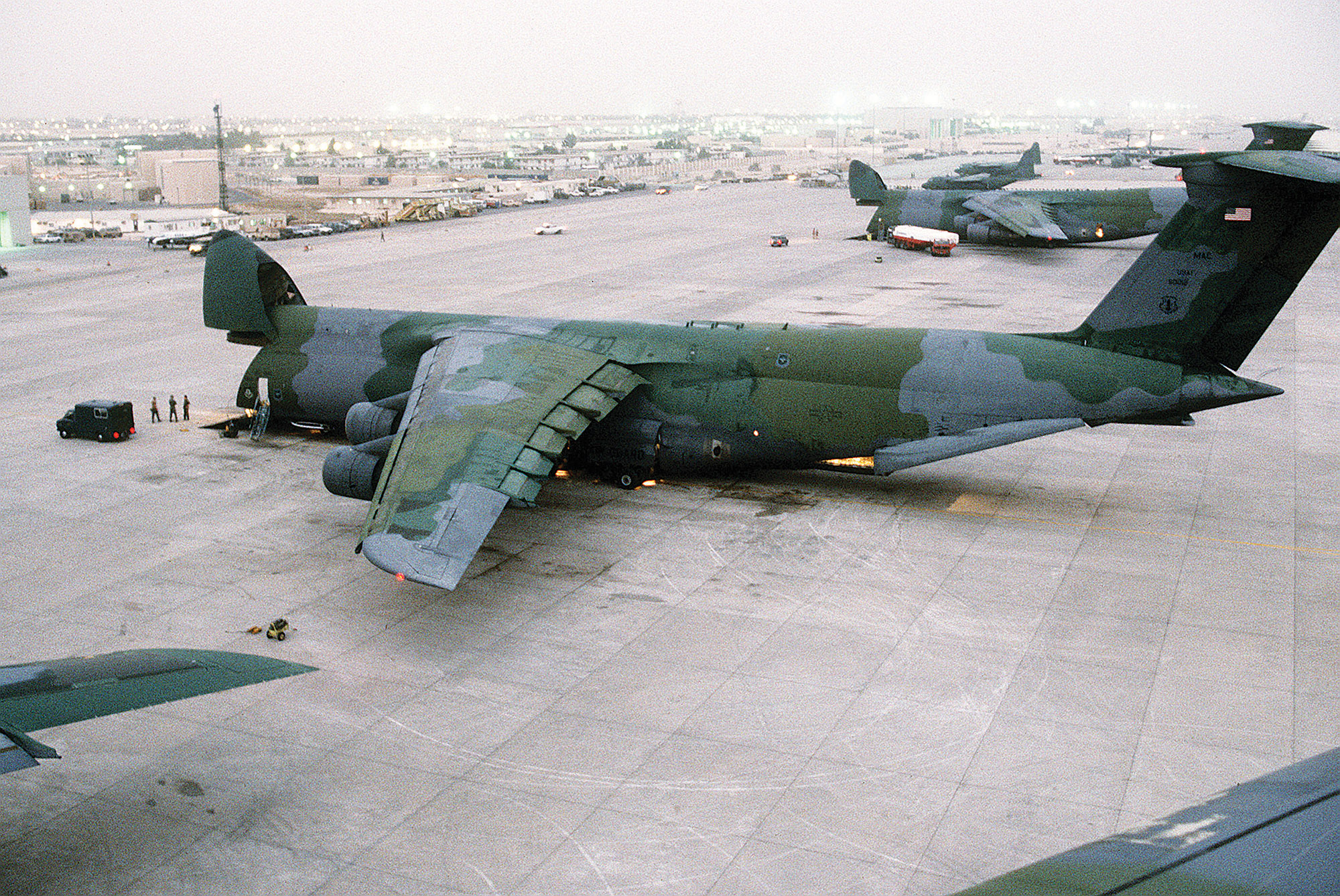
Kondra took over an operation in progress. In August alone, MAC would move more than 70,000 passengers on 1,500 C-141 and C-5 missions. The C-141 Starlifters, which went into active service in 1964 and had undergone extensive depot work to rebuild their wing boxes and extend their design life were tired airplanes by this point. The C-5 Galaxy fleet, which had suffered similar issues, had been re-winged in the 1980s and by 1990 were flying without restrictions.
But maintenance was of great concern to Kondra.
“My biggest problem, when I took over, was that I didn’t know what I wasn’t doing,” he said. “I knew how many missions were flying, but I didn’t know how many good airplanes were sitting on the ground that could be flying. So I went to the maintenance guy, Maj. Gen. John Nowak, the MAC/LG … and said, ‘John, I’m shutting the door, because this is heresy. Maintenance is going to drive this operation. You’re going to tell me how many in-commission airplanes you’ve got, and I’m going to schedule missions against them. As a matter of fact, I’m going to overschedule them. I’m going to make sure that every day there will be more missions scheduled than you have airplanes … so that there will not be a good airplane sitting on the ground that isn’t flying.’”
The difficulty was defining “in commission.” Kondra could track, station by station, airplane status and found he could push maintenance to release aircraft that still needed fixes, minor repairs that were not material to safety.
Then-Col. William Begert, who had taken command of the 60th Military Airlift Wing at Travis Air Force Base, Calif., in June, was also concerned with maintenance. In command only a matter of weeks, he was pulling long-haul flights to Saudi Arabia within days of Saddam’s invasion.
“I think the first time I landed in Saudi was like three or four days” after the Aug. 2 invasion. “We were generating sorties like crazy. … Very high tempo right from the start.”
Travis jets left home, flew to U.S. bases, picked up Soldiers, Marines, “equipment, weapons—all that kind of stuff,” recalled Begert, who eventually became a four-star commander.
Jets were rushed out of depots early and many standard procedures were being waived. “A number of our airplanes didn’t have paint jobs—they were unpainted, raw silver,” he recalled. “But they had finished enough of the depot work to get them going.”
Looking like throwbacks to the 1950s, the unpainted jets provided essential capacity in a crisis. “We had to generate as much as we could on the ramp,” Begert recalled. Raw-metal fuselages added a visual dimension to the expression “aluminum bridge” now being used to describe the flow of people and equipment to the Middle East.
Begert’s wing deployed 3,500 of 9,000 Airmen, sending them to East Coast, European, and Middle East bases to help maintain the flow of people and gear. The associate Reserve wing was activated, including medical, maintenance, and aerial port personnel in addition to flight crew.
“The crews also were carrying broken airplanes and flying with stuff they ordinarily wouldn’t fly with,” said Begert, who flew missions every couple of weeks to keep an eye on his Airmen and operations downrange.
East Coast bases were the bottleneck as gear piled up, especially at Dover Air Force Base, Del. But maintenance also became an issue. “When airplanes came back from downrange, they needed work, they needed spare parts or an engine change, those kinds of things, which were done in Europe and primarily on the East Coast,” as airplanes limped back from missions, Begert said. Meanwhile, Travis had repair capacity, but no jets. “Airplanes would get fixed and they would deploy again off the East Coast.” One coast had a backlog, the other excess repair capacity.
Begert suggested routing returning aircraft from Europe north, over the pole, rather than west, then landing at West Coast bases. “We still had plenty of capability at Travis and could work on those airplanes. Doesn’t matter whether they’re Travis airplanes or not. And we could generate them and send them back out.” Sure that this would help generate more planes faster, he pushed his idea up the chain. “But I could never convince anybody to change the CONOPS, and that continued throughout Desert Shield.”
Flying the polar route “would have been a fairly unusual thing,” Begert acknowledged, still convinced the idea had merit. “But if you take a look at the world, it’s only a couple hours of extra flying time. … But that didn’t prevail.”
Downrange, operators found another bottleneck: Refueling aircraft on the ground. So many planes were landing in Saudi Arabia that ramps became overcrowded. Fuel was plentiful, but access to it became harder as the ramps became gridlocked.
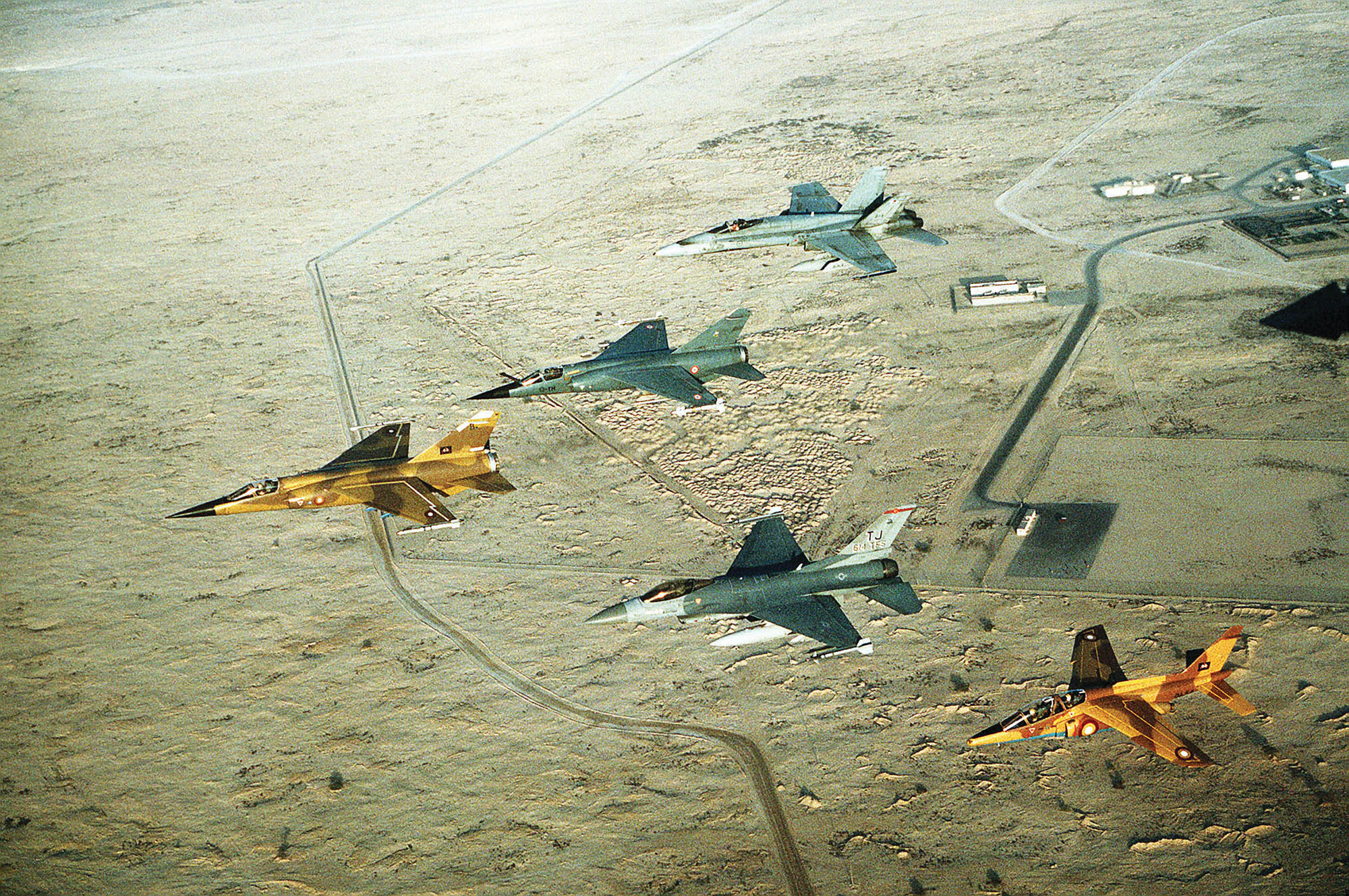
C-141s couldn’t refuel underway but C-5s could. But the tankers didn’t belong to MAC in those days, and tribal barriers between major commands were hard to overcome. The Air Force’s 500 or so tanker aircraft belonged to Strategic Air Command, and while SAC sent tankers downrange, that was to support the fighter and bomber aircraft in theater. SAC deployed 115 KC-135s in the first phase of Desert Shield and would eventually deploy more than 300.
In the early stages, KC-135s flew “the Desert Express,” carrying people and equipment in support of B-52s deploying to the Indian Ocean island of Diego Garcia. Flying from the U.S. to Hawaii and on to Guam, their contents would be transferred to KC-135Rs and KC-10s that could make the haul to Diego.
Forward-deployed tankers were generally unavailable to airlifters, however.
“The CONOPS didn’t include tankers, really,” Begert said. “We did things the old-fashioned way, the way we had always done them, and for this massive deployment, it just kind of ended up bottlenecking everything on the East Coast.”
Bottlenecks also started showing up in theater. At Dhahran, so many airplanes were on the ramps that ground traffic became overwhelming, as planes couldn’t get access to fueling stations.
Kondra recalled: “We had people waiting up to nine hours on the ground for fuel. We had too many airplanes on the ground; we had 28 on the ground there at one time, and there were not enough fuel pits to service them all.”
At Jubail, where the 1st Marine Expeditionary Brigade was trying to get in, C-5s were also held up by fuel. “The C-5s were going to go into Jubail [and] I wanted to have them in and out, because Jubail didn’t have much refueling [capability],” Kondra explained. His idea was to aerially refuel before landing, then unload and take off and on the way out do another aerial refueling for the full flight home. “Then we wouldn’t have to try to refuel on the ground. I was trying to cut the ground times down, because we were having to wait eight, nine hours for fuel.”
SAC declined to support the idea, however. “Somebody decided we didn’t need them,” Kondra lamented. “Well, [true,] we didn’t need them to get there and back, but we needed them to cut down on the ground times. But some people who don’t understand ground time and throughput didn’t look at it in those terms. … We never did get the tankers.”
Kondra noted that on Aug. 29, six C-5s came in to Jubail, two met their ground times of about two hours, while the other four sat from four to 10 hours waiting on gas.
The problem wasn’t just wasted time on the ground—it was extending mission time and wearing out crews.
Starting in Europe, a flight would onload, fly the mission, offload, and return. “If everything went perfectly it was about a 22-hour crew duty day,” Kondra said. “Then you throw in a nine-hour wait for fuel and you just went past the 24-hour crew duty day. We had people, in the initial stages, who went up to 36 hours.”
That was more than double normal limits. Pilots aren’t supposed to fly more than 120 hours in a 30-day period, a safety measure to ensure sufficient crew rest and attention while flying. While those limits can be broken for necessity in wartime, that became routine before summer turned to fall in September 1990.
Air Force Chief of Staff Gen. Mike Dugan questioned the need for more Reserve crews, and Kondra flew to Washington to explain. “At that time 44 percent of the C-141 crews in the system were at 150 hours,” he said. “The system was about to come to a screeching halt.”
The 30-day limit had already been raised from 125 to 150 hours of flight time but now another cap was in his sights: 275 hours in a 60-day time frame. “Now if you’ve got 150, that means you can only get 125 in the next 30 days,” Kondra said.
MAC’s Johnson was prepared to authorize 400 hours in a 90-day period. Kondra had never before seen more than 330 hours. “I only gave two waivers, myself,” he said. “There may have been others, but I was supposed to be the one who did that. I gave two waivers to two crew members the night we moved Patriot missiles from Rhein Main [Germany] to Israel. They called me and said they had two crew members who would be over 330 by the time they got back, and I said, ‘Send them down—they have the waiver to go past 330—but when they come back, take them off and replace them with other crew members.’”
In addition to pilots, loadmasters were also in short supply. On missions with more than 40 passengers, two were needed. Waivers became routine, and some considered appointing Soldiers as temporary loadmasters to fill the requirement.
“Getting all our qualified loadmasters from the staff out and flying” was crucial, he said. Kondra pulled loadmasters from staffs “where they were figuring out the requirements and stuff.”
He used flying opportunities as incentives—“a reward for guys busting their butts 12, 14, 16 hours a day [at headquarters],” Kondra said. “We got them a break: I’d send them out for two weeks and let them go fly as qualified loadmasters.”
Adding Reserve aircrews also helped, enabling aircraft to be used for more hours in a day.
Airlines provided additional aircraft via the Civil Reserve Air Fleet (CRAF), and foreign airlines offered to loan airplanes at reduced or no charges. This drew complaints from the CRAF partners so the U.S. determined that only aircraft loaned free of charge could be used, eliminating competition to CRAF carriers.
But foreign aircraft, while offered by allies, were difficult to employ. Kuwait offered two 747s and crews, but the Air Force never used them because of concerns about foreign crews handling whatever the Americans loaded on board.
CRAF jets were crewed by U.S. commercial aircrews, raising concerns among some about flying into potential combat hazards. Fears about chemical weapons and the need for protective gear were preeminent. “It became a very emotional issue with the [commercial] crews,” Kondra said. USAF trained its aircrews on using chemical weapons gear, but the commercial crews had no training. “We didn’t give them equipment to take with them initially, because we said they wouldn’t know how to use it anyhow,” Kondra said. “When the SCUDs started flying there was some real concern—and rightfully so.”
Better late than never, the Air Force sent briefing teams to CRAF transit hubs in Europe, Kondra said. “We should have done that earlier. That was one for the lessons learned pile.”
Transit bases, where Air Force aircrew laid over, were not all up to the task—ill equipped to take care of all the aircrew, not to mention Marines and Soldiers passing through en route to “the sand box.”
At Torrejón, squadron commander Wright’s wife, Keri, and other spouses cleaned out the commissary shopping for baking supplies to provide some relief there, but things didn’t really improve, Begert said, until MAC’s Johnson made a stopover there.
“We were having trouble at Torrejón with crew rest and getting on base and getting busses to go to the airplanes—all that kind of stuff,” Begert recalled in a recent interview. “H.T Johnson flew in there on the way to the AOR, and he got off the airplane—as a four-star—and the wing commander didn’t meet the airplane. Johnson got back on the airplane, called [USAFE Commander Gen. Robert] Oaks.” Shortly thereafter, the wing commander made his way out to the airplane, trying to apologize. Torrejón belonged to Tactical Air Command, not MAC, so perhaps the wing commander didn’t think such a courtesy was needed. But a four-star is a four-star, and that shouldn’t have mattered. “So things got better after that,” Begert said.
Flight operations were so intense it was inevitable, perhaps, that something would go wrong. On Aug. 29, the Air Force suffered the first losses of Operation Desert Shield when a C-5 lifted off from Ramstein Air Base, Germany. The crew went through its preflight checks, which included testing the reverse thrusters. Afterward, one engine remained stuck in reverse, but the indicator light that should have signaled that to the crew malfunctioned—the light remained off. Shortly after takeoff, the plane went down, killing 13. Four crew survived.
On hearing of it, Kondra went upstairs to brief Johnson. “That was a long walk, from the second floor to the third floor,” he told his interviewer. “And I must say that there were doubts that went through my mind … thoughts that said, ‘Have we pushed too hard?’ Because I had no idea what had caused the crash. I only knew it was at night; I had no idea what the crew duty day had been, had no idea what they had been doing beforehand. So you have those doubts.”
Begert walked the crash site a few days later. It had been his airplane, but someone else’s crew, and though the crash was under investigation, operations continued unabated. This was wartime, and in war you don’t stop to think, because the mission remains. “You’re going to have to carry the airplane with some broken things that in peacetime you might not carry,” Begert said. “You’ve got to make decisions. But what you tried to have done all along [as the wing commander] is empower the aircraft commanders to be able to make those decisions.”
On the ground, training was getting underway. Troops were digging in, developing routines. Planners worked long days, continuously revising their target sets and the weapons needed to destroy them. Logisticians juggled needs—choosing which to prioritize, a turbine for a Navy ship or six Cobra helicopters for the Marines—and when the warfighters didn’t get what they wanted they complained. Of 1,500 missions, Kondra related, three caused someone “to raise hell.” If you don’t satisfy the customer 100 percent of the time, they’ll only remember the times you fail.