
Although 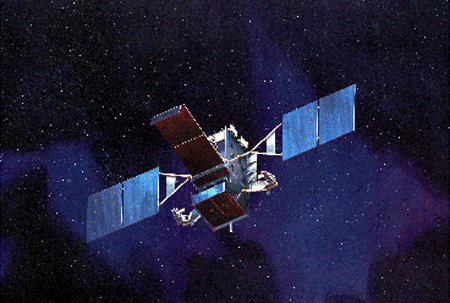 many National Reconnaissance Office satellites are more than a decade old and well past their intended service lives, their signals-collection capabilities remain fairly robust, said NRO Director Bruce Carlson. Once designed “to collect Soviet long-haul communications” during the Cold War, NRO now is employing these legacy birds to collect “push-to-talk radio signals out of the war zones,” Carlson told defense reporters Thursday in Washington, D.C. Insurgents use push-to-talk radios “extensively in the combat zone,” because they are very difficult to geo-locate, he said. It “requires overhead assistance and the fusion of that data,” he explained. But, with a series of overhead sensors pointed in the right direction, the “geolocation is very accurate,” he noted. In fact, NRO now measures geo-location in meters rather miles. That’s a significant improvement over the last several years, said Carlson. He noted that the adaptation of the satellites for this role is an example of NRO’s approach. “We’ve tried to make our satellites adaptable and robust because we have been successful and gotten more life out of them than what we originally planned,” he said.
The U.S. military conducted strikes on Iranian targets around the Strait of Hormuz on May 7, as the conflict with Iran flared up again—though officials say the ceasefire remains in effect.