
The Department of the Air Force announced seven new mission area-focused portfolio acquisition executives for the Air Force and Space Force, some of the department’s first steps to implement Defense Secretary Pete Hegseth’s sweeping acquisition reforms.
A central element of Hegseth’s plan to transform the way the Pentagon buys and fields weapons and platforms is the creation of portfolio acquisition executives to replace the current program executive office structure, which many view as siloed and inefficient. PAEs will combine several programs within a single mission area and, as proposed by the Pentagon, will report directly to the service acquisition executive. They will also have authority to move funds between programs and adjust requirements based on evolving needs.
The DAF on Jan. 8 revealed the first tranche of PAEs for the Air Force and Space Force. The Air Force’s first five PAEs are:
- fighters and advanced aircraft
- command, control, communications, and battle management
- nuclear command, control, and communications
- propulsion
- weapons
The Space Force will initially implement just two PAES—one for space access and one for space-based sensing and targeting.
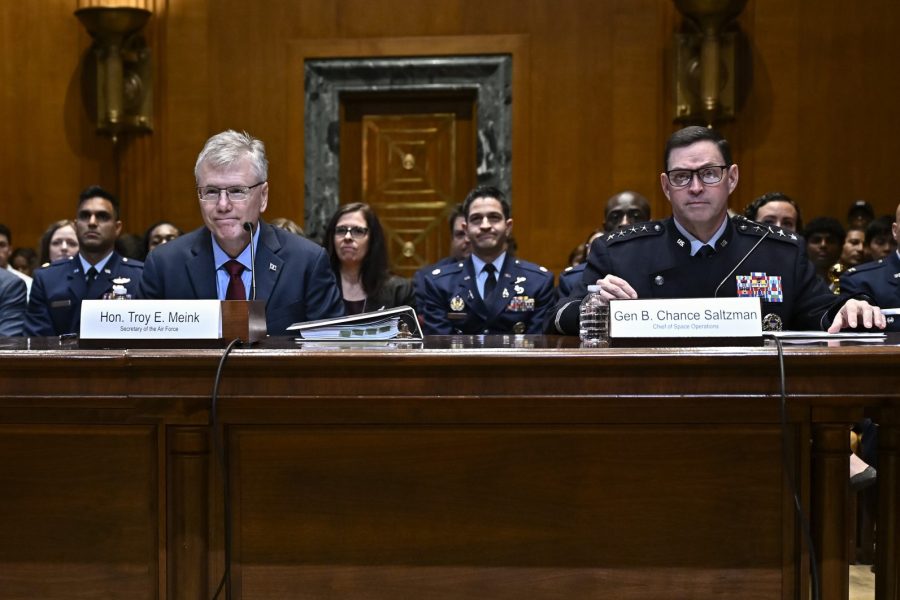
The services didn’t indicate who will be leading each portfolio and didn’t offer a timeline for when they will roll out additional PAEs. Air Force Secretary Troy Meink told reporters in December the department has identified most of the portfolios but is still working to align the new structure with the right resources and support. In the Jan. 7 statement he said funding and authority are key to successfully implementing the new approach.
“We will ensure that every one of our Portfolio Acquisition Executives, and the teams that support them, has the three things they need to succeed: the authority, the resources, and the talent to execute their mission,” he said.
Maj. Gen. Stephen Purdy, the Space Force’s acting acquisition executive, said the Space Force views acquisition as a “warfighting function” and will pursue rapid development and procurement with discipline.
“Speed with discipline is our mantra,” he said in the statement. “We continue to empower our acquisition corps to be experts who can manage risk and deliver capability through rapid, iterative cycles.”
Purdy told reporters at the Spacepower Conference in December that while the new PAE structure will help streamline program management of efforts that are currently “scattered” throughout the Space Force, there’s risk it could create new “seams” between those missions. The service plans to utilize Space Systems Command’s System of Systems Integration Office to manage that.
“No one can possibly own an entire kill chain, an entire element, there’s data in the cloud, there’s transports, there’s all sorts of elements,” Purdy said. “And so you know there’s going to have to be strong seam management.”
Statutory Changes
Hegseth’s acquisition reform agenda, which he rolled out in early November, was well received on Capitol Hill and across industry. The strategy called for the elimination of the Joint Capabilities and Integration Development System and directs the military services to adopt a commercial-first mindset and drive more competition into their development and production programs. Many of the initiatives can be implemented without congressional approval but some elements—including the essential authorities PAEs need to shift funding and adjust requirements—will need sign-off from lawmakers.
While Congress has endorsed the idea of portfolio management, some experts have said congressional appropriators are hesitant to give the services more authority at a moment where perceived executive overreach has eroded trust between the Pentagon and lawmakers. The House and Senate are currently negotiating a final Omnibus Appropriations Act for fiscal 2026, and PAE authorities are expected to be a sticking point.
Elaine McCusker, resident scholar at the American Enterprise Institute and acting DOD comptroller during President Donald Trump’s first term, told Air & Space Forces Magazine in November that while authorizers may be able to help “institutionalize” the Pentagon’s changes, the appropriators play a key role in providing the funding structure to support those shifts.
“Without statutory appropriation law changes, the budget will be out of alignment with the portfolio program management approach in the acquisition transformation strategy,” McCusker said. “If that new management approach is going to be effective and last, the budget will have to support it.”