
There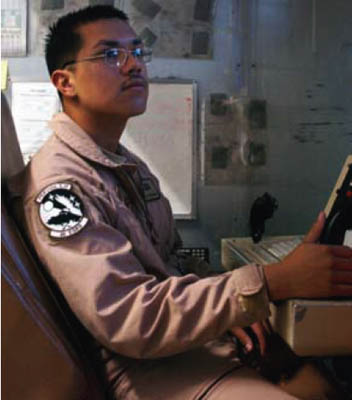 is a small contingent of pilots and sensor operators in Southwest Asia and more back in the states at Nellis AFB, Nev., who fly and target the MQ-1 Predator unmanned aerial vehicles. The SWA-based pilots get the small aircraft off the ground and remotely fly the UAV within 25 miles of their base; they also engage weapons. Once beyond the 25-mile perimeter, though, the stateside pilots take over. Maj. Craig Babbitt, commander of the 46th Expeditionary Reconnaissance Squadron, told the Red Tail Flyer that the only reason the stateside pilots don’t fly the entire mission is because of a six-second satellite delay. Still, being able to fly the bulk of every mission from Nevada means the Air Force can limit the number of airmen it must deploy. Babbitt has less than a dozen airmen in his squadron.
An F-16 Fighting Falcon assigned to the Texas Air National Guard’s 149th Fighter Wing crashed during a training mission in Michigan on Sept. 17. The fighter's sole pilot ejected and is in stable condition at a local hospital.
