
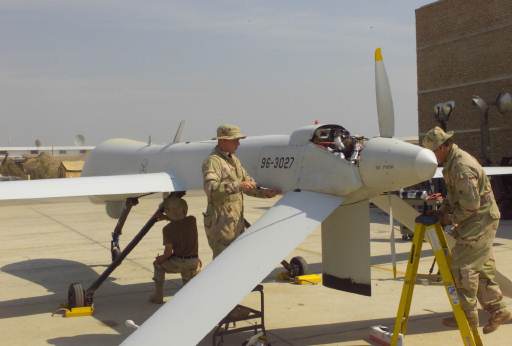
 Talking with Washington-based defense reporters last week, the Supreme Allied Commander Europe, Army Gen. John Craddock, said that NATO is about four brigades’ worth of troops shy of requirements in Afghanistan, but helicopters and intelligence-surveillance-reconnaissance capabilities are also in short supply. One problem is “movement,” the SACEUR explained. Fewer troops make helicopters even more important, so that reinforcements can quickly be delivered to the places where allied forces are coming under attack. The general also cited full motion video and the analytic capability to process the intelligence that FMV provides as a specific need in Afghanistan. The Air Force Predator and other unmanned aerial vehicles provide the bulk of this high-demand capability.
A combined Navy and Air Force program is seeking to build a smaller version of a ubiquitous air-to-air missile that could give advanced aircraft, such as the Collaborative Combat Aircraft, greater magazine depth in a high-end fight.