
President Donald Trump took to social media this week to announce the Pentagon could see its budget topline increase to $1.5 trillion in fiscal 2027—a boost of more than $500 billion above anticipated 2026 spending levels.
“This will allow us to build the ‘Dream Military’ that we have long been entitled to and, more importantly, that will keep us SAFE and SECURE, regardless of foe,” Trump said in a Jan. 7 post on his Truth Social site, adding that the 50 percent increase would be paid for with tariff revenue.
GOP leaders in Congress were quick to praise Trump’s commitment to a higher topline. Senate Armed Services Committee Chairman Roger Wicker (R-Miss.) has repeatedly called for U.S. defense spending to increase to 5 percent of the country’s gross domestic product, and a $1.5 trillion dollar budget would achieve that. Wicker said in a joint statement with House Armed Services Committee Chairman Mike Rogers (R-Ala.) that the funding will help accelerate key modernization programs across the services.
“Increased investment will lead to tangible hard power: accelerated shipbuilding and aircraft production, a modernized arsenal, and innovative technologies that ensure our warfighters remain unmatched,” the lawmakers said. “These efforts prioritize the needs of our men and women in uniform and deliver the ‘Dream Military’ President Trump has envisioned.”
Yet the announcement raised questions and skepticism from analysts and former defense officials. Exactly how the funding would be distributed among the services is unclear, at least until the White House releases its 2027 budget request, which traditionally is delivered in February or March, and it’s possible the topline could shift between now and then. It’s also not clear whether tariff revenue alone—which Trump has also earmarked for other administration goals, like reducing the federal debt and distributing rebate checks to middle-class Americans—is sufficient to fund the increase.
In a Jan. 7 note to investors, Byron Callan of Capital Alpha Partners considers it doubtful that Congress would appropriate so much mopney for defense. While Republicans successfully passed an extra $150 billion in defense funding for fiscal 2026 through the Big Beautiful Bill Act, passed by means of reconciliation, this proposal comes in the midst of a politically charged midterm election year in which Republicans are currently managing what Callan called a “razor-thin margin.”
Callan also questions whether the U.S. defense industrial base is prepared to respond to such a massive increase, even if the funding were spread over a few years.
“It raises multiple questions about how funding would be spent and how this increase could be absorbed by the defense sector,” he wrote.
Modernizing the Air Force
For the Air Force and Space Force, an influx of additional resources could be an opportunity to accelerate a massive modernization portfolio and ramp up aircraft and satellite production, defense analysts and former officials told Air & Space Forces Magazine. Yet it will be a challenge to balance those investments with the needed workforce, training, and industrial base support, especially if the spending surge is only a one-time hike rather than the beginning of long-term, sustained budget growth.
The Air Force typically garners about 20 percent of the military’s budget. If that portion remains consistent, the increase would be about $100 billion in 2027.
Retired Lt. Gen. Dave Deptula, dean of AFA’s Mitchell Institute for Aerospace Studies and former Air Force deputy chief of staff for intelligence, surveillance, and reconnaissance, said he thinks the service should use the potential influx to rebuilt aircraft inventories with new aircraft purchases to replace aging fleets, and to increase sustainment and flying-hour accounts to improve the service’s combat readiness. The service could use some funds for F-47 and Collaborative Combat Aircraft, he said, but focusing on existing production lines will address the most pressing needs first.
“You can come up with all kinds of ways to spend the money,” he told Air & Space Forces Magazine. “The most logical one from the Air Force’s perspective is you just start increasing the procurement buys.”
Todd Harrison, a senior defense and budget fellow at the American Enterprise Institute, suggested the Air Force would do well to focus any additional funding to cover cost overruns on programs like Sentinel, the long-delayed replacement to the Minuteman III intercontinental ballistic missile, and to accelerate the F-47 next-generation air dominance fighter and the recapitalization of its aerial refueling fleet.
“I would not count on this being a sustained increase in funding, so I would avoid increasing force structure,” Harrison said. “It would make more sense to buy down the acquisition bow-wave as much as possible while the money is available.”
Deptula and Mark Gunzinger, the Mitchell Institute’s director of future concepts and capability assessments, proposed in a policy paper published at the start of the Trump administration, proposed a $45 billion budget increase for the Air Force. The paper outlined a plan to acquire an extra 32 F-35As, 24 F-15EXs, and 10 B-21s annually, as well as a fleet of at least 26 E-7 early-warning and battle-management jets.
They also called for funding a Next-Generation Aerial Refueling System program to be able to start production in the mid-2030s and advocated for fully funding the Sentinel program. Deptula also said the ground-based air defense mission, flying hours, and weapon systems sustainment should also be top priorities for the service, and could be funded with an increase in the $100 billion range.
But Deptula emphasized that one-time boosts are far less valuable than sustained annual funding. “Key to this increase will be that this level for defense spending cannot only be a one-time shot,” he said. “It needs to be a re-leveling for future multiyear defense appropriations.”
Meeting Demand for Space Capabilities
The Space Force has the smallest budget share of all the military services, around 3 percent of total Pentagon spending, or $26 billion in fiscal 2026—though reconciliation increased that to about $40 billion. If its portion of a $500 billion defense increase were proportionate, it would receive an additional $15 billion in 2027.
But both Deptula and Charles Galbreath, senior resident fellow for space studies at the Mitchell Institute, argued that the Space Force should receive a greater than proportionate share of the increase to help it add personnel and meet the increasing demand for Space-dependent missions, such as space-based moving target indicators, and to increase its space superiority and counterspace capabilities.
Harrison was skeptical of this approach, arguing for his part that the Space Force as “flush with cash” for current obligations, due to reconciliation funding. More resources could help address unmet mission needs like building out its data transport layer, he said, but he argued that USSF should focus on delivering existing programs before launching new ones.
“The challenge for the Space Force is more about execution on programs than funding,” Harrison said.
The Space Force will play a major role in the Pentagon’s Golden Dome missile defense architecture, which is envisioned as a multi-layered missile defense shield that will combine existing sensors and missile tracking capabilities alongside advanced intercept technology. Galbreath suggested increased funding could speed development and scale production of existing sensors.
“There’s certainly a layer of sensors that has to be increased and expanded,” he said. “The C2, synthesizing all of that information, is also critical. There is progress that’s being made on that front, so I would expect additional funding to help accelerate the delivery.”
For the more challenging developmental elements of Golden Dome—space-based and ground-based interceptors—additional funding could allow the Space Force and other agencies to spread contracts among more companies, increasing competition to reduce risk and accelerate development.
“If you’ve got today three companies that are pursuing space-based interceptors, maybe you increase that to seven or 10 if you’ve got additional funding, knowing that some of them are simply going to fail,” Galbreath said. “And then once you’ve got winners, you’re going to put a whole lot more money into those to scale them to meet the threat environment.”
Beyond program increases, Galbreath suggested funding could be used to enhance the Space Force’s training enterprise and to increase the workforce it will need to manage acquisition programs and operate new systems. He cautioned, however, that the service should focus on sustainable investments initially, in case funding levels aren’t maintained in future years.
“You don’t want to buy 20 weapon systems if you only have personnel or sustainment funds for 10 in the outyears,” he said. “You’ve got to manage your growth in a realistic way.”
Execution Challenges
Both Galbreath and Deptula said they expect the defense industrial base is well positioned to take advantage of additional funding—whether to expand production lines or fill personnel gaps created by significant government cuts over the last year.
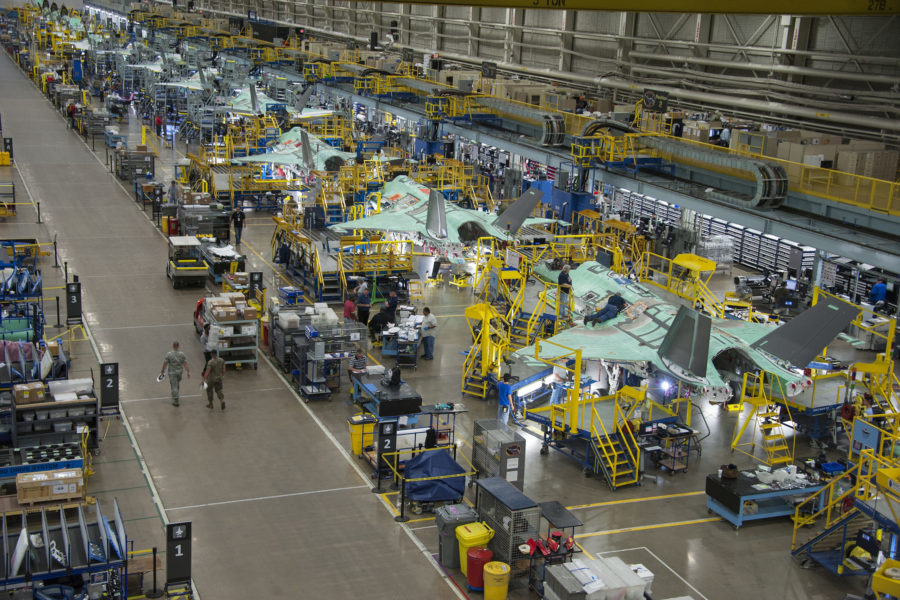
“We’re not talking about inventing new stuff,” Deptula said. “We’re talking expanding what is either already on the books or on the drawing boards. … With sustained funding, the production lines that are already in existence can increase output at meaningful rates.”
Similarly, Galbreath said the space industry is ready and waiting for a demand signal from the department. But a significant increase in production demands could pose challenges for the growing space industrial base.
“The big question I have is supply chain and pace,” he said. “Will we be able to produce the quantities of capability at the rate the government needs to match the spending profiles as well as the operational demand signal we see from an emerging threat? President Trump when he unveiled the $1.5 trillion, he said we’re looking at the threats and that number is based off of a realization of how significant those threats are. We have to meet them.”