


There’re 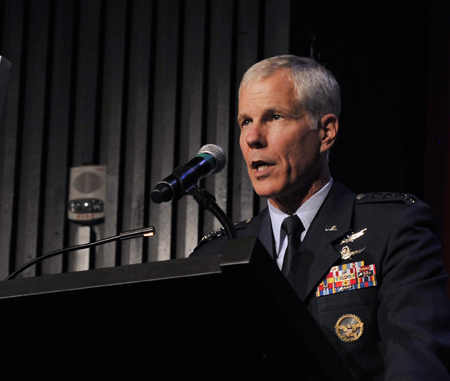 still far more questions than answers when it comes to operationalizing and defining cyberspace, said Air Force Space Command boss Gen. William Shelton. Addressing the Armed Forces Communications and Electronics Association conference in Vienna, Va., on Oct. 11, Shelton outlined what he called the five most “vexing issues in the cyber business.” First, he said, is the fact that the Air Force has yet to come up with a clear and effective definition of cyberspace. Second, the service needs to define its proper role in this realm. All four military services are completely dependent on cyber capability to complete their missions; however, it’s not clear if the Air Force should own the full spectrum or count on others to help with exploitation and offense, he said. Third is the challenge of recruiting and training the right personnel given a severe shortage of graduates in technology-related majors, said Shelton. Fourth, the Air Force must switch its focus from total information assurance to mission assurance as cyberspace becomes increasingly competitive and contested, he said. Fifth, the Air Force needs to work with industry to figure out industry’s role in the service’s cyber future, said Shelton.
The Space Force has selected six commercial space domain awareness companies to support military operations with both steady-state and surge capacity, as part of the service’s new Commercial Augmentation Space Reserve.