


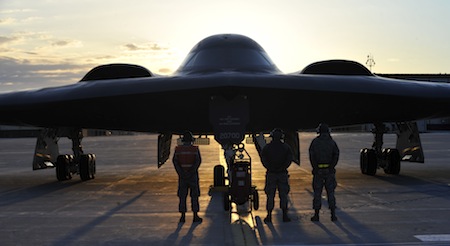
 Nuclear deterrence is as relevant today as it has always been, said Maj. Gen. Garrett Harencak, the Air Force’s assistant chief of staff for strategic deterrence and nuclear integration. “It’s as important today as it was in 1972, and 1962, and 1955, and we need to talk about it,” he said during a June 7 address on Capitol Hill sponsored by AFA, the National Defense Industrial Association, and Reserve Officers Association. Recapitalization of the nuclear deterrent force, including the Air Force’s Minuteman III ICBMs and nuclear-capable bombers, is needed, asserted Harencak. “Why? Because we took a procurement holiday for almost 30 years and now the bills are coming due,” he said. The United States also took an “intellectual holiday” on deterrence, he said. “We just didn’t talk about it. We didn’t talk to the American people about it. We didn’t talk to members of Congress about it,” he said. In that absence, he said, many lost an understanding for the fundamental principles of deterrence and myths emerged, such as this one: It makes no sense for the United States to possess nuclear weapons any more since the nation never uses them. “We use those weapons every day,” countered Harencak. “It’s called deterrence.”
The Space Development Agency wants to wrap up its Tranche 1 launch campaign by the end of spring 2027, flying six more batches of satellites to build out its tracking and data transport constellations, according to Director Gurpartap Sandhoo.
