


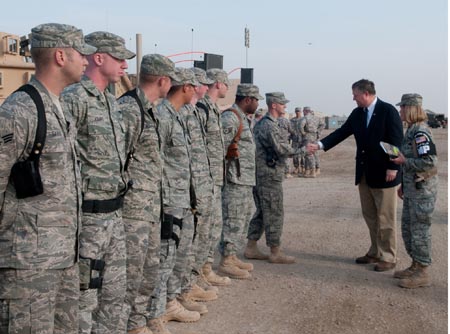
 The increase in Army and Marine Corps end strength “won’t substantially reduce” the number of airmen performing joint expeditionary taskings right away, an Air Force spokesman tells the Daily Report. The growth of land forces, he said, is focused on combat units, while most JET assignments—comprising work not traditionally done by airmen—fall into such areas as training, combat support, or combat service support. The number of JETs will decrease as US forces withdraw from Iraq, but since support units will facilitate the drawdown, JETs “will lag behind the withdrawal of combat units,” he said. Chief of Staff Gen. Norton Schwartz told Congress in February he hoped that the use of JETs wouldn’t become a “habit,” since USAF has its own critical needs that these airmen could fill. So far in Fiscal 2010, JET requirements have remained steady. Any reductions in Iraq have been offset by increases in Afghanistan.
The top Air Force commander on on the Japanese island of Okinawa has clamped down alcohol and issued a curfew for junior enlisted Airmen and Guardians at Kadena Air Base for the next month. The order came roughly two weeks after a U.S. Marine was arrested for allegedly robbing and…