


Just 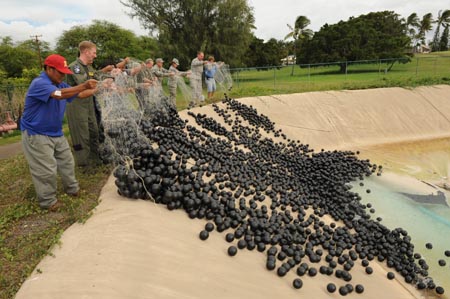 off the end of the main runway at JB Pearl Harbor-Hickam, Hawaii, airmen cut loose a cascade of objects resembling softball-sized caviar down a concrete embankment, coating the surface of an adjacent 23,560 square-foot reservoir. The more than 70,000 plastic balls recently released are part of a bird aircraft strike hazard abatement, or BASH, program to protect military aircraft. They are intended to discourage waterfowl from landing or roosting on waterways by disguising the water’s surface. Fifteenth Wing aircraft at the base have suffered $261,740 in cumulative damage from bird strikes since Fiscal 2007. “The worst case scenario is [the birds] can take out all the engines,” said Capt. Russell Foxworth, 15th Wing flight safety chief. He cited the loss of an E-3 AWACS aircraft in Alaska in 1995 caused by 31 Canadian geese. (Pearl Harbor-Hickam report by SrA. Gustavo Gonzalez)
The top Air Force commander on on the Japanese island of Okinawa has clamped down alcohol and issued a curfew for junior enlisted Airmen and Guardians at Kadena Air Base for the next month. The order came roughly two weeks after a U.S. Marine was arrested for allegedly robbing and…